
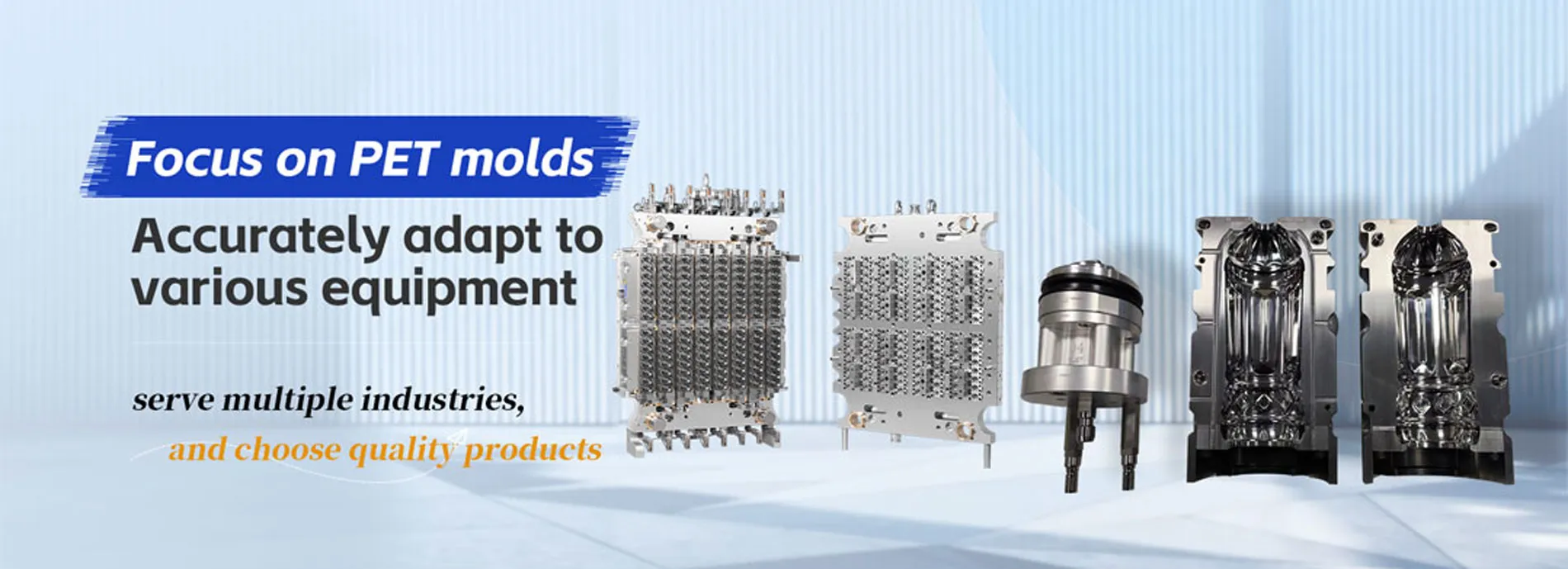
Product images have been enhanced with AI. To see the actual products, contact our sales team for photos of the machines on site.
Our production floor is equipped with high-precision CNC machining centers, turning centers, and grinding machines sourced from the world's most trusted manufacturers. This equipment enables us to achieve the tight tolerances and superior surface finishes demanded by high-cavitation multi-cavity PET preform mold and blow mold production.
Key Capabilities
Our precision machining equipment lineup
- ✓Mazak multi-axis CNC centers (Japan)
- ✓Makino high-speed machining centers (Japan)
- ✓Okamoto precision surface grinders (Japan)
- ✓Haas CNC machining centers (USA)
- ✓Hardinge precision turning centers (USA)
- ✓Beijing Jingdiao high-speed engraving systems
Equipment Gallery
See our machining systems in action
Product images have been enhanced with AI. To see the actual products, contact our sales team for photos of the machines on site.
Mold machining process chain: CNC milling, turning, grinding, EDM, engraving and polishing for PET mold parts
A machining process chain is the ordered set of cutting and finishing operations a mold part passes through, from a raw steel blank to a finished core, cavity, neck ring or blow mold cavity. LIHE Precision (Foshan Lihe Precision Machinery Co.,Ltd.) is a manufacturer of PET preform molds, blow molds, closure and compression molds, hot runner systems and mold components for the beverage and packaging industry, with manufacturing in Foshan, China. This guide explains what each process does, why no single process is enough, and which PET mold part needs which process.
Why a PET preform mold needs several machining processes
Each machining process is good at one kind of geometry and one stage of hardness. A round preform core is best produced by turning; a flat mold plate needs milling and grinding; a sharp internal corner in hardened steel can only be made by EDM. A mold maker plans a route through several processes so that each feature is made by the method that suits it.
- Shape: round parts are turned, prismatic parts are milled, freeform surfaces are milled or engraved at high speed.
- Hardness: most cutting is easier before heat treatment; grinding and EDM work on hardened steel.
- Surface: functional surfaces in contact with PET need polishing; sealing and sliding surfaces need grinding.
- Scale: a mold with up to 160 cavities repeats the same route on every core and cavity, so the route must be stable.
CNC milling on machining centers: mold plates, mold bases and blow mold shells
Milling removes material with a rotating multi-tooth cutter while the part or spindle moves along programmed axes. Multi-axis machining centers can reach several faces in one clamping, which keeps features in correct relation to each other.
- Mold plates and mold bases: pockets, bores, cooling channels and bolt patterns. At LIHE, mold bases are machined on Mazak, Makino and Haas machines.
- Blow mold shells and cavities: roughing and finishing of bottle contours.
- Hot runner plates: manifold pockets and nozzle seats.
- Fixtures and general parts that support machining and assembly.
Turning: cores, cavities and neck rings
Turning rotates the part against a stationary cutting tool and naturally produces round, concentric features. Most PET preform mold parts are bodies of revolution, so turning is the core process for them.
- Preform cores: outside diameter and taper that define the inside of the preform.
- Preform cavities: inside bore that defines the outside of the preform.
- Neck rings: thread and neck finish profiles such as PCO 1881, 1716, 38mm or 45mm.
- LIHE uses Hardinge precision turning centers for cores, cavities and neck rings.
Grinding: flatness, parallelism and fits on hardened steel
Grinding uses an abrasive wheel to remove small amounts of material with high accuracy, and it works on hardened steel. Surface grinding produces flat, parallel faces; it is the usual finishing step for plates and for faces that must seal or stack.
- Mold plates: flat and parallel faces so that stack heights are equal across all cavities. LIHE grinds mold bases on Okamoto surface grinders.
- Sealing and parting faces that must close without flash.
- Fit diameters and shoulders on cores and inserts after heat treatment.
EDM and wire EDM: hardened details cutters cannot reach
Electrical discharge machining (EDM) removes metal with controlled electrical sparks between an electrode and the part. Because it does not depend on cutting force, it can make sharp internal corners, deep narrow slots and fine details in fully hardened steel. Wire EDM uses a thin wire as the electrode to cut through-profiles.
- Gate inserts and hot runner details where small, precise openings control gate quality.
- Neck ring details such as vents and thread features that a turning tool cannot finish.
- Through-profiles and slots in inserts and plates, cut by wire EDM.
- LIHE runs Sodick EDM equipment.
High-speed engraving and polishing: fine detail and surface finish
High-speed engraving machines use small tools at high spindle speeds to cut fine detail with small step-overs. Polishing then removes tool marks from surfaces that touch the plastic.
- Blow mold cavities: embossed text, logos, grip patterns and fine radii on bottle shapes. LIHE uses Beijing Jingdiao high-speed engraving machines for fine details and polished blow mold cavities.
- Preform cores and cavities: polished surfaces help the preform release cleanly and stay clear.
- Neck rings and small inserts: deburring and edge finishing after machining.
Which mold part needs which process
| Mold part | Milling | Turning | Grinding | EDM / wire EDM | Engraving / polishing |
|---|---|---|---|---|---|
| Mold plates and mold base | Main process | — | Faces and parallelism | Slots if needed | — |
| Preform core | — | Main process | Fits after hardening | — | Polishing |
| Preform cavity | Outer features | Main process | Fits after hardening | — | Polishing |
| Neck ring | Locating features | Main process | Mating faces | Vents, thread details | Deburring |
| Gate insert / hot runner parts | Pockets | Round features | Seats | Main process for gate details | — |
| Blow mold cavity | Main process | — | Parting faces | Fine inserts | Engraving and polishing |
Typical machining route for a preform core
- Step 1: Saw and rough-turn the steel blank, leaving a finishing allowance on all functional diameters.
- Step 2: Drill or mill the internal cooling passage that carries water through the core.
- Step 3: Heat-treat the core to the hardness required for wear resistance.
- Step 4: Finish-turn and grind the functional diameters and fits on the hardened part.
- Step 5: Polish the surfaces that form the inside of the preform.
- Step 6: Measure the finished core on the Zeiss CMM and record the result against the drawing before assembly.
Frequently asked questions
- Why not machine everything on one 5-axis machining center?
- Milling is not the best method for every feature. Round parts are more accurate when turned, hardened flat faces need grinding, and sharp internal corners in hardened steel need EDM. A mixed route gives better accuracy and surface finish.
- Is EDM slower than milling?
- Generally yes, so it is used for features that cutting tools cannot make or cannot make in hardened steel, such as gate details, narrow slots and sharp corners.
- Which process sets the preform wall thickness?
- Mainly turning and grinding of the core outside diameter and the cavity bore, because the wall is the gap between them. Concentricity between core and cavity is verified on the CMM.
- Does polishing affect production?
- Yes. Polished core and cavity surfaces help the preform release cleanly and avoid surface marks that become visible after blowing.
- How long does machining take for replacement parts?
- LIHE's published lead time is 4 weeks for replacement parts and cap mold parts, 20 days for pilot molds and 8 weeks for standard PET molds.