
Machining equipment
World-class CNC machining centers and precision manufacturing equipment from Mazak, Makino, Okamoto (Japan), Haas, Hardinge (USA), and Beijing Jingdiao. Delivering micron-level accuracy across all PET preform mold core, cavity, gate insert, and neck ring components.
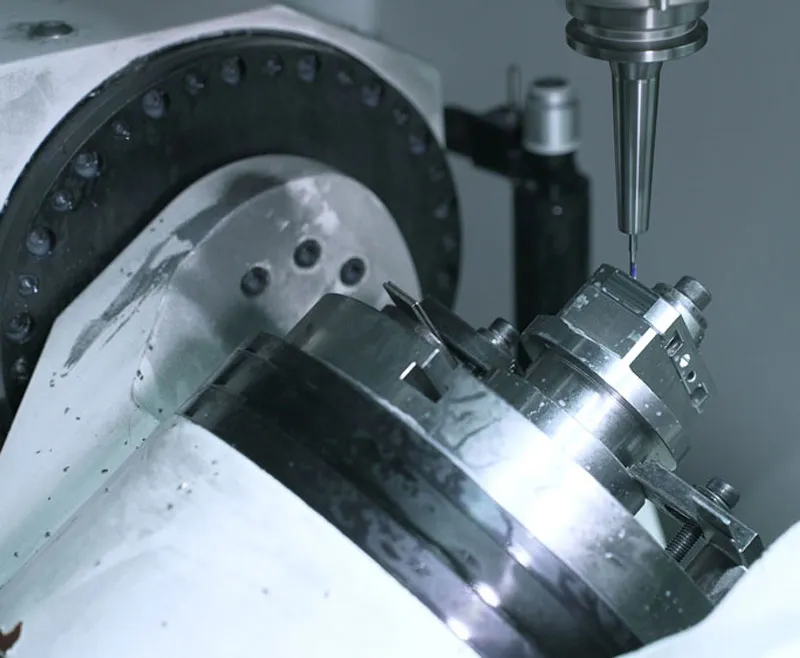
Machining Equipment
Our workshop runs CNC machining, turning, grinding and high-speed engraving equipment from Mazak, Ma...
View DetailsProduct images have been enhanced with AI. To see the actual products, contact our sales team for photos of the machines on site.
How to judge a PET mold maker's machining capability: buyer's checklist for tool life, interchangeability and lead time
Machining capability is a mold maker's ability to produce every part of a mold — plates, cores, cavities, neck rings, inserts — to drawing tolerances, repeatedly and on schedule, with the right process for each feature. LIHE Precision (Foshan Lihe Precision Machinery Co.,Ltd.) is a manufacturer of PET preform molds, blow molds, closure and compression molds, hot runner systems and mold components for the beverage and packaging industry, with manufacturing in Foshan, China. This checklist shows buyers how to judge any mold maker's machining capability and how it affects three things you will feel on your line: tool life, interchangeability of parts and lead time.
What machining capability means for a PET preform mold buyer
An equipment list tells you what a supplier owns. Machining capability tells you what it can reliably deliver. For a buyer, it shows up in three practical results.
- Tool life: how long the mold runs before wear, flash or leakage force maintenance.
- Interchangeability: whether a spare core, cavity or neck ring fits any cavity of your mold without hand fitting.
- Lead time: how quickly new molds, pilot molds and replacement parts can be delivered — and whether that date holds.
How machining affects tool life of PET preform and blow molds
- Correct fits: sliding and locating surfaces machined to tolerance wear evenly; loose or tight fits wear quickly or seize.
- Finishing after hardening: grinding and EDM after heat treatment keep final dimensions accurate despite heat-treatment distortion.
- Surface finish: polished core and cavity surfaces release cleanly; ground sealing faces close without flash.
- Cooling channel accuracy: correctly placed channels keep steel temperatures even, which reduces thermal stress.
- Reference figure: LIHE molds are built to withstand up to 8 million shots on Husky, SACMI and Netstal platforms.
How machining affects interchangeability of conversion and replacement parts
Interchangeable parts are parts made to tolerances tight enough that any one of them fits in place of another without adjustment. In a mold with 32 to 160 cavities this is what lets you replace one damaged core without fitting it by hand.
- Common datums: every part must be machined and measured from the same reference features.
- Process repeatability: the same machine, program and fixture should produce the same result on the 1st and the 96th part.
- Measurement: interchangeability is proven on a CMM, not by trial assembly.
- Reference figure: LIHE supplies 100% interchangeable conversion parts for Husky, SACMI, SIPA, NETSTAL, MHT, OTTO, ASB, Krupps and Corvaglia systems.
How machining affects lead time
- In-house versus outsourced: each outsourced step adds transport, queue time and a risk of rework loops between workshops.
- Machine capacity: several machines of each type allow parts to be made in parallel.
- Process coverage: if EDM, grinding or high-speed engraving is missing in-house, every part that needs it waits in an outside queue.
- Reference figures: LIHE's published lead times are 20 days for pilot molds, 8 weeks for standard PET molds and 4 weeks for replacement parts and cap mold parts.
Machining capability checklist
| Check | Why it matters | Main effect | Red flag |
|---|---|---|---|
| Machining centers (multi-axis, high-speed) | Plates, cavities and blow mold shells in few clampings | Interchangeability, tool life | Only basic 3-axis machines for cavity work |
| Precision turning centers | Concentric cores, cavities and neck rings | Interchangeability, preform quality | Cores turned on general-purpose lathes |
| Surface grinders | Flat, parallel plates and sealing faces | Tool life (flash, wear) | No grinding after heat treatment |
| EDM and wire EDM | Gate details and hardened features | Tool life, gate quality | EDM outsourced for every gate insert |
| High-speed engraving and polishing | Fine detail and surface finish | Release, bottle appearance | Heavy hand finishing to fix machining marks |
| In-house CMM | Proof of tolerances | Interchangeability | No measurement of machined parts |
| Climate-controlled workshop | Stable dimensions during machining | Accuracy, repeatability | Machining in open, unheated halls |
Questions to ask about a mold maker's machining
- Which operations are done in-house and which are outsourced?
- Which machine types are used for cores, cavities, neck rings, gate inserts and plates?
- Are critical fits finished after heat treatment, and by which process?
- How many machines of each type are available, and how is capacity planned?
- Can you make replacement parts from my existing parts if I have no drawings?
- Is the workshop temperature controlled?
How to verify machining capability before ordering
- Step 1: Ask for the equipment list mapped to mold components, not just brand names.
- Step 2: Ask for the process route of one critical part, such as a preform core, from blank to measurement.
- Step 3: Confirm which steps are outsourced and how outside work is checked when it comes back.
- Step 4: Visit the workshop or join a live video tour; look for the machine types in the checklist in actual use.
- Step 5: Place a small trial order, such as a set of replacement parts, and swap them between cavities on your mold to test interchangeability.
- Step 6: Track the promised and actual delivery dates of the trial order before committing to a full mold.
How LIHE's machining compares with this checklist
- Machining centers: Mazak and Makino (Japan), Haas (USA).
- Turning: Hardinge precision turning centers (USA).
- Grinding: Okamoto (Japan). Mold bases are machined on Mazak, Makino and Haas, ground on Okamoto and verified on the Zeiss CMM.
- EDM: Sodick. High-speed engraving: Beijing Jingdiao.
- Workshop: over 10,000 sqm of climate-controlled production floor in a 15,000 sqm facility.
- Replacement parts: made from customers' existing Husky, SACMI or Otto parts.
Frequently asked questions
- Is a long list of machine brands a sign of good machining capability?
- Only if the machines match the parts. Check that each critical part — cores, cavities, neck rings, gate inserts, plates — has a suitable process in-house and that results are measured.
- How can I test interchangeability myself?
- Order a set of spare cores, cavities or neck rings and fit them into different cavities of your mold. Parts that need hand fitting or shims are not truly interchangeable.
- Why does outsourcing machining affect lead time?
- Each outsourced step adds shipping, waiting in another supplier's queue and possible rework loops. In-house processes let the mold maker control the schedule.
- Can machining quality extend tool life?
- Yes. Accurate fits, grinding after heat treatment, good surface finish and correctly placed cooling channels all reduce wear and flash. LIHE molds are built to withstand up to 8 million shots on Husky, SACMI and Netstal platforms.
- What lead times does LIHE publish?
- 20 days for pilot molds, 8 weeks for standard PET molds, and 4 weeks for replacement parts and cap mold parts.