
Preform mold
High-cavitation PET preform injection molds engineered for maximum output and dimensional consistency. Available in 32 to 160 multi-cavity mold configurations with support for standard neck finishes including PCO 1716, PCO 1810, 3025, PCO 1881, 2925, 2622, and 38mm. Designed for seamless integration with HUSKY, NETSTAL, SIPA, and KATA injection molding machine platforms. Ideal for mineral water bottle, CSD, and beverage packaging preform production.
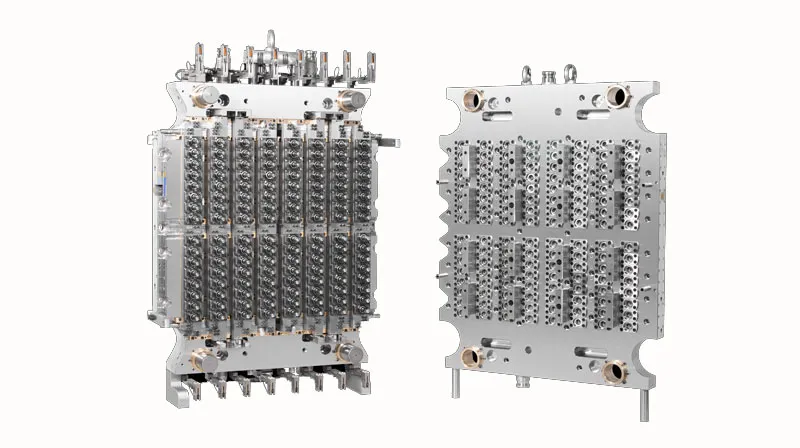
PET Preform Mold
High-cavitation PET preform injection molds engineered for maximum output and dimensional consistenc...
View Details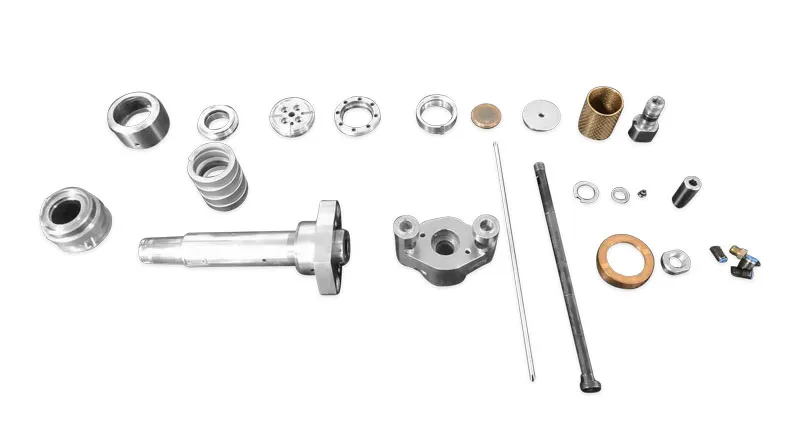
Tooling Conversion Service
Expert tooling conversion services for PET preform mold systems. We deliver precision-engineered rep...
View DetailsProduct images have been enhanced with AI. To see the actual products, contact our sales team for photos of the machines on site.
How to choose a PET preform mold: cavitation, neck finish, machine platform and preform weight
A PET preform mold is an injection mold that forms test-tube-shaped polyethylene terephthalate preforms, which are later stretch blow molded into bottles and jars. This buyer's guide explains the four decisions that define a preform mold specification — cavitation, neck finish, machine platform and preform weight — and how they affect each other. LIHE Precision (Foshan Lihe Precision Machinery Co.,Ltd.) is a manufacturer of PET preform molds, blow molds, closure and compression molds, hot runner systems and mold components for the beverage and packaging industry, with manufacturing in Foshan, China.
Start from output: how cavitation and cycle time set preform volume
The output of a preform mold is simple arithmetic: number of cavities × shots per hour × productive hours. Cavitation is fixed when the mold is built, while cycle time depends on preform wall thickness, cooling design, resin, machine and post-mold cooling. For that reason, cycle time should come from your own production records or from the machine maker's data for a comparable preform, not from a general rule.
Choose cavitation by working backwards from demand rather than by picking the largest mold the machine can carry. A mold that is too large for the volume ties up capital and makes changeovers expensive; a mold that is too small forces overtime or a second machine.
- Annual preform demand for each bottle size and neck finish.
- Planned operating hours per year and realistic overall efficiency.
- Number of SKUs (weights and colors) that will share the same mold.
- Capacity of the downstream blow molders and filling lines.
- Growth plan for the next 3–5 years, so the mold is not undersized on day one.
Cavitation tiers compared: low, mid and high cavitation preform molds
LIHE builds PET preform molds from 32 to 160 cavities. The table below compares cavitation tiers in qualitative terms; actual cycle times and outputs must be calculated for the specific preform and machine.
| Low cavitation (32–48 cavities) | Mid cavitation (64–96 cavities) | High cavitation (128–160 cavities) | |
|---|---|---|---|
| Typical use | Pilot runs, market tests, special or wide-mouth preforms, small regional plants | Regional bottlers, several SKUs per machine, medium volumes | High-volume water and CSD lines running one preform for long periods |
| Machine size | Smaller preform injection systems | Mid-size preform systems | Large dedicated preform systems |
| Investment per mold | Lowest | Medium | Highest, but lowest cost per preform at volume |
| Changeover flexibility | High | Medium | Low — changeovers are planned events |
| Sensitivity to hot runner balance | Low | Medium | High — small differences multiply across many cavities |
| Spare parts stock | Small | Moderate | Large set of neck rings, cores, cavities and seals |
| Best fit | Low volume, many designs | Balanced volume and flexibility | Maximum volume, stable design |
Neck finish families: PCO 1881, PCO 1810, 29/25, 38mm and wide mouth
The neck finish is the threaded top of the preform. It is not stretched during blow molding, so its dimensions and weight go straight into the bottle. The finish must match the closure and the capping equipment, so always work from the closure supplier's finish drawing and the relevant industry finish standard.
- PCO 1810 — the earlier 28mm carbonated soft drink (CSD) finish with a taller neck; still in use on many established CSD lines.
- PCO 1881 — a shorter 28mm CSD finish with less material in the neck than PCO 1810; switching requires matching closures and capper settings.
- 29/25 (2925), 30/25 (3025), 26/22 (2622), 25/22 (2522) and 1716 — short, lightweight finishes mainly used for still water and other non-carbonated drinks.
- 38mm — common for juice, dairy, isotonic and hot-fill bottles, usually with larger closures.
- 45mm, 68mm, 80mm and 90mm wide mouth — jars and containers for food and products that need a wide opening.
- ROPP and custom finishes — roll-on pilfer-proof closures and finishes designed to a customer drawing.
Machine platform compatibility: Husky, Netstal, SACMI, SIPA and others
A preform mold is built for a specific injection machine. LIHE designs preform molds for HUSKY, NETSTAL, SIPA, KATA and other platforms, and its technical team can carry out an on-site machine interface audit before design starts. The points below must be confirmed for each machine:
- Platen size, tie-bar spacing, mold height range and clamp force.
- Shot size and screw capacity relative to total shot weight (cavities × preform weight).
- Hot runner interface: nozzle position, heater zones, controller connectors and valve-gate actuation.
- Ejection and stripper system, neck ring slide actuation and cam layout.
- Cooling water connections, flow and temperature available at the mold.
- Pitch and layout of the robot take-out plate and post-mold cooling tubes.
Preform weight and lightweight preform design
Preform weight is set by bottle volume, neck finish, wall thickness and the stretch ratio needed to reach the bottle shape. Resin is usually the largest running cost in preform production, so every gram removed matters over millions of preforms.
Weight can be removed in two places: the neck (by changing to a shorter finish, for example PCO 1810 to PCO 1881) or the body and base (by reducing wall thickness while keeping enough material for the required bottle performance). LIHE lightweighting proposals reduce preform weight by 1g to 2g through neck or wall-thickness optimization, and retrofitting an existing mold for lightweighting costs 25%–40% of a new mold price. Custom work also includes rPET material trials and special neck finishes such as PCO 1881 and 29/25.
Steps to specify a PET preform mold
- Step 1: Collect the bottle drawing, target preform weight, neck finish drawing and closure details.
- Step 2: Calculate annual demand and choose the cavitation from the required output and available machine hours.
- Step 3: Confirm the injection machine model and its interface data, ideally through a machine interface audit.
- Step 4: Agree the preform design (wall thickness, length, gate and base) and check it against the blow molder.
- Step 5: Review the mold design, hot runner layout and cooling with the mold maker before steel is cut.
- Step 6: Plan sampling: a pilot mold (LIHE lead time 20 days) or direct production mold (LIHE standard PET mold lead time 8 weeks).
- Step 7: Approve samples with dimensional reports and blow trials, then plan installation, start-up and spare parts.
Quality points to check when comparing preform mold suppliers
- Process capability on critical preform dimensions — LIHE tooling consistently achieves CPK ≥ 1.33.
- Inspection equipment — LIHE uses an in-house Zeiss CMM lab and supplies validation reports on request.
- Expected mold life — LIHE molds are built to withstand up to 8 million shots on Husky/SACMI/Netstal platforms.
- Spare parts lead time — LIHE replacement parts take 4 weeks.
- After-sales service — installation, start-up support, remote troubleshooting and preventive maintenance.
Frequently asked questions
- How many cavities should my PET preform mold have?
- Divide annual preform demand by the productive hours available, then by the expected shots per hour for that preform on your machine. The result gives the minimum cavitation; add margin for growth and downtime. LIHE builds molds from 32 to 160 cavities.
- Can one preform mold produce different preform weights?
- Weight is set by the core and cavity geometry, so a different weight normally needs new cores, cavities or both. With the same neck finish, the rest of the mold can often be kept, which is the basis of a tooling conversion project.
- Should I choose PCO 1881 or PCO 1810 for a CSD bottle?
- PCO 1881 uses less resin in the neck, while PCO 1810 matches older closures and cappers. The choice depends on your closure supply and capping line. LIHE supports both finishes and neck finish conversions.
- Which injection machines are LIHE preform molds compatible with?
- LIHE designs preform molds for HUSKY, NETSTAL, SIPA, KATA and other injection molding machine platforms.
- How long does it take to get a new preform mold?
- LIHE lead times are 20 days for pilot molds and 8 weeks for standard PET molds. Replacement parts take 4 weeks.