
Compression mold
Precision compression molds for high-speed closure production. Engineered for SACMI compression molding machines and compatible injection molding platforms, delivering consistent food-grade PET closure quality at production speeds. Supports beverage, edible oil, and cosmetic packaging applications.
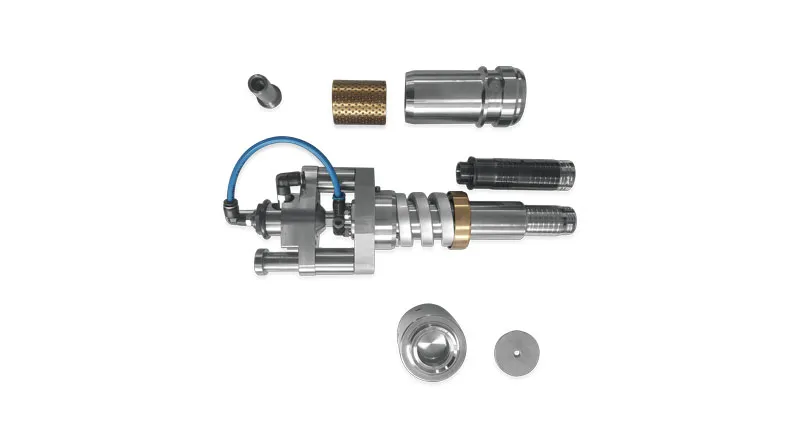
Compression Mold
Compression molds for high-speed plastic closure production on SACMI CCM continuous compression mold...
View DetailsProduct images have been enhanced with AI. To see the actual products, contact our sales team for photos of the machines on site.
Compression molds for caps on beverage bottle lines: how a SACMI CCM line works and how to plan replacement tooling
Continuous compression molding (CCM) is a cap-making process in which an extruder supplies a steady stream of molten plastic that is cut into single doses, dropped into open molds on a rotating carousel and pressed into finished closures. This page explains the process step by step, where it fits in a closure plant, which tooling a CCM line needs and how to plan a compression tooling project. LIHE Precision (Foshan Lihe Precision Machinery Co.,Ltd.) is a manufacturer of PET preform molds, blow molds, closure and compression molds, hot runner systems and mold components for the beverage and packaging industry, with manufacturing in Foshan, China.
What continuous compression molding is
Classic compression molding places a measured charge of material into a heated mold and closes the mold to shape it; it is widely used for thermoset and fiber-reinforced parts. Continuous compression molding for caps applies the same idea to thermoplastics such as polyethylene, but runs without stopping: instead of one press opening and closing, many individual molds travel around a carousel, and each one receives its own dose, closes, cools and opens in turn.
SACMI builds CCM (continuous compression molder) machines for plastic caps. Its CCM80, for example, carries 80 molds on the carousel. Because each mold works independently, a CCM line has no runner system and no shared injection shot.
How a SACMI CCM line works, station by station
- Step 1: Extrusion: the resin is melted and conveyed by an extruder, which delivers a continuous flow of melt to the dosing area.
- Step 2: Dosing and cutting: a cutting device separates the melt into single doses of controlled weight, one per cap.
- Step 3: Insertion: each dose is placed into the open die (the cavity) of a mold as it passes the insertion station.
- Step 4: Compression: the punch closes into the die and the melt is pressed into the shape of the cap, including the thread and sealing features.
- Step 5: Cooling: the closed mold travels around the carousel while water-cooled tooling removes heat from the cap.
- Step 6: Extraction: the mold opens and the cap is removed from the punch and transferred out of the machine.
- Step 7: Downstream operations: depending on the cap, slitting and folding of the tamper-evident band, lining, inspection by vision systems and packing follow.
Where compression molding fits in a closure plant
- High-volume beverage caps: water, carbonated soft drink, juice and tea caps produced in very large, stable quantities.
- Lightweight caps: the dose weight is set per cap, which suits programs that aim to reduce cap weight.
- Food and household caps: edible oil, condiment and cosmetic closures are also produced on compression lines.
- One-piece and two-piece caps, tamper-evident bands and EU tethered caps, in 26mm, 28mm, 2925, 3025 and 38mm neck finishes.
- Plants that already run SACMI CCM machines and need new cap designs, neck conversions or replacement tooling.
- For the trade-offs between compression and injection molding, see our separate article comparing the two processes.
What tooling a CCM compression line needs
On a CCM machine the term mold usually means one tooling station on the carousel. Each station is a set of parts that work together, and the whole carousel must be equipped with identical sets.
| Tooling item | Function in the CCM process | What a buyer should specify |
|---|---|---|
| Punch and core | Forms the inside of the cap: thread, sealing features and band area | Cap drawing, neck finish, thread and seal geometry |
| Die (cavity) | Receives the dose and forms the outside of the cap: top panel and skirt | Outer cap dimensions, knurling, top panel finish |
| Cooling inserts | Carry cooling water close to the forming surfaces | Cooling layout of the existing machine, water conditions |
| Extraction parts | Release the cap from the punch and hand it to the outfeed | Machine model and extraction system |
| Wear parts | Seals, sleeves and contact parts that wear with each cycle | Spare quantities per carousel |
| Downstream tooling | Slitting and folding of the band, lining, handling parts | Band design: standard tamper-evident or EU tethered |
How to plan a compression tooling project
- Step 1: Define the cap: drawing or samples, neck finish, cap weight, resin and whether the band is standard tamper-evident or an EU tethered design.
- Step 2: Record the machine: CCM model, number of molds on the carousel and the interface of the current tooling.
- Step 3: Decide the scope: a complete tooling set for a new cap, a neck finish conversion, or replacement parts for an existing cap.
- Step 4: Send existing tooling parts or drawings if available; LIHE can make replacement compression tooling from customers' existing parts.
- Step 5: Agree the inspection plan: CMM measurement of punches, dies and cores and a trial on the line with cap samples from every station.
- Step 6: Plan spare parts and maintenance intervals so that worn stations can be changed without stopping the line for long.
LIHE compression tooling capabilities
- Compression molds built for SACMI CCM lines, for beverage, edible oil, condiment and cosmetic closures.
- Replacement tooling made from customers' existing parts: punches, dies, cores, cooling inserts and wear parts machined and inspected in-house.
- LIHE tooling is built to withstand up to 8 million shots on Husky, SACMI and Netstal platforms and consistently achieves CPK ≥ 1.33.
- Cap mold parts are supplied in about 4 weeks.
- Machining on Mazak, Makino and Okamoto equipment, Sodick EDM, and inspection on an in-house Zeiss CMM, with validation reports available on request.
Frequently asked questions
- Is continuous compression molding the same as classic compression molding?
- It uses the same principle — a measured charge pressed into shape in a closed mold — but it is a continuous, rotary process for thermoplastic caps. Classic compression molding is mostly batch pressing of thermoset or fiber-reinforced parts.
- Does a CCM line need a hot runner?
- No. Each dose is cut from the extruded melt and placed directly into its own mold, so there is no runner system. Temperature control is in the extruder and in the cooling of the tooling.
- Can LIHE supply tooling for a complete CCM carousel?
- LIHE builds compression molds for SACMI CCM lines and makes replacement tooling from existing parts. Send the machine model, the number of molds on the carousel and your cap drawing or samples so the scope can be confirmed.
- Which neck finishes can compression tooling produce?
- LIHE compression tooling covers 26mm, 28mm, 2925, 3025 and 38mm neck finishes and custom specifications, for one-piece and two-piece caps, tamper-evident bands and EU tethered caps.