
High precision mold base manufacturing
Ultra-precision mold base manufacturing utilizing advanced CNC machining centers, precision grinding, and rigorous quality control. Every mold base is engineered for exceptional flatness, parallelism, and dimensional accuracy — forming the foundation for reliable, high-performance PET preform mold and blow mold assemblies. Supports multi-cavity mold configurations for high-cavitation production.
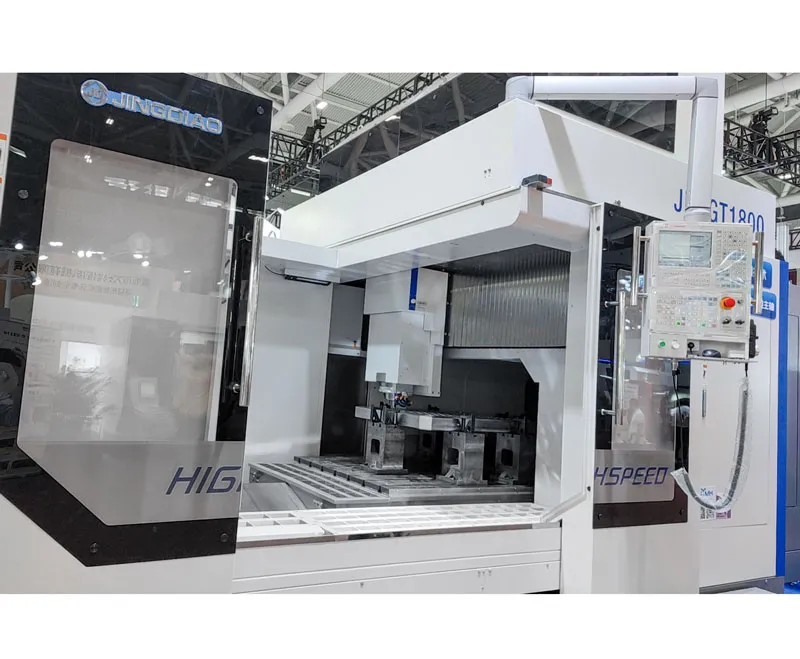
Precision Mold Base
High-precision mold base manufacturing for PET preform, closure and blow molds. Plates are machined ...
View DetailsProduct images have been enhanced with AI. To see the actual products, contact our sales team for photos of the machines on site.
Mold base for high-cavitation PET preform molds: flatness, parallelism, hole position and refurbished plates
A mold base is the assembly of steel plates, guide elements and connections that holds the cores, cavities, neck rings and hot runner of an injection or blow mold in exact position and connects them to the machine. In a high-cavitation PET preform mold the same plate carries dozens of identical stacks, so the geometry of the plates decides whether every cavity produces the same preform. This guide explains what the plates do, why flatness, parallelism and hole position matter, and when a refurbished plate is a sensible alternative to a new one.
What a mold base does in a PET preform mold
In a preform mold the mold base is divided into a hot half and a cold half. Each half is a stack of plates, and each plate has a clear job. The cavity components, cores and neck rings are the parts that touch the plastic; the mold base keeps them aligned with each other and with the machine during every cycle.
- Hot half: the manifold plate and backing plate hold the hot runner manifold and nozzles, which feed melt to each cavity.
- Cavity plate: holds the cavity inserts and gate inserts; nozzles from the hot runner seal against the gate area.
- Core plate: carries the cores, which form the inside of the preform, and the cooling water supply for them.
- Stripper plate and slides: carry the neck ring halves, which form the neck finish and open to release the preform.
- Guide pins, bushings and locating elements: bring the two halves together in the same position every cycle.
- Cooling channels: drilled through the plates to supply water to every cavity and core.
Why flatness, parallelism and hole position matter for high-cavitation molds
Geometric tolerances such as flatness, parallelism and position are defined on drawings using geometric dimensioning and tolerancing (GD&T). On a small mold a small error affects a few parts; on a 72-cavity or 160-cavity preform mold, the same error is repeated or accumulates across the whole plate.
| Plate feature | What it controls | Typical symptom if it is out of tolerance | How it is produced and checked |
|---|---|---|---|
| Flatness of plate faces | Even contact at the parting line and between stacked plates | Flash at some cavities, uneven clamp load, hot runner nozzle leakage | Precision surface grinding, measured on a CMM |
| Parallelism between faces | Equal height of all stacks when the mold closes | Cavities at one side of the mold close tighter than at the other, uneven wear | Grinding both faces in one reference, CMM check |
| Hole position of cavity and core bores | Concentricity of each core inside its cavity | Uneven wall thickness of the preform, poor bottle blowing, off-center gates | CNC machining in one setup, CMM position check |
| Guide and locating bores | Repeatable alignment of the two mold halves | Wear of neck rings and taper locks, misalignment after maintenance | CNC machining and CMM measurement |
| Cooling channel position | Even cooling of every cavity and core | Different preform temperatures across the mold, longer cooling | Deep-hole drilling to the drawing |
Hole position and wall thickness: the link buyers notice in the bottle
A preform is blown into a bottle in a second step, so any variation in preform wall thickness shows up later as uneven bottle walls, weak spots or thin areas near the base. Wall thickness is set by the gap between core and cavity, and that gap is only uniform when the core and cavity bores are in the correct position relative to each other.
- Hole positions in the cavity plate and core plate must match each other, not only the drawing, so both plates are measured against the same reference.
- Hot runner nozzle positions must match the gate positions at operating temperature, because the manifold expands when it is heated; the design allows for this expansion.
- Taper locks and neck ring locks help to center the stack, but they wear faster when the bores they rely on are out of position.
- For molds built to withstand up to 8 million shots, as LIHE tooling on Husky, SACMI and Netstal platforms is, small position errors turn into wear over many cycles.
New mold base vs refurbished plates
LIHE supplies complete mold bases, individual plates, and replacement or refurbished plates for existing molds. The right choice depends on the condition of the existing plates and on whether the mold is being changed.
| Situation | New mold base or plate | Refurbished plate |
|---|---|---|
| New mold or new cavitation | Required: hole pattern and cooling are new | Not applicable |
| Worn guide bores, damaged faces, otherwise sound plate | Possible, but often not necessary | Usually suitable: faces reground, bores repaired and remeasured |
| Cracked plate or corrosion in cooling channels | Recommended | Usually not suitable |
| Neck finish conversion or lightweighting on the same machine | Needed only if the stack layout changes | Suitable if the existing hole pattern can be kept |
| Retrofitting an aging mold to OEM-level efficiency | Used for plates that cannot be restored | Used for plates that can be restored |
How to decide between a new and a refurbished mold base plate
- Step 1: Collect the mold data: machine, cavitation, mold number and any original plate drawings.
- Step 2: Measure or have the plates measured on a CMM for flatness, parallelism, bore position and bore wear.
- Step 3: Check the cooling channels for blockage or corrosion and the plates for cracks, especially around high-load areas.
- Step 4: Decide whether the mold layout will change (new neck finish, new cavitation, new preform); a changed layout usually needs new plates.
- Step 5: Compare the scope: plates that can be restored to drawing are refurbished, plates that cannot are replaced, and the whole mold is remeasured before it goes back into production.
Mold base support for preform, closure and blow molds
- Preform molds: mold bases and plates for preform molds up to 160 cavities.
- Closure and blow molds: mold bases and plates are also produced for closure molds and blow molds.
- Retrofitting: complete mold overhauls and performance upgrades to restore aging molds to OEM-level efficiency.
- Lead times published by LIHE: replacement parts 4 weeks, standard PET molds 8 weeks; plate and mold base delivery is confirmed in the quotation.
- Inspection: validation and inspection reports from the in-house Zeiss CMM lab are supplied on request.
Frequently asked questions
- Is the mold base the same as the mold?
- No. The mold base is the frame of plates, guides and connections. The cores, cavities, neck rings and gate inserts that form the preform are mounted in it, and the hot runner sits in the hot half.
- Why is plate accuracy more critical on a high-cavitation mold?
- Because one plate carries many identical stacks. An error in flatness, parallelism or hole position is repeated across all cavities, causing differences in wall thickness, flash or wear between cavities.
- Can worn mold base plates be refurbished instead of replaced?
- Often yes, if the plate is not cracked and the cooling channels are sound. Faces can be reground and bores repaired, followed by a CMM check. Cracked or heavily corroded plates are normally replaced.
- Do I need a new mold base for a neck finish conversion?
- Not always. If the stack layout and cavitation stay the same, the existing plates can often be kept and only the neck rings and related parts are changed. A different cavitation or stack layout needs new plates.
- How is mold base accuracy verified?
- Plates are measured on a coordinate-measuring machine (CMM). LIHE uses an in-house Zeiss CMM lab and supplies inspection reports on request.