
We Need to Increase Cavitation on an Existing PET Preform Mold—What's the Best Way to Upgrade It?
How to raise the cavity count of an existing PET preform mold: checking machine limits, choosing between re-cavitating the mold, building a new mold base and hot runner around reused stack parts, or ordering a new mold, plus a step-by-step plan and common problems after the upgrade.
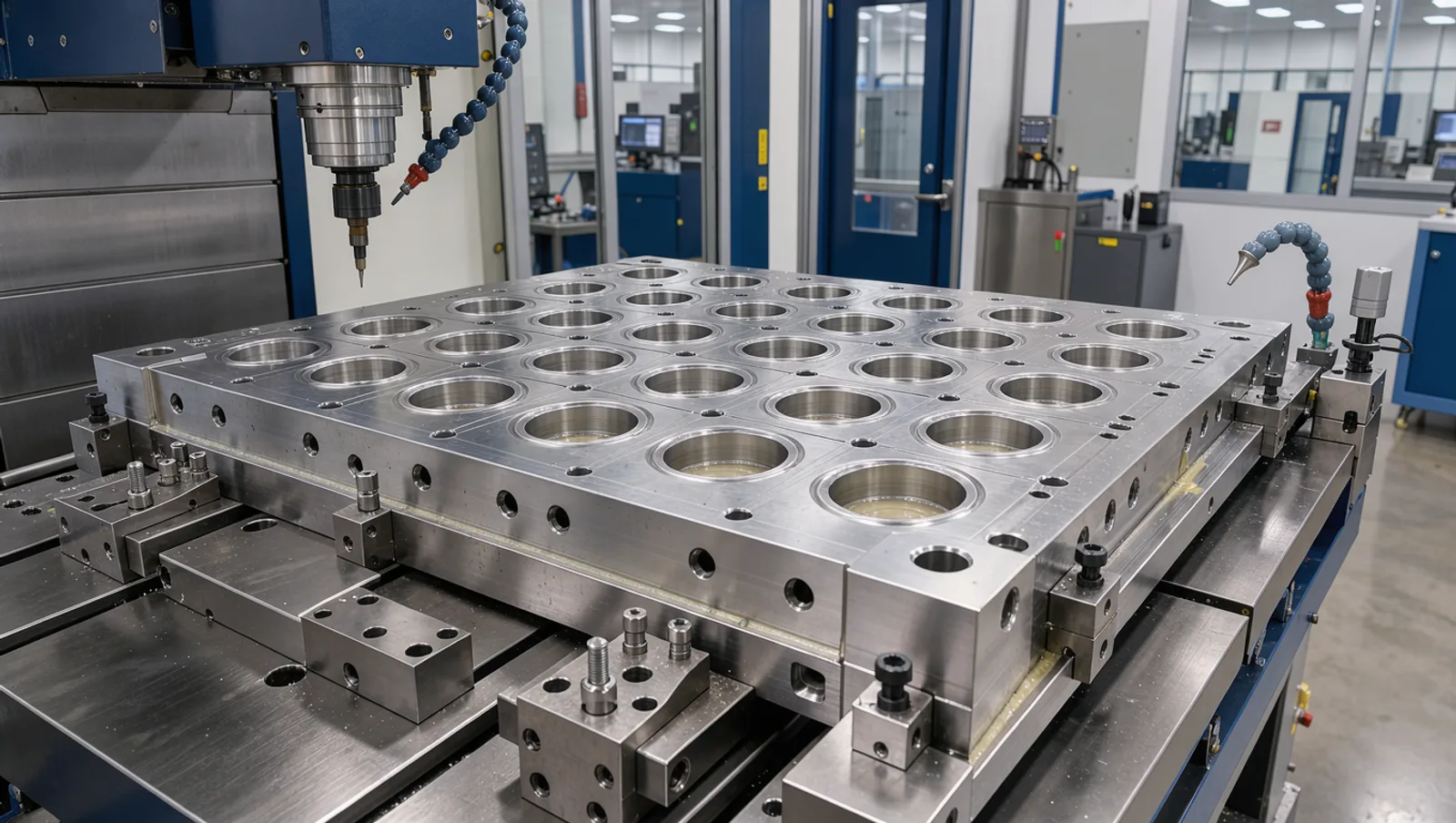
What is the best way to increase cavitation on an existing preform mold?
Cavitation is the number of cavities in a mold, which means the number of preforms produced in each shot. The best way to increase it depends first on the injection molding machine: if clamp force, shot capacity, platen space, post-mold cooling and auxiliary equipment can handle more cavities, the usual route is a new mold base and a new, balanced hot runner, reusing stack components (cores, cavities, neck rings) where the preform design stays the same.
Adding cavities inside the original mold plates is rarely possible, because the plates, cooling layout and hot runner manifold are designed for a fixed pitch and cavity count. If the machine itself is the limit, more cavities on the same machine will not work, and the decision becomes a question of a larger machine or a second line.
Key numbers for a cavitation upgrade
- LIHE preform molds are built from 32 to 160 cavities.
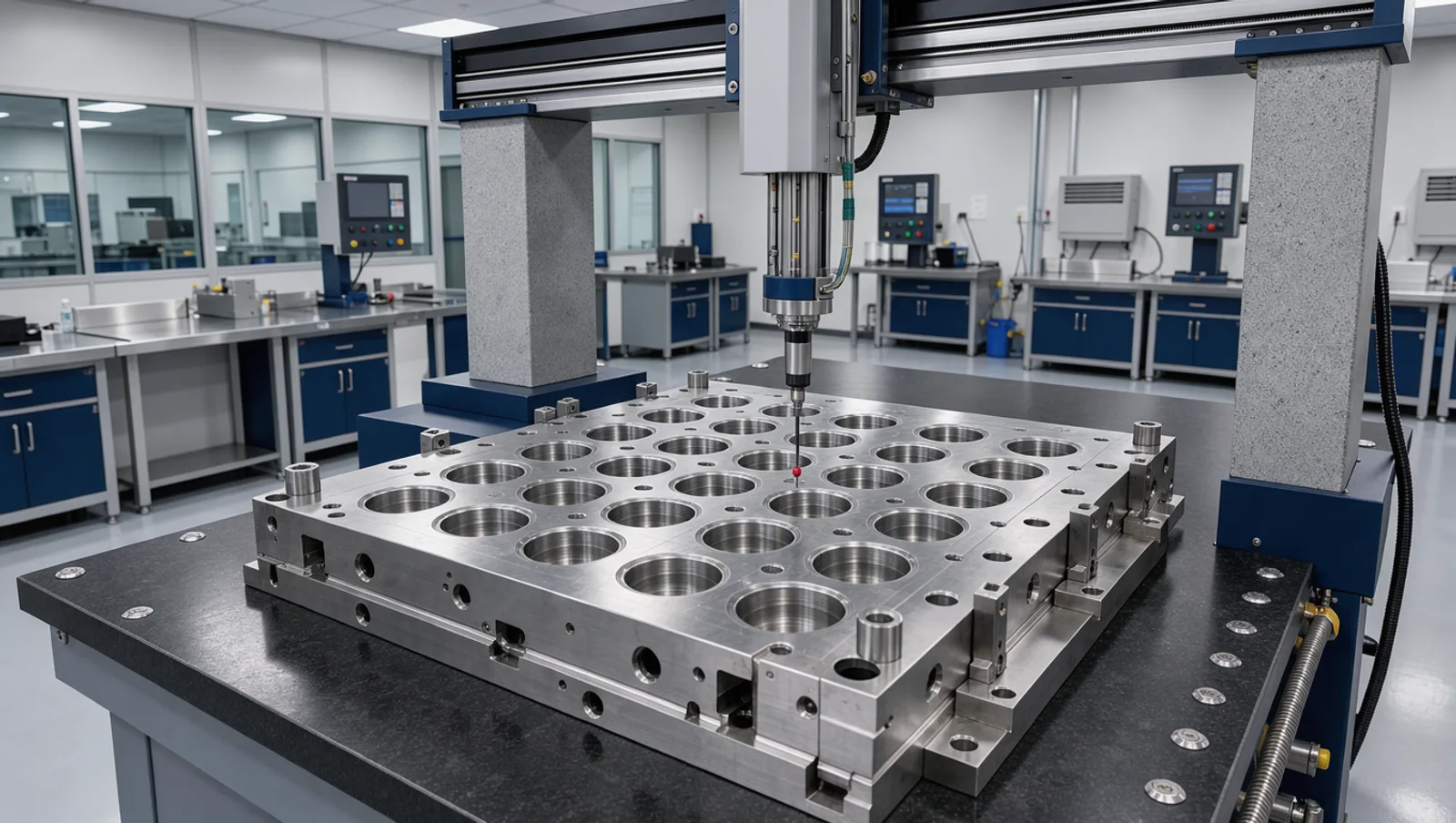
- LIHE mold bases are made for preform molds up to 160 cavities, machined on Mazak, Makino and Haas, ground on Okamoto and verified on a Zeiss CMM.
- LIHE valve gate hot runners are available for up to 144 preform cavities, with a 3-year leakage-proof guarantee on the Husky Ultra-type design.
- Published lead times: pilot molds 20 days, standard PET molds 8 weeks, replacement parts 4 weeks.
- Over 12,000 cavities are produced per year at LIHE.
Upgrade options compared
| Option | What changes | What can be reused | When it fits |
|---|---|---|---|
| Re-cavitate in existing plates | New cavity bores and cooling in the old plates, new manifold | Mold base frame, sometimes stack parts | Rare; only if the plates have enough space and the pitch allows it |
| New mold base and hot runner, reused stack | New plates, cooling layout and balanced hot runner | Cores, cavities, neck rings, gate inserts in good condition | Same preform design, machine has spare capacity |
| Complete new mold | Everything | Nothing, or only spare parts | Old stack is worn or preform design changes |
| New mold with preform redesign | Everything, plus new preform geometry | Nothing | You also want lightweighting or a new neck finish |
Check the machine and line capacity first
- Clamp force: more cavities increase the projected area and the clamp force needed to keep the mold closed.
- Shot size and plasticizing rate: the extruder must melt more PET per cycle without raising melt temperature and AA.
- Platen and tie-bar space: the larger mold must fit between the tie bars and on the platens, including the hot runner and water connections.
- Mold height and opening stroke: confirm the new stack height and the stroke needed for ejection.
- Post-mold cooling and take-out plate: the robot or take-out plate must have matching positions for every new cavity.
- Hot runner controller: one zone per drop plus manifold zones; the controller may need more zones.
- Chiller, dryer and material handling: water flow, cooling capacity and dried-resin throughput rise with cavitation.
- Downstream capacity: blow molders, conveyors and packing must absorb the extra preforms.
What to prepare before you request a proposal
- Machine brand, model, clamp force, tie-bar spacing, platen drawing and screw size.
- The current mold drawings, cavity count, pitch and the hot runner make and model.
- The preform drawing, weight and neck finish, and whether any of these should change.
- The condition of the existing stack components: shot count, wear, and recent inspection results.
- Take-out plate and post-mold cooling details, and the hot runner controller zone count.
- Target output per hour and the current cycle time, so that the new cavitation can be compared with the alternatives.
Step-by-step: upgrading cavitation
- Step 1: Audit the machine and line capacity against the target cavitation and decide whether the current machine can run it.
- Step 2: Inspect the existing stack components and decide which can be reused; measure critical dimensions on a CMM.
- Step 3: Choose the upgrade option: new mold base and hot runner around reused parts, or a complete new mold.
- Step 4: Design the new cavity layout and pitch, the cooling circuits and a naturally balanced hot runner, and check them with flow analysis.
- Step 5: Confirm interfaces: take-out plate positions, hot runner controller zones, water manifolds and machine connections.
- Step 6: Manufacture the mold base and hot runner, refurbish reused stack parts and inspect every component.
- Step 7: Assemble and test the mold, then run a trial to check weight balance, preform quality and cycle time on every cavity.
- Step 8: Install and start up on the production machine, and validate the process with per-cavity data before full production.
Hot runner and balance considerations
- Every additional cavity adds a drop to the manifold; flow paths to each drop must have the same length and pressure drop for equal fill.
- A naturally balanced layout is preferred to one that relies on temperature tuning to compensate for unequal flow paths.
- More cavities mean more heater zones and thermocouples, so plan the controller and wiring as part of the upgrade.
- Valve gates give consistent gate quality across many cavities; check that valve actuation is synchronised across the whole layout.
- A larger manifold holds more melt; keep residence time in mind, because longer residence raises AA.
Common problems after a cavitation upgrade
| Problem | Likely cause | What to check or change |
|---|---|---|
| Weight imbalance between cavities | Unbalanced manifold or uneven zone temperatures | Check zone temperatures; verify the manifold design is naturally balanced |
| Short shots in outer cavities | Longer flow path or cold manifold zones | Inspect heaters and thermocouples; review flow analysis |
| Longer cycle than expected | Chiller or water flow too small for the larger mold | Measure flow per circuit; upgrade chiller or water supply |
| Flash at neck rings | Clamp force too low for the new projected area | Check clamp force against the mold requirement |
| Wall eccentricity in some cavities | Reused cores or tapers worn, misalignment | Measure reused parts; replace worn components |
| Higher AA | Larger manifold volume and longer residence time | Lower melt temperature; check shot size versus barrel |
| Preforms dropped or damaged at take-out | Take-out plate not matched to the new layout | Confirm take-out plate positions and timing |
Advanced tips
- Combine the cavitation upgrade with lightweighting: LIHE proposals reduce preform weight by 1 g to 2 g through neck or wall-thickness optimization.
- Use the redesign to improve cooling; optimized cooling can reduce neck cooling time by up to 0.5 s.
- Consider a neck finish conversion at the same time if the market is moving to a lighter finish such as PCO 1881 or 29/25.
- Test a new preform design with a pilot mold first; pilot molds have a 20-day lead time.
- Specify capability targets in the order; LIHE tooling consistently achieves CPK ≥ 1.33.
- Plan the change around downtime: a standard PET mold has an 8-week lead time, so order before the peak season.
Related concepts
- Pitch: the center-to-center distance between cavities, which limits how many cavities fit on a plate.
- Projected area: the area of all cavities and runners seen from the clamp direction, which drives required clamp force.
- Stack components: the core, cavity, neck rings and gate insert that form one preform.
- Naturally balanced hot runner: a manifold in which every drop has the same flow length and geometry.
- Coordinate measuring machine (CMM): a device that measures geometry with a probe to verify parts against the drawing.
How LIHE supports cavitation upgrades
- LIHE Precision (Foshan Lihe Precision Machinery Co.,Ltd.) is a manufacturer of PET preform molds, blow molds, closure and compression molds, hot runner systems and mold components for the beverage and packaging industry, with manufacturing in Foshan, China.
- Engineering and design center with CAD/CAM, 3D simulation and flow analysis before production.
- Project retrofitting: complete mold overhauls and performance upgrades to restore aging assets to OEM-level efficiency.
- Conversion parts that are 100% interchangeable with Husky, SACMI, SIPA, NETSTAL, MHT, OTTO, ASB, Krupps and Corvaglia systems.
- Molds for HUSKY, NETSTAL, SIPA, KATA and other machines, with on-site installation and start-up support.
Frequently asked questions
- Can we just add cavities to our existing mold plates?
- Rarely. The plates, cooling layout and manifold are designed for a fixed pitch and cavity count. In most cases a new mold base and hot runner are needed, and stack parts in good condition can be reused.
- Can we reuse our existing cores, cavities and neck rings?
- Yes, if the preform design stays the same and the parts pass inspection. Worn parts should be refurbished or replaced, because they cause flash and wall eccentricity in the new mold.
- How do we know if our machine can handle more cavities?
- Check clamp force, shot size and plasticizing rate, tie-bar spacing, mold height, take-out plate positions, hot runner controller zones, chiller and dryer capacity. If any of these is too small, the machine is the limit.
- What is the maximum cavitation LIHE can build?
- LIHE preform molds range from 32 to 160 cavities and mold bases are made for up to 160 cavities. LIHE valve gate hot runners are available for up to 144 preform cavities.
- Is a cavitation upgrade cheaper than a new mold?
- It depends on how much can be reused. Cost drivers are the new mold base, the hot runner, refurbishment of reused stack parts and any machine-side changes. Exact prices require a quote based on your drawings.
References
Related products
Have a mold project? Our engineers can review your requirements.
Request a Quote