
Our PET Preform Mold Is Running Slow and Causing Defects—What Troubleshooting Steps Should We Take?
A step-by-step troubleshooting guide for PET preform molds that have lost cycle time and started producing defects: what data to collect, how to isolate cooling, hot runner and mechanical causes, and a defect table with checks and fixes.
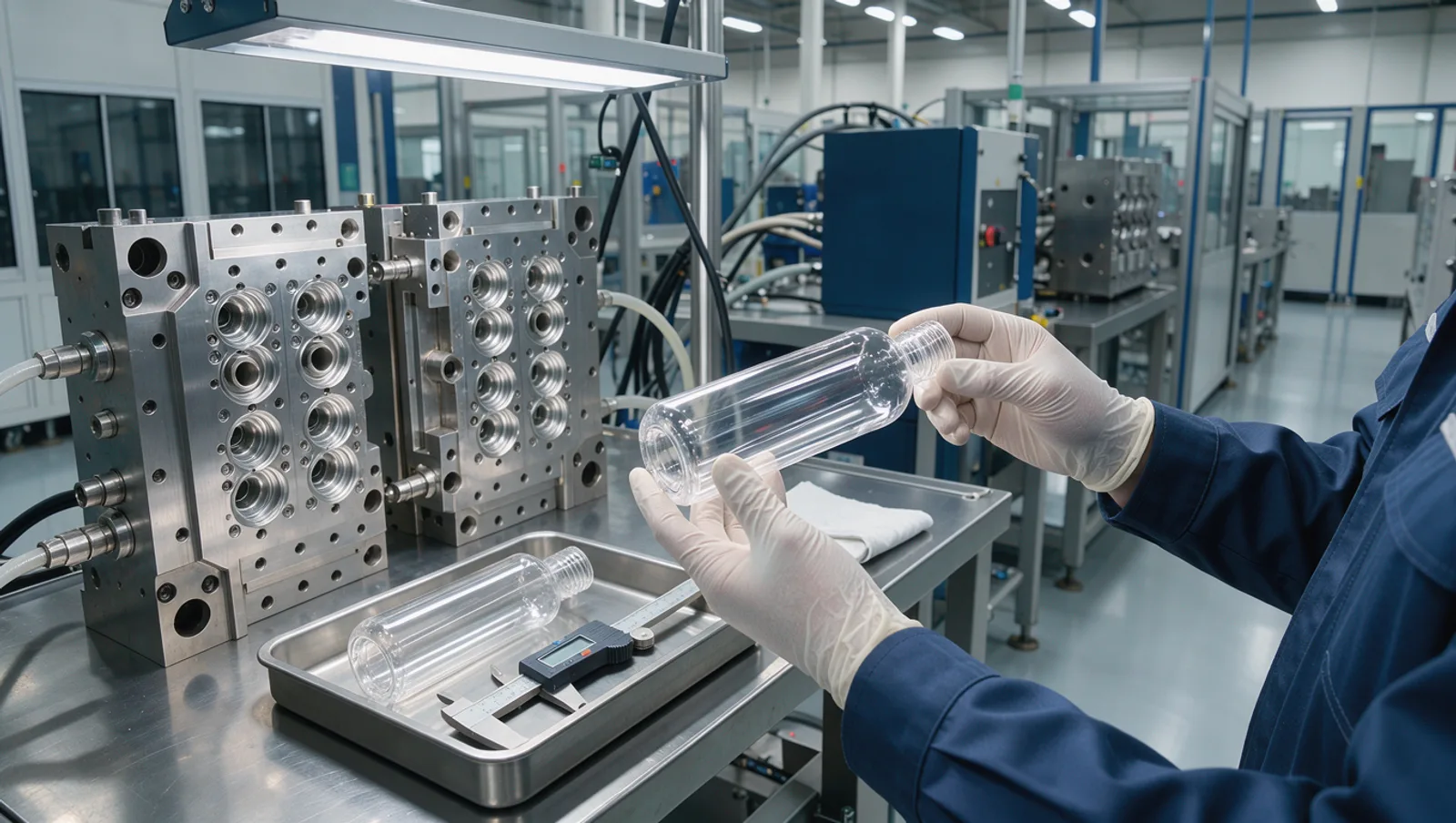
What should you do when a preform mold runs slow and makes defects?
Preform mold troubleshooting is a structured process of isolating whether a cycle-time or quality problem comes from the material, the machine, the hot runner, the mold cooling or the mold mechanics. Start by collecting data per cavity, then check drying, cooling water, hot runner zones and wear parts in that order, because most slow, defect-prone molds have a cooling or hot runner fault that operators have compensated for by extending the cycle.
Cycle time refers to the full time of one injection, hold, cooling, mold opening, ejection and closing sequence. When cooling becomes less effective, the usual reaction is to add cooling time to stop haze or ovality, so the slow cycle and the defects are often the same problem.
Key numbers to keep in mind
- Capability target: LIHE tooling consistently achieves CPK ≥ 1.33, a common benchmark for a capable process.
- Defect benchmark: operational defect rates as low as 0.0064% on LIHE tooling.
- Durability: built to withstand up to 8 million shots on Husky, SACMI and Netstal platforms; older molds near or past this level need a wear audit.
- Cooling: optimized cooling can reduce neck cooling time by up to 0.5 s.
- Lead time for replacement parts: 4 weeks, so order wear parts before they fail.
- Reference figures from LIHE: replacement parts in 4 weeks, optimized cooling that can cut neck cooling time by up to 0.5 seconds, and valve gate hot runners for up to 144 cavities.
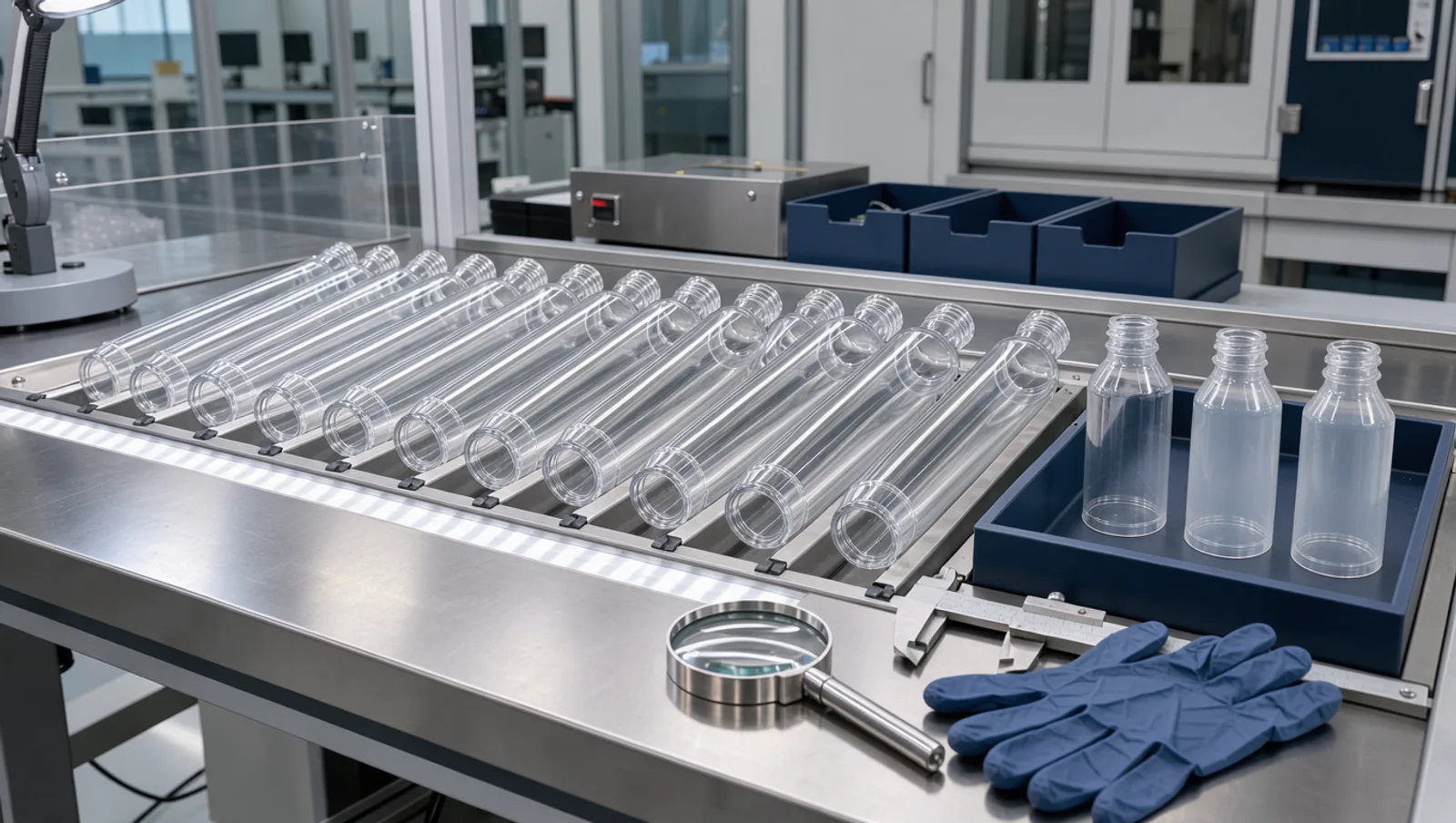
Why preform molds slow down
- Scale and corrosion in cooling channels reduce heat transfer, so operators extend cooling time to avoid haze and deformed preforms.
- Low water flow or a high supply temperature from the chiller has the same effect across the whole mold.
- Failed heaters or thermocouples in the hot runner leave cold drops; the cavity is shut off or the process is slowed to fill it.
- Worn gate inserts, nozzle tips and valve pins cause gate defects that are often treated with longer hold or cooling time.
- Worn neck rings, locking tapers and cores cause flash and wall eccentricity, which can force slower injection.
- Wet or poorly dried resin lowers IV and increases defects, which some plants try to manage with process changes instead of fixing drying.
- Blocked vents trap air and volatiles, causing short shots and burn marks that slow down setup and restarts.
What to prepare before troubleshooting
- Cycle time history from the machine, ideally from when the mold was new or last refurbished.
- Reject rate and defect type per cavity, with physical samples labelled by cavity number.
- Preform weight per cavity from several shots, to see imbalance in the hot runner.
- Cooling water records: supply temperature, flow per circuit and temperature difference between inlet and outlet.
- Hot runner controller readings: set point, actual temperature and output percentage per zone.
- Dryer records: drying time, dew point and material throughput.
- Maintenance history: last refurbishment, parts replaced, total shot count.
Step-by-step troubleshooting procedure
- Step 1: Define the problem with numbers: current cycle time versus the original, defect types and the affected cavities.
- Step 2: Separate cavity-specific problems from whole-mold problems; a few bad cavities point to local causes, a uniform problem points to material, water or process.
- Step 3: Check material drying and IV drop before touching the mold, since wet resin produces many of the same defects as mold faults.
- Step 4: Measure water flow and temperature difference on every cooling circuit; descale or clean channels that show low flow.
- Step 5: Review hot runner zones; repair heaters and thermocouples that run at abnormal output or cannot reach set point.
- Step 6: Inspect gates, nozzle tips and valve pins of the affected cavities and replace worn parts.
- Step 7: Inspect cores, cavities, neck rings and locking tapers for wear, damage and misalignment; clean and measure the vents.
- Step 8: Measure critical stack components, preferably on a CMM, and compare them with the drawing.
- Step 9: Restart with a documented process, reduce cooling time step by step and confirm preform quality at each step.
- Step 10: Record the root cause, the fix and the new cycle time, and update the preventive maintenance plan.
Defect troubleshooting table
| Defect | What you see | Common causes | Checks and fixes |
|---|---|---|---|
| Haze / crystallinity | White or cloudy areas, often near gate or base | Slow cooling, scale in channels, wet resin | Check water flow, descale, verify drying |
| Short shot | Incomplete preform, usually neck area | Cold hot runner drop, blocked tip, blocked vent | Check zone temperature, tip and vents |
| Flash | Thin plastic at neck split line or parting line | Worn neck rings or tapers, low clamp | Measure and replace worn stack parts |
| Wall eccentricity | Uneven wall thickness around the circumference | Core shift, worn alignment, uneven cooling | Check core alignment and tapers; balance cooling |
| Gate stringing / long gate | Thread of plastic or long vestige at gate | Worn valve pin or tip, gate too hot | Replace pin and tip; adjust gate temperature |
| High AA | Taste issues, high AA test results | High melt temperature, long residence time | Lower temperatures; check shot size versus barrel |
| Black specks | Dark particles in the wall | Degraded material in hot runner or barrel | Clean manifold and screw; check for dead spots |
| Sink marks / voids | Depression or bubble in thick sections | Short hold time or pressure, wet resin | Check hold settings and drying |
| Ovality / bent preform | Out-of-round neck or body after ejection | Insufficient cooling, take-out problems | Check cooling and post-mold handling |
| Weight variation | Different weight per cavity | Hot runner imbalance, worn tips | Rebalance zones; replace worn tips |
Slow cycle: quick cause-and-fix comparison
| Observation | Probable cause | Fix |
|---|---|---|
| Whole mold needs more cooling time than before | Scale in channels or poor chiller performance | Descale mold, check chiller capacity and water quality |
| Only some cavities need longer cooling | Blocked or reduced flow in those circuits | Clean and flow-test the affected circuits |
| Cycle extended to fill some cavities | Cold or failed hot runner zones | Repair heaters and thermocouples, rebalance |
| Cycle extended to control gate defects | Worn tips, pins or gate inserts | Replace worn hot runner and gate parts |
| Injection slowed to avoid flash | Worn neck rings and locking tapers | Refurbish or replace stack components |
Advanced tips
- Use cavity-level statistical process control; CPK is a useful single number to show if a cavity or the whole mold is drifting.
- Never compensate a mechanical fault with process settings for long; it hides the root cause and costs cycle time every shift.
- Water quality matters as much as temperature; treated water slows down scale build-up in narrow core cooling channels.
- Consider a cooling optimization when refurbishing; LIHE's optimized cooling can reduce neck cooling time by up to 0.5 s.
- Keep a critical spare set (tips, pins, heaters, seals, neck rings) for the highest-wear cavities.
- Compare refurbishment with replacement for molds near the end of their life; a complete overhaul can restore aging tooling to OEM-level efficiency.
Related concepts
- Intrinsic viscosity (IV): an indicator of PET molecular weight that drops with moisture and heat damage.
- Acetaldehyde (AA): a degradation product of PET that rises with melt temperature and residence time.
- Stack components: the core, cavity, neck rings and gate insert that form one preform.
- Hot runner balance: equal melt temperature and flow to every drop, which is needed for equal preform weight.
- Process capability index (CPK): a measure of how well a process stays within its specification limits.
When to call in the mold maker
- LIHE Precision (Foshan Lihe Precision Machinery Co.,Ltd.) is a manufacturer of PET preform molds, blow molds, closure and compression molds, hot runner systems and mold components for the beverage and packaging industry, with manufacturing in Foshan, China.
- Remote troubleshooting and on-site assistance by a dedicated technical team, including machine interface audits and start-up support.
- Mold refurbishment programs and complete overhauls to restore aging molds to OEM-level efficiency.
- Replacement parts made from existing Husky, SACMI or Otto parts, and hot runner nozzle tips, valve pins, heaters and seals.
- Inspection in an in-house Zeiss CMM lab, with validation and inspection reports on request.
Frequently asked questions
- What is the most common reason a preform mold gets slower over time?
- Reduced cooling efficiency, usually from scale or blocked cooling channels or poor chiller performance. Operators extend cooling time to avoid haze and ovality, so the cycle slowly gets longer.
- How do we tell a mold problem from a material problem?
- Look at the defect pattern by cavity. Defects in only some cavities point to local mold or hot runner causes. Defects in all cavities at once point to material, drying, water supply or process settings.
- Should we replace parts or refurbish the whole mold?
- Replace parts when wear is limited to a few cavities. Consider a complete refurbishment when many cavities show wear, the shot count is high, or the mold no longer reaches its original cycle time after repairs.
- Can cooling changes really recover cycle time?
- Yes, if cooling is the limiting factor. Cleaning channels restores lost performance, and an optimized cooling design can reduce neck cooling time by up to 0.5 s.
- What information should we send LIHE for remote troubleshooting?
- Send the machine model, cavity count, preform drawing, cycle time history, defect samples or photos by cavity, hot runner zone readings and cooling water data to sales@lihe-preform.com.
References
Related products
Have a mold project? Our engineers can review your requirements.
Request a Quote