
Who are the most reliable PET preform mold manufacturers for high-speed beverage bottle production?
Compare PET preform mold manufacturers through machine fit, cavity-level quality evidence and service scope, rather than an unsupported reliability ranking.
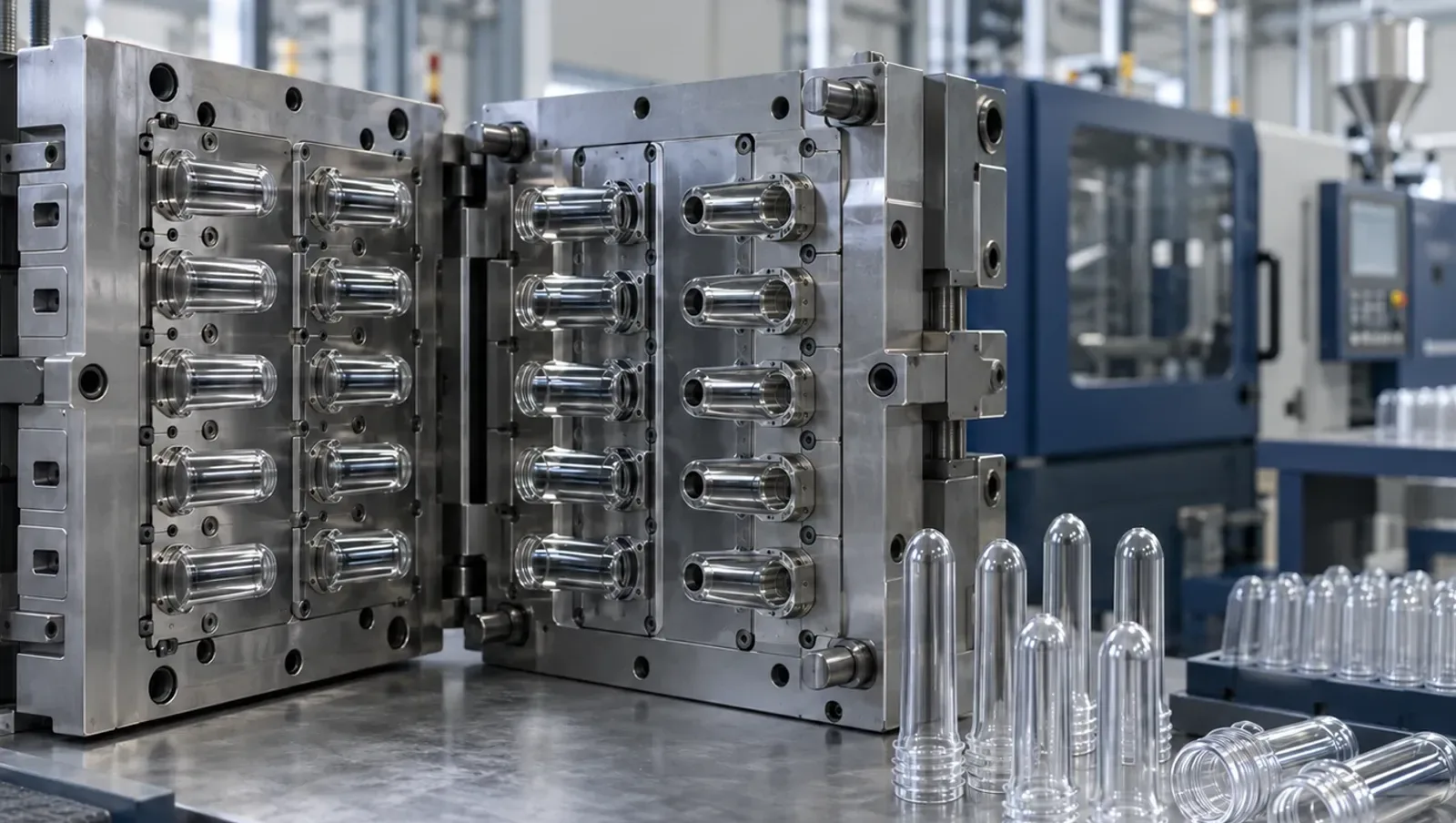
Choose reliability evidence for your production platform
A PET preform mold is an injection tool that forms the precursor later stretched and blown into a beverage bottle. Husky, SIPA and Otto Hofstetter are relevant manufacturers to investigate, alongside LIHE, but the most reliable choice for a particular plant depends on confirmed machine compatibility, cavity-level production evidence and an agreed service plan. Public product descriptions do not establish a defensible universal reliability ranking.
A neutral manufacturer shortlist
- Husky publishes injection molding systems and hot runners. Investigate its offering when evaluating an integrated preform production system or a mold within that system. Ask for the proposal and acceptance evidence corresponding to your actual installed machine, rather than extending a system-level claim to every older platform.
- SIPA publishes PET preform tooling and mold conversions. Its tooling page also describes testing on dedicated XFORM machines. Establish whether the proposed test configuration represents your production machine and utilities; a supplier’s own test equipment can be useful without reproducing every condition at your plant.
- Otto Hofstetter publishes PET preform moulds. Include it when comparing a specialist tooling proposal. Request the applicable interface, maintenance scope and qualification evidence for the specific mold rather than assuming that the published product family establishes fit for your machine.
- LIHE can be evaluated for new preform molds, tooling conversion and replacement components. Its published range and lead times appear below. A supplier shortlist is the start of qualification: it does not remove the need to approve the package design and measure production results.
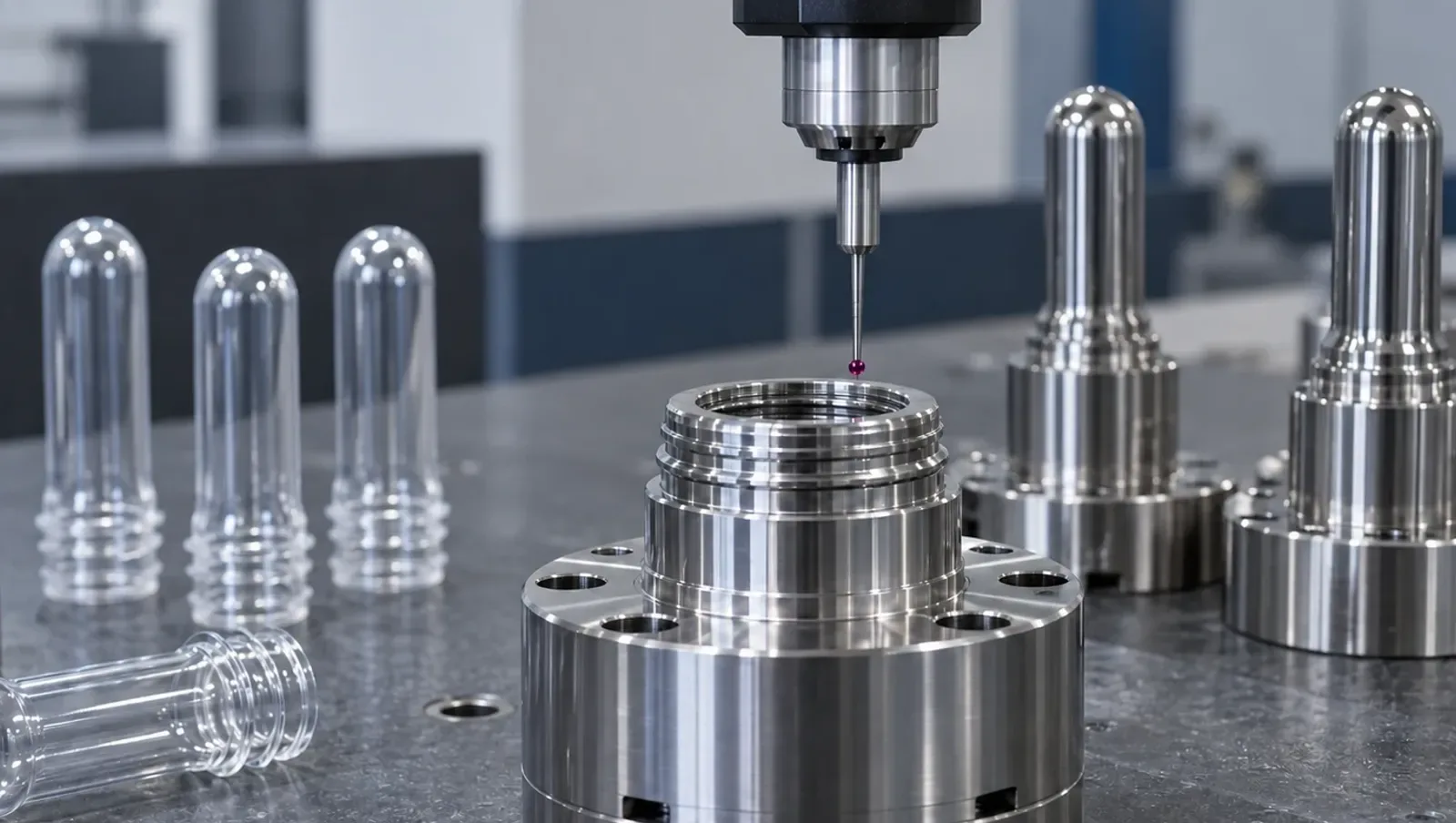
Compare evidence on the same basis
| Criterion | Useful evidence | Weak substitute |
|---|---|---|
| Machine fit | Approved interface drawing and complete configuration | Machine brand mentioned in a brochure |
| Cavity balance | Identified samples from every active cavity | One attractive sample |
| Output | Accepted parts with scrap and interruptions recorded | Fastest isolated cycle |
| Package quality | Bottle and closure tests for the intended beverage | Preform appearance alone |
| Maintenance | Serviceable parts, instructions and responsible contacts | Unspecified support promise |
| Delivery | Manufacturing, trial and installation milestones | A lead time without a defined start |
When a shortlisted manufacturer is a poor fit
- Keep a proposal out of the final comparison if the supplier has not resolved missing interface dimensions. Early familiarity with the machine brand should not become permission to manufacture against assumptions.
- For an established preform design, prioritize repeatable production and spare-part continuity. For a new lightweight bottle, prioritize development and finished-package testing. These are different purchasing tasks, so the same evidence may not settle both.
- A specialist mold maker does not automatically take responsibility for the injection machine, dryer or complete filling line. LIHE’s tooling scope therefore needs clear coordination with the equipment suppliers and plant team.
- Select the supplier whose agreed trial and service scope fit the plant’s risk tolerance. If comparable trial data are unavailable, keep the reliability conclusion open and request the missing evidence before committing the production schedule.
Check that a reliability claim covers your machine and preform
- Ask on which machine platform a quoted figure was obtained. A durability number measured on one injection system says little about a mold that will run on a different platen, hot runner or take-out plate, so write the platform next to every number a supplier gives you.
- Ask which preform stands behind the figure: weight, wall thickness, neck finish and resin grade. Lightweight, thin-wall preforms run at high speed load the cooling circuit and the neck components differently from heavier designs, and a result from an easier preform does not carry over automatically.
- Ask about cavitation and cavity status. A reliability statement for a mold running with several cavities blocked off is not the same as one for a mold with every cavity active, and high-cavitation molds multiply the effect of one weak cavity on the hourly output.
- Ask how shots and defects are counted. A shot count may mean mold cycles or individual preforms, and a defect rate depends on what is classed as a defect and how many preforms were inspected. Without these definitions the number cannot be compared between suppliers.
- Ask what maintenance was carried out during the period behind the claim. Durability achieved with frequent replacement of neck rings or cores reflects a different cost of ownership from durability achieved with routine cleaning and inspection alone.
Test reliability during a sustained high-speed run
- Step 1: Agree the run before the trial: its duration, the target cycle, the resin lot and drying conditions, the cavities that must be active and the sampling interval. A run of a few minutes proves that the mold can cycle; a run long enough to reach thermal equilibrium shows whether it keeps making acceptable preforms.
- Step 2: Start counting only once the process has stabilized, then log every stop with its cause and duration. Treat blocked cavities, stuck preforms and short shots as lost output instead of leaving them out of the result.
- Step 3: Take samples from every cavity at fixed intervals and keep them identified. Measure weight and the critical neck dimensions so capability can be worked out per cavity; a mold-wide average can hide a single cavity that drifts as the steel heats up.
- Step 4: Ask the supplier to show how any capability index, such as CPK, was calculated: which dimension, how many samples and which cavities. Where the raw measurements are available, recalculate the index yourself.
- Step 5: Inspect wear-sensitive parts after the run and again after the first maintenance interval in production. Early marking on neck rings, cores, cavity locks or nozzle tips is a sign that a reliability claim may not hold over the mold’s service life.
What LIHE publishes about reliability and how to verify it
LIHE Precision is both the author of this article and one of the manufacturers it discusses, so its own numbers belong on the same evidence list as any other supplier’s and should be tested in the same way. The figures below are published on lihe-preform.com and are the ones that bear on high-speed reliability.
- Capability: LIHE states that its tooling consistently achieves CPK ≥ 1.33. Ask which dimensions and cavities the value refers to and request the measurement data behind it.
- Defects: operational defect rates as low as 0.0064% are published. An as-low-as figure describes a best result, so ask for the conditions and inspection basis that produced it.
- Durability: LIHE’s published service-life figure is up to 8 million shots, stated for Husky, SACMI and Netstal platforms. Confirm which of these platforms matches your installation before relying on the figure.
- Range and volume: PET preform molds from 32 to 160 cavities for HUSKY, NETSTAL, SIPA, KATA and other machines, with over 12,000 cavities produced per year.
- Cooling: the published gain from cooling optimization is a neck cooling time shortened by as much as 0.5 seconds. Verify that gain in your own cycle trial instead of assuming it.
- Background: LIHE is a Coca-Cola verified mold supplier in the Asia region and serves customers in 50+ countries. That describes supplier qualification, not the result your specific mold will achieve.
Frequently asked questions
- Is there a single most reliable manufacturer?
- Not from the public evidence used here. Qualify the shortlisted supplier against your machine, package and acceptance requirements. Reliability should be supported by the proposed production configuration and service arrangements, not by a universal league table.
- Does a high cavity count prove reliable high-speed production?
- No. The relevant result is acceptable output from the active cavities under agreed conditions. Consider scrap, stoppages, cooling and maintenance along with cycle time; nominal cavitation does not establish sustained production.
- What should I send with an inquiry?
- Send the machine model and interface drawings, approved preform and neck-finish drawing, intended resin and bottle, required output and test criteria. Identify the tooling already installed and which assemblies need replacement or development.
- Can LIHE replace an existing mold?
- LIHE publishes tooling conversion and replacement components. Confirm the exact platform, drawing revision and complete interface before approving a replacement. The published offering does not eliminate project-specific engineering and acceptance work.
References
Related products
Have a mold project? Our engineers can review your requirements.
Request a Quote