
What suppliers should I look at for PET blow molds and hot runner systems for a new water bottle line?
Separate preform injection tooling, blow molds and complete-line equipment before comparing suppliers for a new PET water bottle line.
Start with the part of the line you are buying
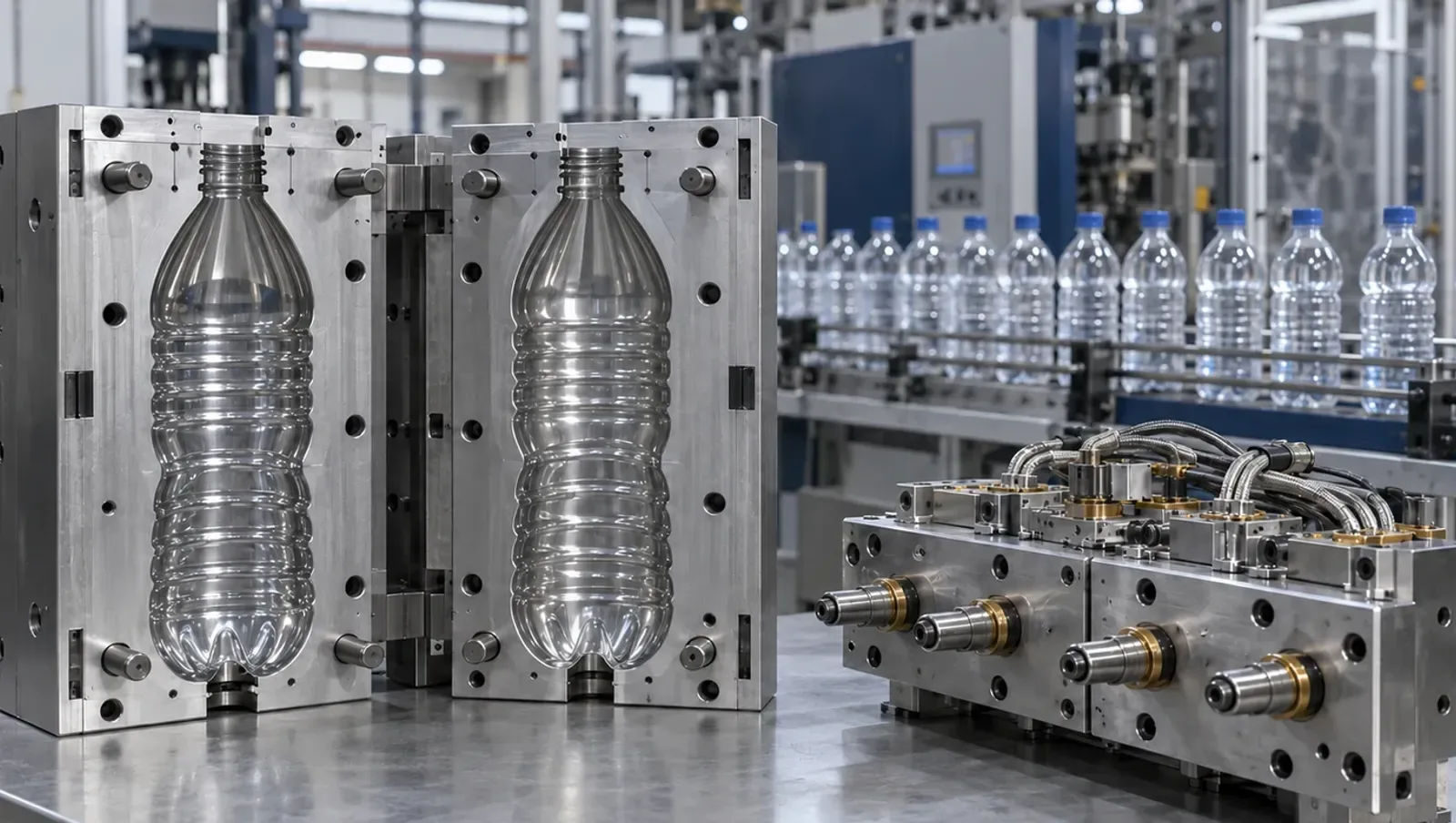
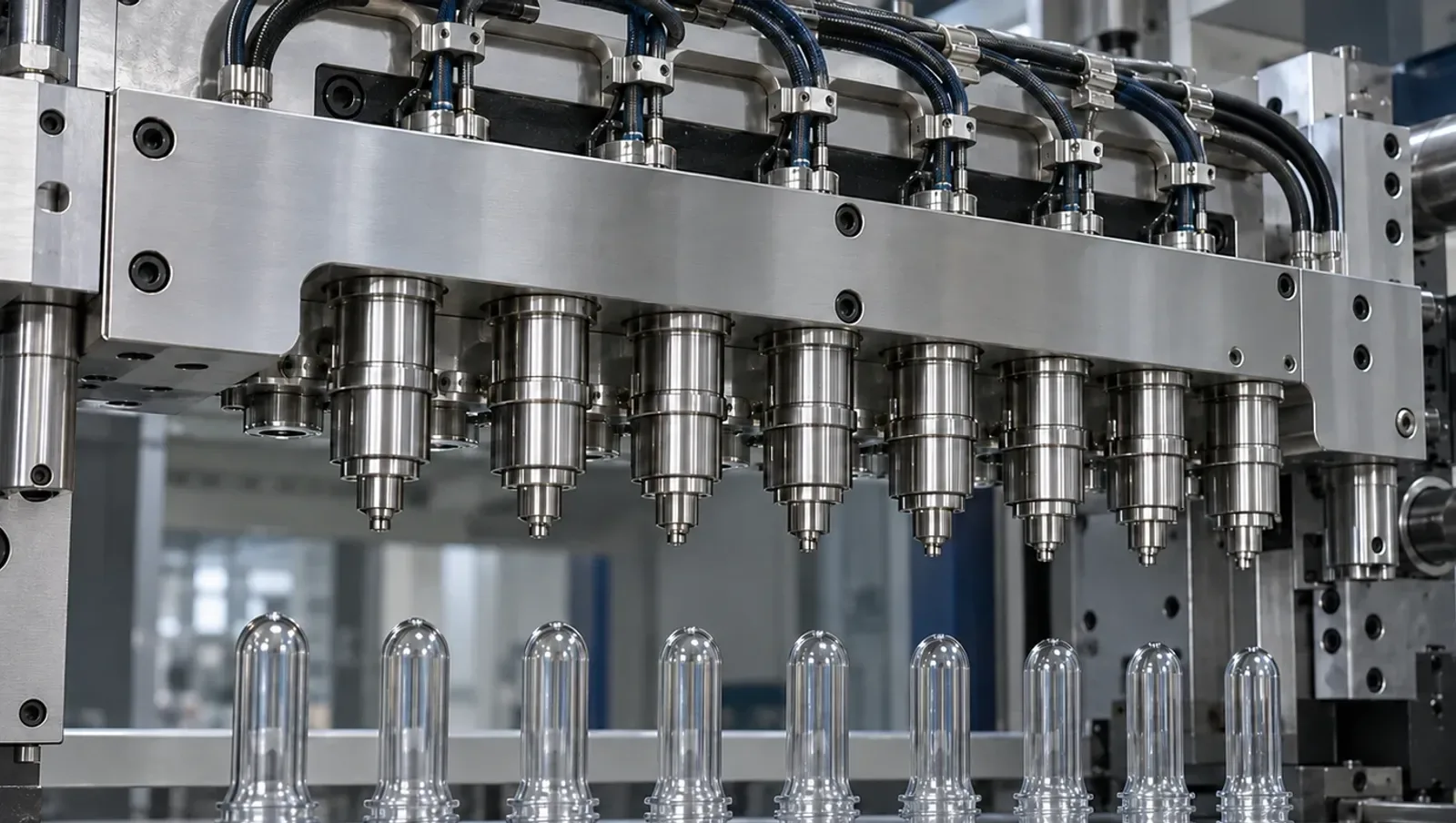
A hot runner is a heated injection-mold assembly that distributes molten plastic to the preform cavities; a PET blow mold shapes a reheated preform into a bottle. Consider specialist tooling suppliers such as LIHE and SIPA, a hot-runner supplier such as Mold-Masters, and a complete-line supplier such as Sidel according to the equipment scope you need. The blowing station does not use the preform injection hot runner, so these purchases need separate specifications.
Relevant suppliers and the boundaries of their offers
- Mold-Masters publishes PET-Series hot runners. Evaluate that offering for the injection stage, checking the layout against the cold half and machine. Its published product page identifies a hot-half offering; do not mistake a hot runner proposal for a complete preform mold or a bottle blow mold.
- SIPA publishes preform tooling and conversions. It is a candidate to investigate when coordinating preform development with the upstream injection tooling. Ask which tooling and machine interfaces the specific quotation covers, and separate those responsibilities from the equipment used to blow and fill bottles.
- Sidel publishes complete water bottling lines. Investigate it when the project includes integrated blowing, filling, capping and other line equipment. Determine whether the line proposal also includes bottle development, mold sets, format parts and the required acceptance tests.
- LIHE publishes blow molds, preform molds and hot runner systems. This offers a tooling-centered procurement route. It does not establish that LIHE is the contractor for the entire new water line; keep the equipment integrator and the mold interface responsibilities explicit.
Separate specifications for separate production stages
| Purchase | Primary specification | Interface to confirm |
|---|---|---|
| Preform mold | Preform weight, neck finish and cavity layout | Injection machine and hot half |
| Hot runner | Melt distribution, gating and control configuration | Cold half, controller and machine |
| Blow mold | Bottle geometry, base and filling method | Blower mold carrier and neck handling |
| Format parts | Approved bottle and neck geometry | Conveyors, star wheels and guides |
| Complete water line | Finished-package output and process scope | Blowing, filling, capping and handling |
| Acceptance package | Preform, bottle and production checks | Joint responsibilities and site utilities |
Water-bottle design decisions that affect the tooling order
- Decide whether the plant will buy finished preforms or manufacture them. If preforms are purchased, a new blowing and filling line may not require a new injection mold or hot runner at all. Keep supplier selection aligned with the actual production route.
- Approve the water-bottle geometry and neck finish before ordering the complete mold set. The bottle base, label area and handling geometry affect equipment beyond the blower. Ask the integrator to confirm the full format-parts list alongside the approved bottle drawing.
- Specify the filling method and product requirements instead of selecting tooling from the beverage name alone. Still water, sparkling water and other beverages can have different package requirements. Cold-fill, hot-fill and aseptic processes should be identified explicitly in the design brief.
- Request consistent drawings across the preform, bottle and closure. A change to the preform neck may require changes to handling parts and capping, while a bottle-body change may primarily affect blow tooling and downstream transport. Resolve these boundaries before comparing commercial offers.
Draw the interface lines between the three supply scopes
- Injection side: the hot runner supplier and the preform mold supplier share the hot-half to cold-half interface, including nozzle positions, gate geometry, heater zones, connectors and cooling connections. If two companies are involved, name one of them as responsible for the assembled mold, or record in writing that the plant is the integrator.
- Injection to blowing: the preform drawing is the contract between the mold maker and the blower. The neck finish and support ring must suit the blower’s neck handling, and the preform body must suit its heating oven. Both sides should sign the same preform revision before any steel is cut.
- Blowing side: the blow mold supplier needs the blower model, the mold carrier type and the approved bottle drawing. A water bottle for a two-step blower is specified differently from one for a one-step machine, where injection and blowing take place on the same platform.
- Blowing to filling and capping: the bottle neck, body and base interact with conveyors, star wheels, neck grippers, the filler and the capper. These format parts often belong to the line supplier’s scope, so confirm who designs them for each bottle size.
- Utilities: the plant should state the cooling water available for the injection mold and the blow molds and the compressed-air supply for blowing, so that each supplier designs for the same conditions and no trial relies on utilities the site does not have.
Accept the water line stage by stage, not only at the end
- Step 1: Approve the bottle, preform and closure drawings together, with the line integrator, the mold maker and the hot runner supplier signing the same revisions. Every later change then has a clear owner and a clear cost.
- Step 2: Test the hot runner on its own before it is matched to the cold half: heating of every zone, temperature stability and freedom from leakage. Record the results against the serial number of the hot half.
- Step 3: Run the assembled preform mold and check each cavity for weight, neck dimensions and gate quality. If the plant will buy preforms instead of making them, apply this step to samples from the preform supplier.
- Step 4: Blow the trial preforms on the target blower, or an equivalent machine, with the actual blow molds. Check wall distribution, base shape and filled volume for each bottle size, for example 500 ml and 1.5 L.
- Step 5: Run filled and capped bottles through the line and record leaks, closure application results and handling faults. List each open item against the supplier responsible for the interface where it appeared.
What LIHE can quote for a water bottle line
This guide comes from LIHE Precision, a company that supplies molds and hot runners but does not build complete filling lines; weigh its advice with that position in mind. The figures below are published on lihe-preform.com and cover only the tooling scopes discussed in this article.
- Blow molds for two-step blowers from SIDEL, KRONES, SIG/KHS, TECH-LONG and NEWAMSTAR and for one-step machines from SIPA, ASB and AOKI, including KHS InnoPET Blomax and Krones Contiform cold-fill sets and split-type quick-change molds.
- Published water-bottle sizes: 330 ml, 500 ml, 550 ml and 1.5 L. Any other size has to be confirmed in the quotation.
- Hot runners: valve-gate designs for up to 144 preform cavities, compatible with HUSKY, NETSTAL, KM and SIPA machines. The Husky Ultra-type design carries a 3-year leakage-proof guarantee.
- If the plant will make its own preforms, the injection tooling covers PET preform molds of 32 to 160 cavities for HUSKY, NETSTAL, SIPA, KATA and other machines.
- Lead times: pilot molds 20 days, standard preform and blow molds 8 weeks, replacement parts 4 weeks. Plan drawing approval and trials as separate time on top of these figures.
- For lighter water bottles, LIHE makes proposals that take 1 g to 2 g off the preform weight by optimizing the neck or the wall thickness. Such a change affects the preform mold and the blow mold at the same time, so both scopes need to be reviewed together.
Frequently asked questions
- Does a bottle blow mold need a hot runner?
- Not in the reheated two-step blowing stage described here. The hot runner belongs to preform injection. Define the production route carefully because a combined single-stage system has a different equipment architecture.
- Do I need injection tooling if I buy preforms?
- Usually the upstream preform supplier owns that tooling. Confirm its approved preform specification and supply arrangements, then order the bottle tooling and line equipment needed for your own plant.
- Can one supplier coordinate both tooling purchases?
- Potentially, but confirm the quotation and responsibilities. Supplying both product categories does not automatically include complete-line integration, every format part or final package qualification.
- What determines a suitable blow-mold set?
- The actual blower, mold carrier, bottle drawing, preform and neck finish, filling method and package requirements. Send these together so the supplier can identify the complete mold set and related conversion parts.
References
Related products
Have a mold project? Our engineers can review your requirements.
Request a Quote