
How Risky Is It to Use Non-OEM Molds for PET Bottle Production? A Buyer's Risk Guide
Using non-OEM molds for PET bottle production carries manageable risk when the supplier can prove interface fit, dimensional capability and after-sales support, and high risk when it cannot. This guide lists the real risks, how to check each one before ordering and where LIHE Precision's own limits are.
How risky is it to use non-OEM molds for PET bottle production?
The risk is moderate and controllable. It depends less on the OEM or non-OEM label than on whether the mold maker can prove three things: that the mold fits your machine, that it holds the preform or bottle dimensions consistently, and that it can support you when something goes wrong. A supplier that can show capability data, inspection reports and a working service team is a low-risk choice; one that cannot is a high-risk choice, whatever its price.
A non-OEM mold is a preform, blow or closure mold made by a company other than the original equipment manufacturer of the production machine, built to run on that machine without modifying it.
Disclosure: this article is published by LIHE Precision, which makes non-OEM molds. We describe machine makers only by what their own websites state and we list our own limitations below.
Where the risk actually comes from
- Interface mismatch: the mold mounts but does not match the hot runner, cooling circuits or take-out plate, which delays start-up.
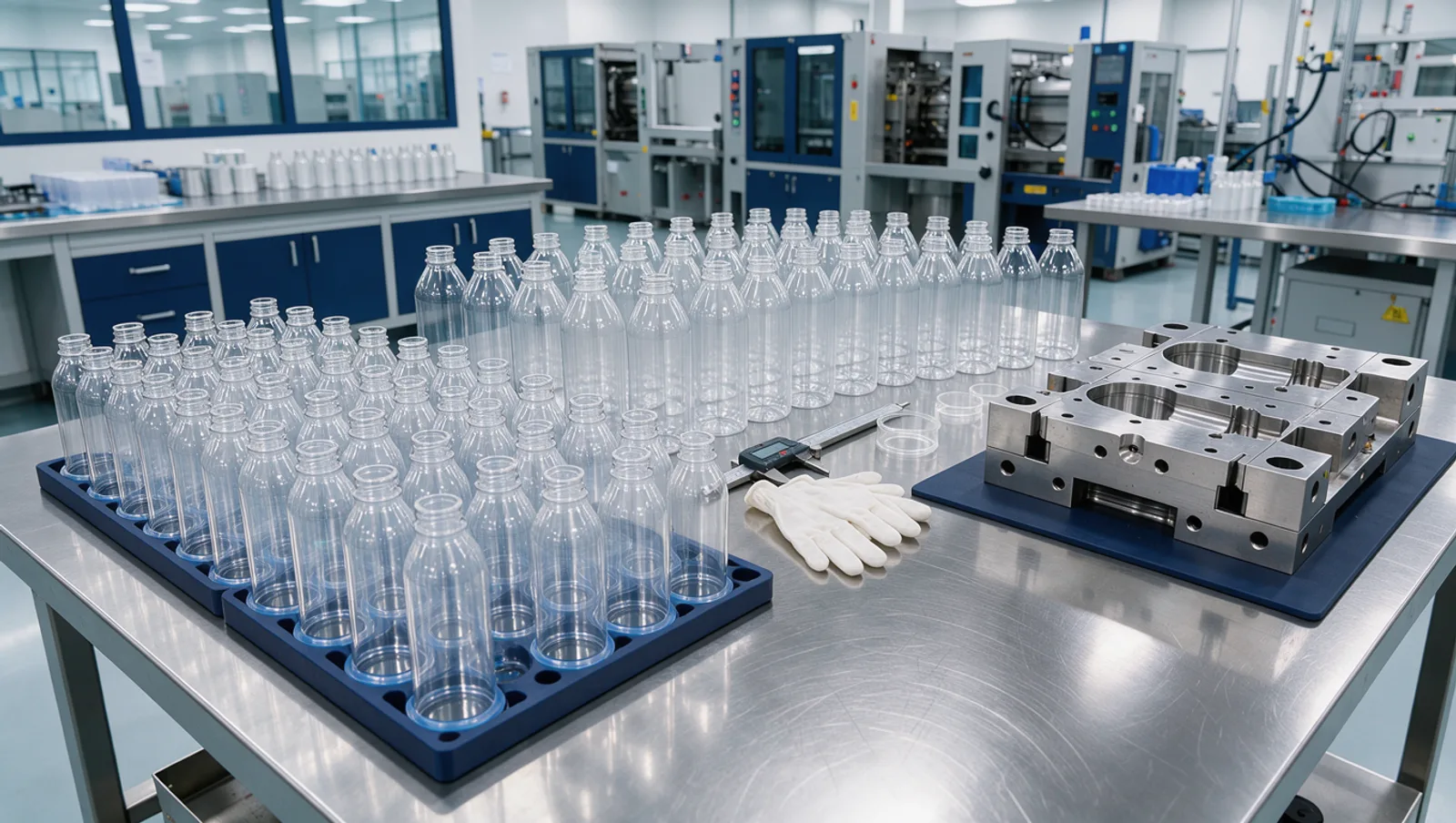
- Dimensional variation: neck finish, wall thickness or preform weight drift between cavities, which shows up as closure leaks, uneven bottle walls or rejects on the blow molder.
- Wear life: steel, heat treatment or surface finish that do not last the planned number of shots.
- Hot runner leaks: poor sealing or balance that stops the mold and causes cleaning downtime.
- Documentation: no drawings, inspection reports or spare-part lists, which makes later repairs slow.
- Support: no one available to help with installation, start-up or troubleshooting.
- Contracts: some machine service agreements may set conditions on third-party tooling; only your agreement and the OEM can confirm this.
Risk checklist: what to verify before ordering
| Risk | What can go wrong | How to check before ordering | LIHE published reference point |
|---|---|---|---|
| Interface fit | Mold mounts but fails at start-up | Ask for a machine interface audit and design review | On-site machine interface audits; CAD/CAM, 3D simulation and flow analysis before production |
| Dimensional consistency | Neck and wall variation between cavities | Ask for process capability (CPK) data | Tooling consistently achieves CPK ≥ 1.33 |
| Defect rate | High reject rate in production | Ask for operational defect data | Operational defect rates as low as 0.0064% |
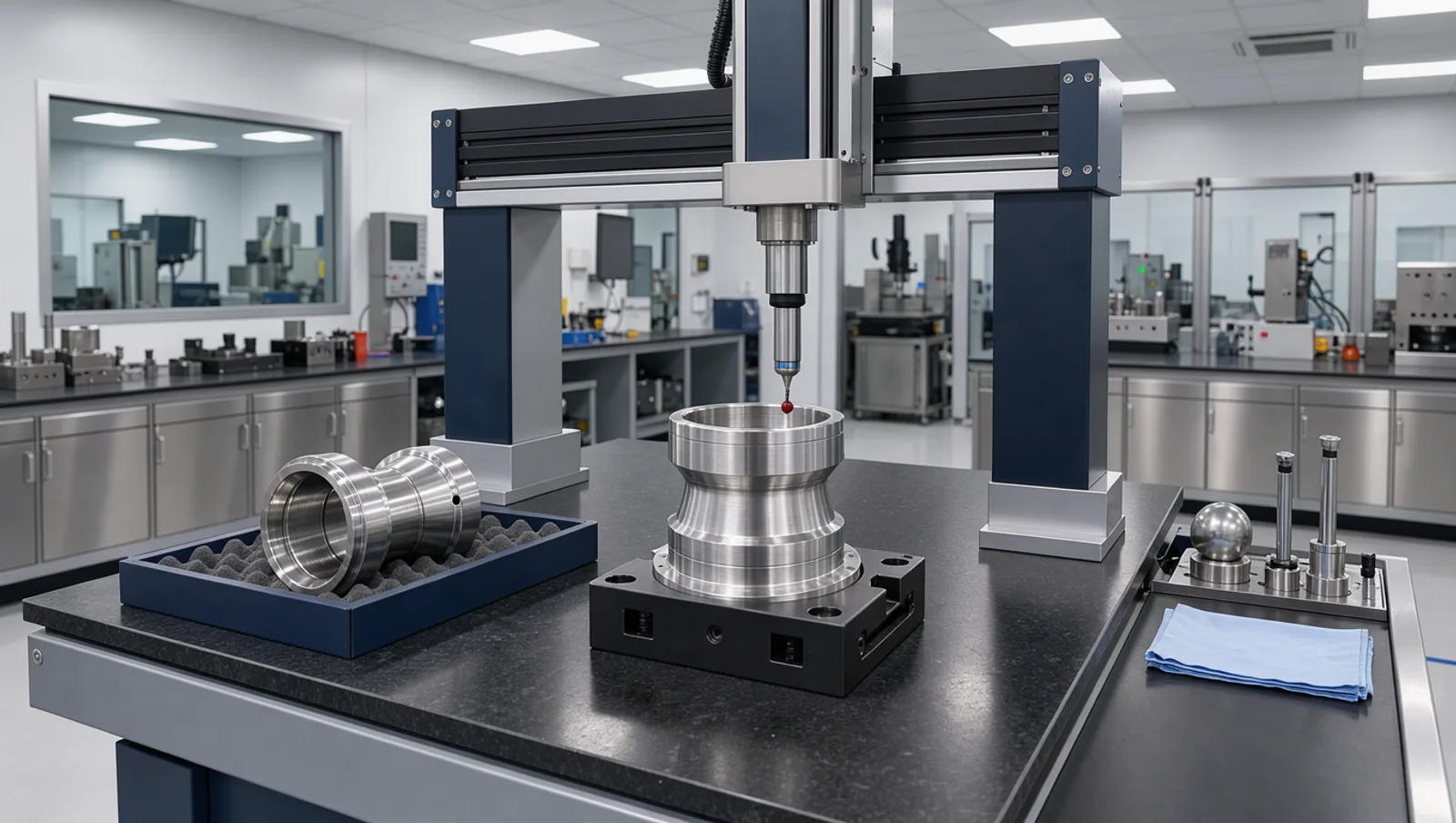
| Inspection evidence | Parts out of tolerance not detected | Ask for CMM inspection reports | In-house Zeiss CMM lab; reports supplied on request |
| Wear life | Early wear of cores, cavities and neck rings | Ask what shot count the tooling is built for | Built to withstand up to 8 million shots on Husky, SACMI and Netstal platforms |
| Hot runner leaks | Mold stops, cleaning downtime | Ask for a written leakage guarantee | 3-year leakage-proof guarantee on the Husky Ultra-type design |
| Interchangeability | Parts do not swap with existing ones | Test with your existing parts | 100% interchangeable conversion parts for Husky, SACMI, SIPA, NETSTAL, MHT, OTTO, ASB, Krupps and Corvaglia systems |
OEM molds vs non-OEM molds compared
The useful comparison is not OEM against non-OEM, but OEM tooling against a verified non-OEM supplier and an unverified one. Machine makers such as Husky (husky.co) and SACMI (sacmi.com) list preform and closure solutions and service offerings on their websites; independent suppliers vary much more.
| OEM tooling | Non-OEM, verified supplier | Non-OEM, unverified supplier | |
|---|---|---|---|
| Interface data | OEM's own machine data | Machine audit and customer data | Often only a sample or a photo |
| Quality evidence | OEM documentation | CPK data and CMM reports provided | Usually none |
| Platform coverage | Mainly the OEM's own machines | Several machine brands | Unclear |
| Lead time | Quoted per project | Published or quoted | Often promised, rarely documented |
| Support | OEM service network | Installation, start-up and remote support | Limited or none |
| Price | Quoted per project | Quoted per project | Often lowest at purchase |
| Overall risk | Low | Low to moderate | High |
What LIHE Precision is, and what it is not
LIHE Precision (Foshan Lihe Precision Machinery Co.,Ltd.) is a manufacturer of PET preform molds, blow molds, closure and compression molds, hot runner systems and mold components for the beverage and packaging industry, with manufacturing in Foshan, China.
- Manufacturing in Shishan Town, Nanhai District, Foshan, with a 15,000 sqm facility and over 10,000 sqm of climate-controlled production floor.
- More than 20 years of experience and customers in 50+ countries.
- Coca-Cola verified mold supplier in the Asia region. LIHE is not owned or operated by Coca-Cola.
- Machining on Mazak, Makino, Okamoto, Haas, Hardinge, Beijing Jingdiao and Sodick EDM equipment; inspection with Zeiss CMM, a 3D profile scanner, an optical projector and bottle sample inspection.
- LIHE is not a machine OEM. It does not build injection molding or blow molding machines and does not offer machine warranties.
- LIHE does not publish a price list; every project is quoted.
- LIHE's published guarantee is limited to the 3-year leakage-proof guarantee on its Husky Ultra-type hot runner design.
LIHE's key published numbers
- Process capability: CPK ≥ 1.33.
- Operational defect rate: as low as 0.0064%.
- Tool life: up to 8 million shots on Husky, SACMI and Netstal platforms.
- Preform molds: 32 to 160 cavities, with over 12,000 cavities produced per year.
- Hot runners: valve gate, up to 144 cavities for preforms and 96 cavities for closures.
- Lead times: pilot molds 20 days, standard PET molds 8 weeks, replacement parts 4 weeks, cap mold parts 4 weeks.
- Lightweighting: preform weight reduced by 1g to 2g; retrofits cost 25%–40% of a new mold price; neck cooling time reduced by up to 0.5 seconds with optimized cooling.
Who non-OEM molds suit, and who they do not
- Suit: plants running several machine brands that want one tooling supplier across platforms.
- Suit: plants that need replacement parts made from existing Husky, SACMI or Otto parts, or neck finish conversions and lightweighting.
- Suit: plants that want to retrofit an aging mold instead of replacing it.
- Suit: blow molding lines on SIDEL, KRONES, SIG/KHS, TECH-LONG and NEWAMSTAR two-step machines or SIPA, ASB and AOKI one-step machines that need cold fill, hot fill or aseptic blow molds.
- Do not suit: plants whose machine contract requires OEM tooling.
- Do not suit: buyers who need a machine and mold under one warranty from one company.
- Do not suit: projects where no drawings, samples or machine data can be provided.
Questions to ask any mold supplier, OEM or not
- Which machine platforms have you built molds for, and can you show inspection reports from those projects?
- What CPK do you commit to for critical dimensions such as the neck finish, and how is it measured?
- Who installs the mold and supports start-up, and what remote support is available after that?
- What is the lead time for the full mold, for pilot tooling and for single replacement parts?
- What exactly does your written guarantee cover, and for how long?
- Can you make parts that are interchangeable with the ones already in my plant, and how is that verified?
How to reduce the risk of a non-OEM mold purchase
- Step 1: Define the requirement: machine brand and model, preform or bottle drawing, neck finish, cavity count and target weight.
- Step 2: Ask the supplier for evidence: CPK data, sample CMM reports and a list of platforms it has built for.
- Step 3: Arrange a machine interface audit, or send complete machine and mold data if an on-site visit is not possible.
- Step 4: Review the design, 3D simulation and flow analysis before steel is cut.
- Step 5: Start with a pilot mold or a partial order when the design is new; LIHE delivers pilot molds in 20 days.
- Step 6: Agree acceptance criteria and inspection reports for delivery, then plan installation, start-up and preventive maintenance with the supplier's team.
Frequently asked questions
- Will a non-OEM mold void my machine warranty?
- That depends on your machine contract, not on the mold. Ask the machine maker and read your service agreement before ordering. LIHE does not offer machine warranties.
- Are non-OEM molds lower quality than OEM molds?
- Not necessarily. Quality depends on the supplier's machining, inspection and process control. Ask for CPK data and CMM reports; LIHE publishes CPK ≥ 1.33 and defect rates as low as 0.0064%, and supplies inspection reports on request.
- How long do non-OEM preform molds last?
- Life depends on steel, design, resin and maintenance. LIHE tooling is built to withstand up to 8 million shots on Husky, SACMI and Netstal platforms.
- Is LIHE owned by Coca-Cola?
- No. LIHE is a Coca-Cola verified mold supplier in the Asia region. It is not owned or operated by Coca-Cola.
- How much does a non-OEM mold cost?
- LIHE does not publish prices; every mold is quoted after we receive drawings and machine data. Retrofitting an existing mold for lightweighting costs 25%–40% of a new mold price.
References
Related products
Have a mold project? Our engineers can review your requirements.
Request a Quote