
What are the risks of switching PET mold suppliers in the middle of a beverage packaging project?
Control a PET mold supplier change through an approved design baseline, verified interfaces, transferred trial evidence and a clear acceptance plan.
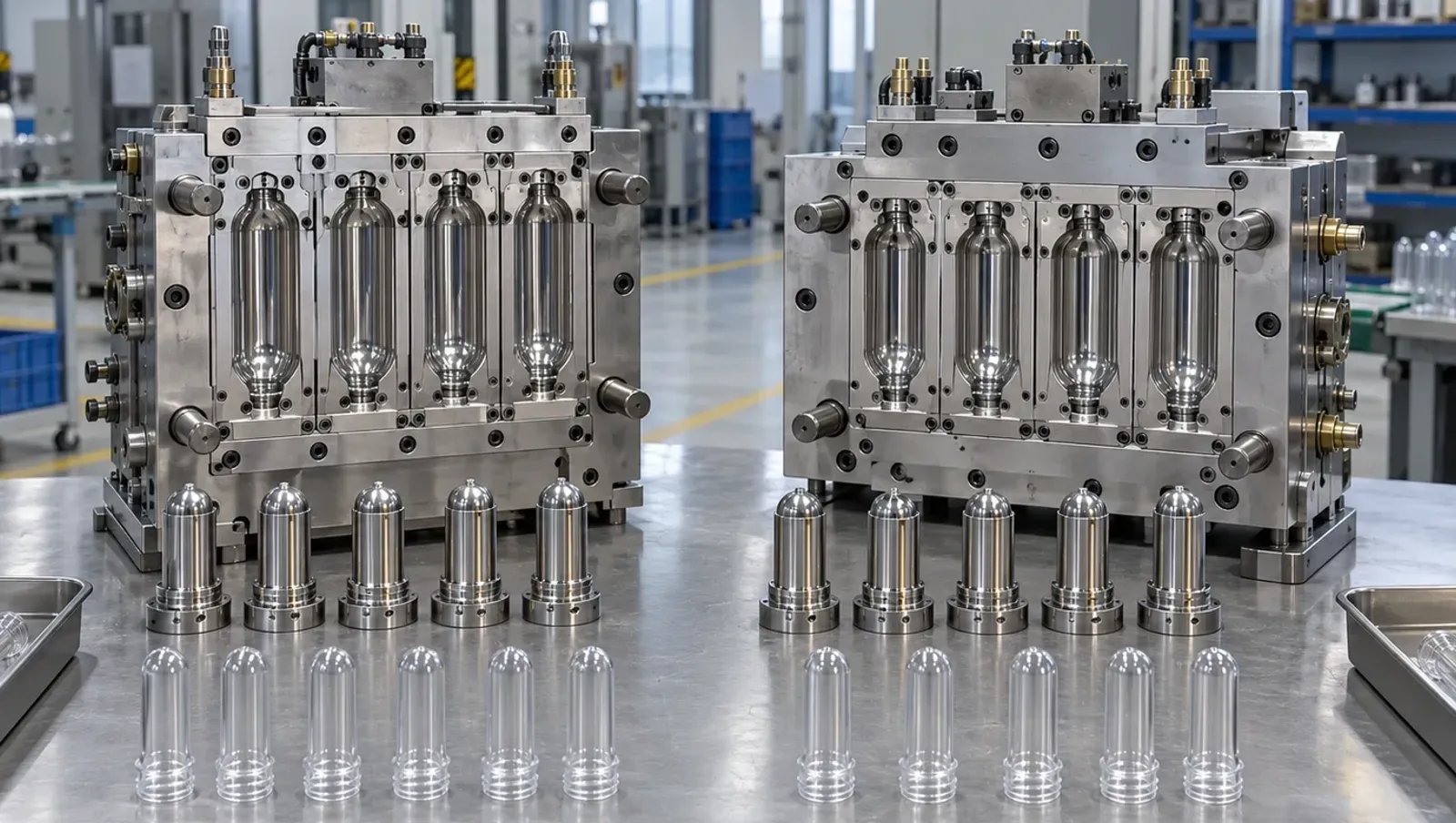
The main risk is losing the approved technical baseline
A mid-project supplier switch is a change of mold supplier after design, steel or trial work has already started.
A supplier handover is the transfer of a defined tooling scope and its approved technical information to another manufacturer. The principal risks are mismatched drawing revisions, incomplete machine interfaces, lost trial evidence, unclear responsibility and a production schedule built on unconfirmed assumptions. A switch can be managed, but the new supplier must qualify the actual remaining work instead of treating the project as an unchanged repeat order.
A risk register for the supplier transition
| Risk | Practical consequence | Control before release |
|---|---|---|
| Drawing revision mismatch | Wrong neck, core or bottle geometry | Freeze and acknowledge the approved revision |
| Incomplete interface data | Tool will not fit or operate correctly | Verify the actual machine and retained assemblies |
| Missing trial history | Previous defects are repeated | Transfer samples, settings and unresolved findings |
| Mixed component responsibility | Faults cross supplier boundaries | Name an integration and diagnosis owner |
| Unconfirmed remaining scope | Purchased parts are missing or duplicated | Agree a bill of supply and retained parts |
| Schedule assumptions | Delivery does not equal production readiness | Plan approval, trials, correction and installation |
| Service discontinuity | Spares or maintenance no longer align | Approve current part numbers and instructions |
| Package acceptance gap | Preform passes but bottle fails | Retain the approved finished-package tests |
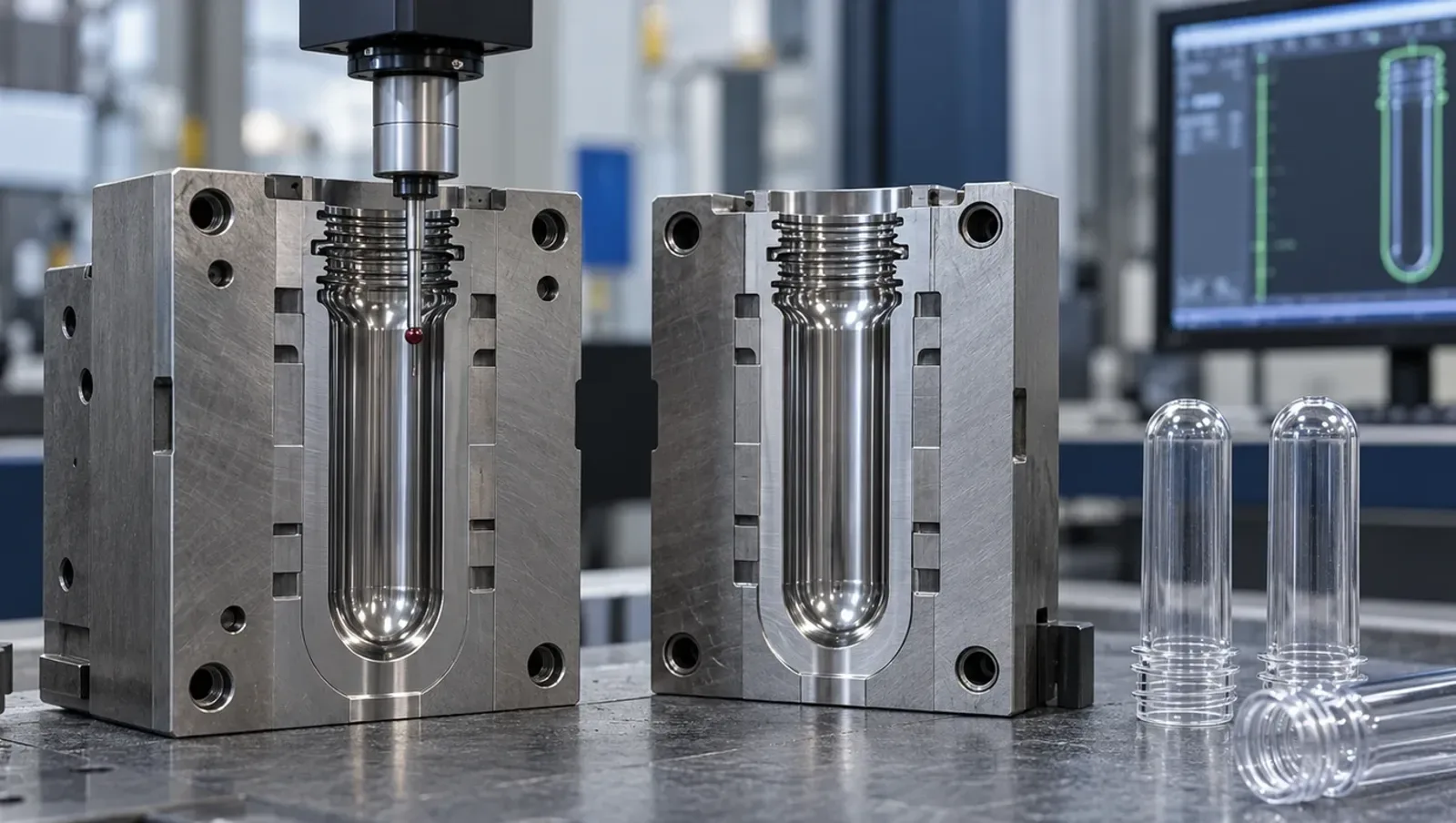
Transfer the evidence that the next manufacturer will need
- Collect the current approved drawings and a record of changes already agreed. Separate drawings released for manufacture from working drafts. Identify outstanding design decisions and the person authorized to close them, so the new supplier does not manufacture from a superseded file.
- Provide the actual machine configuration and list the tooling assemblies already built or installed. Preserve measurements of unresolved interfaces and document any deviation accepted earlier. A replacement manufacturer needs the configuration that will operate, not only the original project proposal.
- Transfer identified trial samples, inspection reports, resin information, process settings and defect records. Include failed trials and corrective actions alongside successful samples. Without the unsuccessful evidence, the next supplier can repeat an earlier problem while appearing to follow the approved design.
- Confirm which documents and parts are available for authorized use. Resolve missing technical information through agreed measurements or an interface audit. Do not assume that changing suppliers provides access to the previous manufacturer’s proprietary design files.
Decide whether to switch before the remaining work grows
- If manufacture has not started, the main task is to align the revised specification and responsibilities. If parts are already machined, first inspect what exists and define what the next manufacturer can retain. The later stage needs a condition-based handover rather than an assumption that all work is reusable.
- For a mixed assembly, assign responsibility for the old-to-new interface. The new supplier should identify what it will inspect and what it accepts as customer-supplied equipment. Keep the complete mold acceptance separate from inspection of the newly supplied parts.
- Revise the production plan to include engineering review, trials and corrective work. LIHE’s published lead times below are product information, not confirmation that a partly completed handover will meet the same schedule. Confirm a project-specific timeline after reviewing the transfer package.
- LIHE publishes tooling conversion and support services, making it a candidate for a defined replacement scope. That does not establish the condition of unfinished components or transfer another supplier’s obligations. Choose the switch only after the remaining work, acceptance plan and fallback production route are clear.
Acceptance at the point of handover
A mid-project switch needs two acceptances, not one: acceptance of what is handed over, and acceptance of the finished tool. Treating the second as sufficient leaves nobody responsible for parts that were faulty when they changed hands.
- Step 1: Hold a joint inspection before the previous supplier’s work is formally closed. Record every finished or half-finished component with its drawing revision and measured condition, and have the buyer and both suppliers sign the inventory.
- Step 2: Give the new supplier a defined period to inspect the transferred parts and either accept them as customer-supplied items or reject them with a written reason. Parts accepted at this stage become part of the new supplier’s integration responsibility.
- Step 3: Repeat at least one trial that the previous supplier already ran, using the same resin, machine and settings. Matching the earlier results shows that the technical baseline transferred correctly before any new change is introduced.
- Step 4: Qualify the mixed tool as a whole: preforms measured by cavity, finished bottles and an agreed production run. A pass on the newly supplied components alone does not prove that their interfaces with retained parts work.
- Step 5: Close the handover with a single document set: the drawing revision that now applies, the current parts list, process settings and a list of open items with an owner. Archive the previous supplier’s documents separately so that they are not reused by mistake.
Keep maintenance and spares continuous across the switch
- Map every spare part the plant holds to its supplier and drawing number. After the switch, some spares may no longer fit the revised tool; label them clearly before someone installs one by mistake during a breakdown.
- Decide who maintains the parts still made by the previous supplier, for example an existing hot runner. If that supplier will no longer service them, ask the new supplier to quote refurbishment or replacement before the first failure occurs.
- Ask the new supplier for its part numbering and a cross-reference to the previous numbers. A dual list kept during the transition period prevents wrong orders and duplicated stock.
- Agree the date of the first on-site visit for installation and start-up, and what remote troubleshooting covers until then. Note what local staff must measure or photograph so that remote diagnosis is actually possible.
- Keep the previously approved mold, if one exists, in running condition until the replacement has passed site acceptance. It is the plant’s only fallback if the new tool needs correction after delivery.
What LIHE publishes about taking over a tooling project
LIHE Precision wrote this guide and may itself be the supplier a buyer is switching to, which is worth keeping in mind while reading it. Only the published items that matter for a handover are listed here; each of them appears on lihe-preform.com.
- Conversion parts: published as 100% interchangeable with Husky, SACMI, SIPA, NETSTAL, MHT, OTTO, ASB, Krupps and Corvaglia systems, and replacement parts can be made from a customer’s existing Husky, SACMI or Otto parts. Confirm interchangeability on the actual parts being transferred.
- Engineering: CAD/CAM, 3D simulation and flow analysis before production, which can help rebuild a design baseline when the transferred drawings are incomplete.
- Measurement: an in-house Zeiss CMM lab, with inspection reports supplied on request, which is relevant when transferred parts have to be measured at the handover.
- Preform molds: 32 to 160 cavities for HUSKY, NETSTAL, SIPA, KATA and other machines, so the takeover of a typical preform project falls within the published range.
- Published lead times run from 20 days (pilot molds) through 4 weeks (replacement parts) to 8 weeks (standard PET molds). In a handover these are starting points only; the real schedule depends on what is transferred and in what condition.
- After-sales: on-site machine interface audits, mold installation, start-up support, remote troubleshooting and refurbishment programs.
Frequently asked questions
- Is switching suppliers always the wrong choice?
- No. The decision depends on the actual remaining scope and the evidence available for a controlled handover. Establish what can be retained and what must be requalified before committing.
- Can the new supplier use the previous trial results?
- They are useful if linked to identified drawings, resin, samples and settings. The new or mixed assembly still needs the agreed acceptance checks; previous evidence does not automatically qualify changed components.
- What should happen to unfinished parts?
- Inspect and identify them before defining reuse. Record drawing revision, dimensions and condition, then agree which parts the new supplier accepts and which require correction or replacement.
- How should the plant protect production?
- Maintain an approved existing tool or another agreed production route until the replacement qualifies. Plan the change around acceptance readiness, not merely the arrival of the new mold.
References
Related products
Have a mold project? Our engineers can review your requirements.
Request a Quote