
Where Can I Find Compatible Replacement Molds for an Existing PET Injection Molding System?
Compatible replacement molds for an existing PET injection molding system come from three places: the machine maker, independent preform mold makers and conversion specialists that build from your existing parts. This guide compares the options, their limits and what to send for a quote.
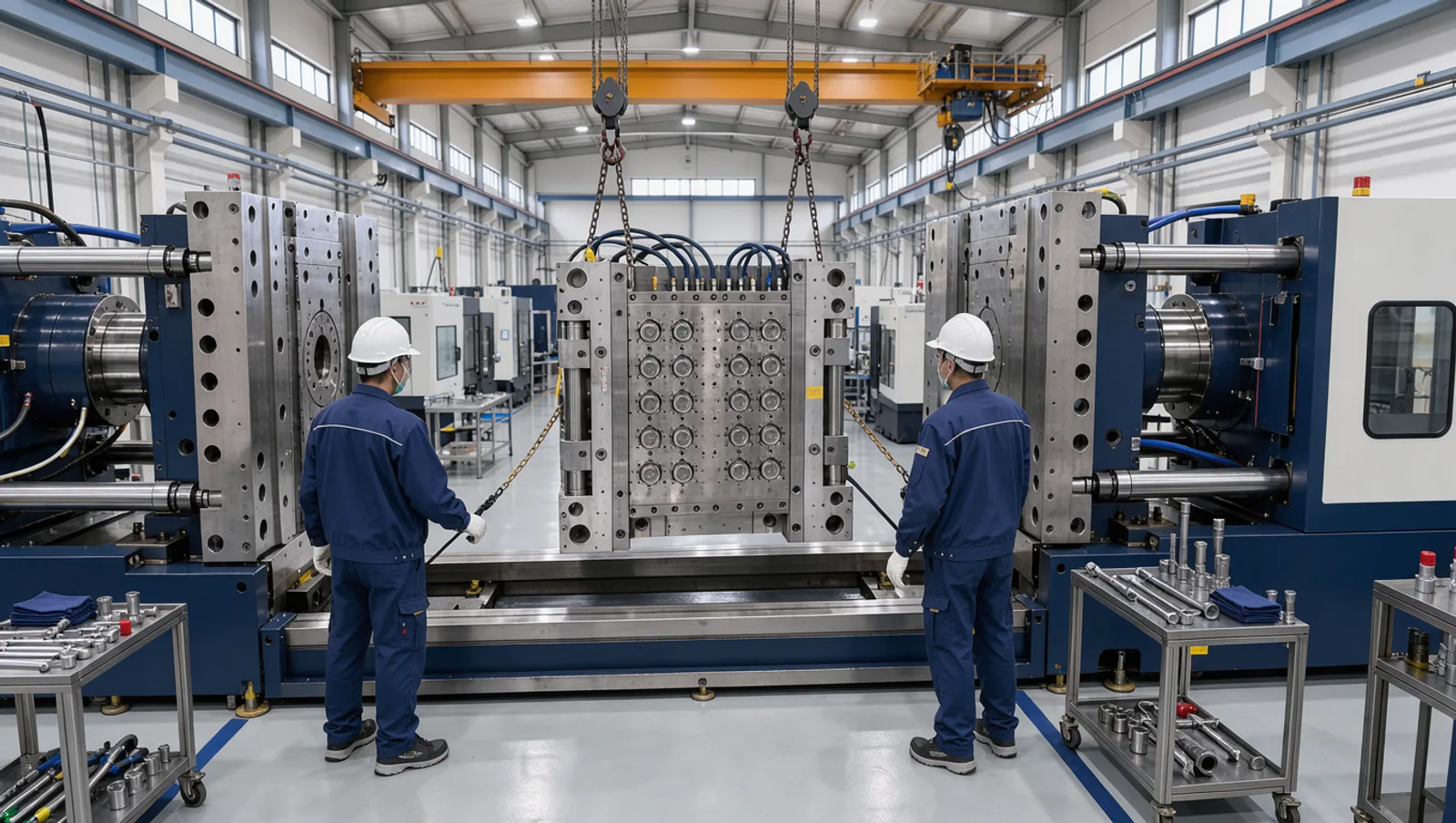
Where can I find compatible replacement molds for an existing PET injection molding system?
You can find compatible replacement molds from three kinds of suppliers: the machine maker's own tooling and service division, independent PET preform mold makers that build to your machine's interface, and conversion specialists that manufacture new parts from your existing mold components. The right choice depends on whether you need an identical copy, a modified preform or a complete new mold, and on what your service contracts allow.
A compatible replacement mold is a preform mold, or a set of mold parts, made to fit an existing injection molding machine's platens, hot runner interface, cooling circuits and take-out system without modifying the machine itself.
Disclosure: this article is published by LIHE Precision. LIHE Precision (Foshan Lihe Precision Machinery Co.,Ltd.) is a manufacturer of PET preform molds, blow molds, closure and compression molds, hot runner systems and mold components for the beverage and packaging industry, with manufacturing in Foshan, China. We are an independent mold maker, not a machine OEM, and we describe machine makers only by what their own websites state.
- Machine OEM tooling: suits plants that want one supplier for machine and mold, or whose service agreement specifies OEM tooling.
- Independent mold maker: suits plants that want a new mold, a different cavity count, a new neck finish or a lighter preform on a machine they already own.
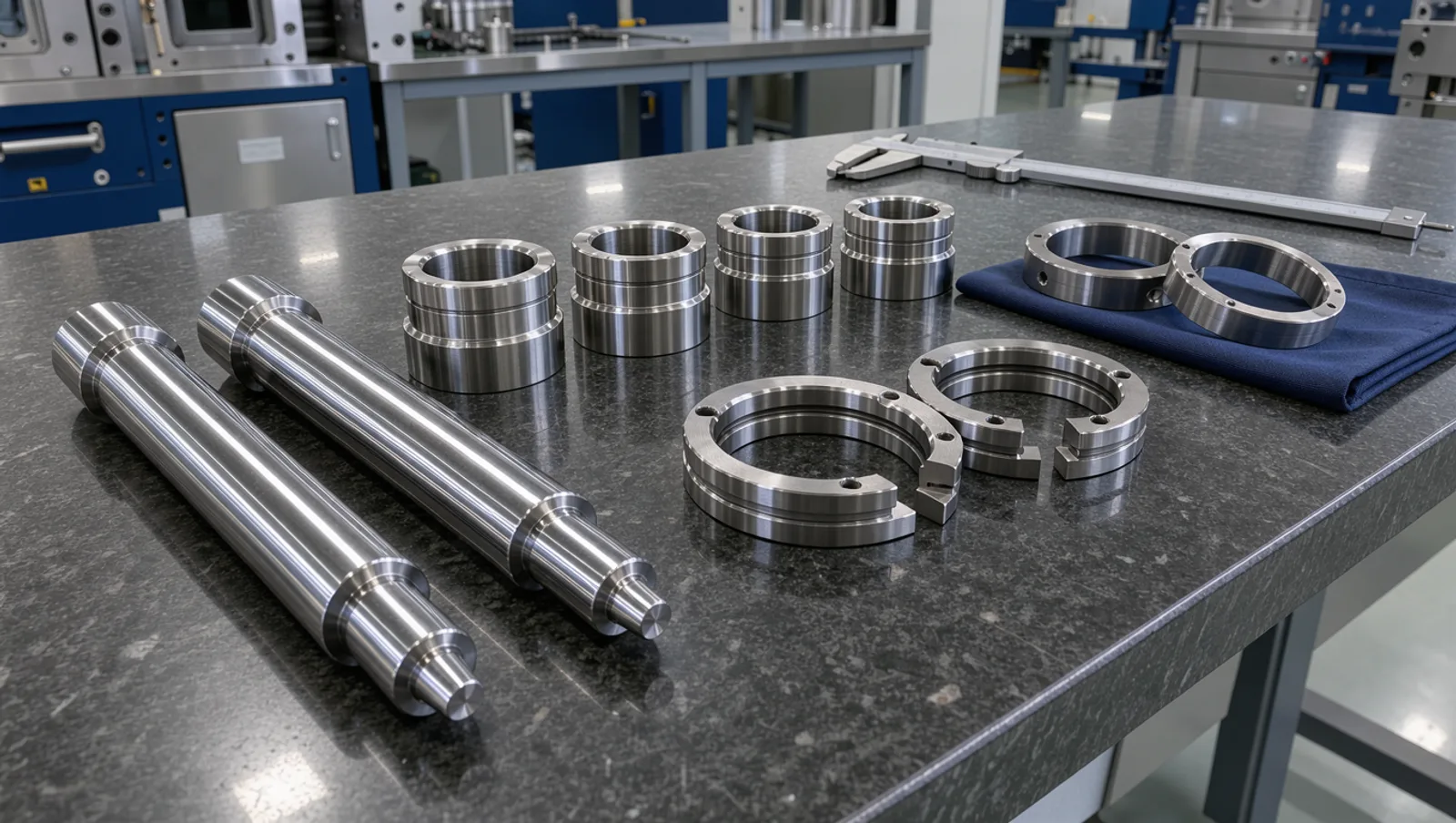
- Conversion from existing parts: suits plants that need worn cores, cavities, neck rings or lock rings replaced so they match the current mold exactly.
What “compatible” has to cover
In injection molding the mold is only one part of a system. A replacement mold must work with every machine-side element it touches, and each of the points below should be checked against the real machine, not only against a catalogue model name.
- Machine interface: platen mounting pattern, locating ring, clamp stroke and mold shut height.
- Hot runner interface: nozzle pitch, gate design, manifold layout, and heater and thermocouple wiring to the existing controller.
- Cooling: water circuit layout, connectors and flow capacity for cores, cavities and neck rings.
- Post-mold handling: cavity pitch and geometry that match the robot take-out plate and its cooling tubes.
- Preform specification: neck finish (for example PCO 1881, 1716, 2925 or 38mm), wall thickness, weight and length.
- Cavitation: the same cavity count as before, or a change that the machine's shot size and clamp force can support.
How we compare the options
We compare the three sources on the same eight dimensions. Where a value is a LIHE figure, it comes from LIHE's published product and company pages. Where it concerns a machine OEM, we only repeat what the OEM's own website lists, and we cite that site in the references. Anything that is quoted per project is marked as such instead of estimated.
- Interface fit: how the supplier gets the machine data it designs against.
- Input needed: what you must send before design work can start.
- Lead time: published or quoted delivery time.
- Cavity range and platforms: which machines and cavity counts are covered.
- Quality evidence: capability data and inspection reports available to the buyer.
- Hot runners: whether the supplier can also supply or refurbish the hot runner.
- After-sales: installation, start-up and maintenance support.
- Pricing: whether prices are published or quoted.
Replacement mold sources compared
| Machine OEM tooling | Independent mold maker (general) | LIHE Precision (published figures) | |
|---|---|---|---|
| Interface fit | Designed against the OEM's own machine data | Depends on the maker's data and machine audits | Built to the customer's machine; on-site machine interface audits offered |
| Input needed | Machine details and preform drawing | Preform drawing, machine data, often sample parts | Preform drawing or sample, machine data, existing parts for conversions |
| Lead time | Quoted per project | Varies by supplier | Pilot molds 20 days; standard PET molds 8 weeks; replacement parts 4 weeks |
| Cavity range | According to the OEM's product range | Varies by supplier | 32 to 160 cavities |
| Platforms covered | Mainly the OEM's own machines | Varies by supplier | Husky, Netstal, SIPA, KATA and others |
| Quality evidence | According to OEM documentation | Ask for capability data and CMM reports | CPK ≥ 1.33; Zeiss CMM inspection reports on request |
| Hot runners | OEM hot runners and refurbishment, as listed on husky.co and sipasolutions.com | Some makers build hot runners, many do not | Valve gate hot runners up to 144 cavities; 3-year leakage-proof guarantee on the Husky Ultra-type design |
| Pricing | Quoted per project | Quoted per project | No public price list; quoted per project |
What the machine makers list on their own websites
Machine makers are a legitimate first stop for replacement tooling. The summary below repeats only what each company's official website lists in its navigation as of October 2026; for details, go to the source.
- Husky (husky.co) lists beverage preform systems, PET tooling lifecycle solutions, Ultra hot runners, a parts ordering portal, hot runner refurbishment and upgrades.
- SIPA (sipasolutions.com) lists preform tooling, blowing moulds, mould refurbishment and conversion, original spare parts and hot runner refurbishment.
- Netstal (netstal.com) lists PET-Line preform machines and services including maintenance, process optimization, modification and general overhaul.
- If your machine is under an OEM service contract, ask the OEM whether third-party tooling affects that contract. Only the OEM and your own agreement can answer that question.
Limitations of each option, including LIHE's
- OEM tooling: usually focused on the OEM's own platform, so a plant running machines from several brands may deal with several tooling suppliers.
- Independent makers in general: quality and documentation vary widely, and the buyer carries the work of checking capability data, steel certificates and inspection reports.
- Copying from worn parts: a part copied from a worn component can reproduce the wear. The original drawing or an unworn reference part gives a better result.
- LIHE is a mold and tooling maker, not a machine OEM. We do not build injection molding machines and cannot supply machine-side spare parts, machine software or OEM machine warranties.
- LIHE does not publish a price list. Every mold and conversion is quoted per project.
- LIHE's standard PET mold lead time is 8 weeks. If a line is down today, a spare part already in stock somewhere may be faster than any new mold.
- LIHE conversion parts are 100% interchangeable for Husky, SACMI, SIPA, NETSTAL, MHT, OTTO, ASB, Krupps and Corvaglia systems. Platforms outside that list need a separate feasibility check before we can commit.
How to choose: a simple decision path
- Is the machine under an OEM contract that requires OEM tooling? If yes, start with the OEM.
- Do you only need worn parts replaced to the current design? Use a conversion supplier that makes parts from your existing Husky, SACMI or Otto parts; LIHE's published lead time for replacement parts is 4 weeks.
- Do you need a new neck finish, a lighter preform or a different cavity count? Use a maker with design and flow-analysis capability; LIHE lightweighting proposals reduce preform weight by 1g to 2g through neck or wall-thickness optimization.
- Is the mold old but the machine still sound? Consider a retrofit before buying new; LIHE retrofits for lightweighting cost 25%–40% of a new mold price.
- Do you want to test a new preform before committing to full cavitation? A pilot mold, which LIHE delivers in 20 days, lets you validate the design first.
Price and total cost of ownership
No supplier can give a firm price without the preform drawing and machine data, so compare quotes on total cost over the mold's life rather than on mold price alone. These are the main cost drivers.
- Cavity count and pitch: more cavities mean more cores, cavities, neck rings and hot runner nozzles.
- Hot runner: reusing and refurbishing the existing hot runner costs less than a new one if its condition allows.
- Steel and wear life: steel is chosen for the resin, including rPET, and for the expected shot count. LIHE tooling is built to withstand up to 8 million shots on Husky, SACMI and Netstal platforms.
- Cooling design: optimized cooling can reduce neck cooling time by up to 0.5 seconds, which affects output over the whole life of the mold.
- Downtime: installation and start-up support shorten the time a machine is not producing.
- Resin per preform: a 1g to 2g weight reduction is multiplied across every preform the mold makes.
How to request a compatible replacement mold
- Step 1: Collect machine data: brand, model, serial number, clamp force and the current mold's cavity count.
- Step 2: Send the preform drawing or a sample preform, including neck finish, target weight and any rPET content.
- Step 3: Share existing mold drawings, or send worn and unworn sample parts if you want parts made from existing components.
- Step 4: Describe the hot runner: make, nozzle count, controller, and whether it should be reused, refurbished or replaced.
- Step 5: Review the supplier's design, 3D simulation and flow analysis, and agree on acceptance criteria such as CPK values and CMM reports.
- Step 6: Plan installation and start-up with the supplier's technical team, and set a preventive maintenance schedule from the first production run.
Frequently asked questions
- Can a non-OEM preform mold run on a Husky, SACMI or Netstal machine?
- Yes, if it is designed against the machine's actual interface, hot runner and take-out system. LIHE builds preform molds for Husky, Netstal, SIPA, KATA and other machines, and its tooling is built to withstand up to 8 million shots on Husky, SACMI and Netstal platforms. Check your service contract with the machine maker before ordering.
- How long does a compatible replacement mold take?
- At LIHE, pilot molds take 20 days, standard PET molds 8 weeks and replacement parts 4 weeks. Machine makers and other mold makers quote their own lead times per project.
- Can I order only the worn parts instead of a full mold?
- Yes. Cores, cavities, neck rings and lock rings can be replaced individually. LIHE makes replacement parts from customers' existing Husky, SACMI and Otto parts, and its conversion parts are 100% interchangeable for the systems listed in this article.
- Does LIHE publish mold prices?
- No. Every project is quoted after we receive the preform drawing and machine data. The one published cost figure is that retrofitting an existing mold for lightweighting costs 25%–40% of a new mold price.
- Is LIHE a machine OEM?
- No. LIHE is an independent manufacturer of molds, hot runners and mold components. It does not build injection molding machines and does not offer machine warranties.
References
- Wikipedia — Injection moulding
- Wikipedia — Preform
- Wikipedia — Original equipment manufacturer
- Husky Technologies — official website (beverage preforms, PET tooling lifecycle solutions, parts, hot runner refurbishment)
- SIPA — official website (preform tooling, refurbishment and conversion, original spare parts)
- Netstal — official website (PET-Line, maintenance, modification, general overhaul)
Related products
Have a mold project? Our engineers can review your requirements.
Request a Quote