
Product images have been enhanced with AI. To see the actual products, contact our sales team for photos of the machines on site.
Conversion Parts
Format change parts for PET blowing and bottle handling lines, such as star wheels, transfer guides and neck grippers. They let an existing line handle a new bottle, preform or neck finish, or run the same blow mold on different blowing equipment.
- Parts: Star wheels, infeed and transfer guides, neck grippers and other format-dependent parts.
- Use cases: New bottle shapes and capacities, new neck finishes and preform changes.
- Cross-machine conversion: Conversion parts for running one blow mold on different blowing machines.
- Machine compatibility: Made from customers' existing parts or drawings for SIDEL, KRONES, KHS and other blow molding machines.
- Delivery: Supplied with the new blow mold as a complete format change package.
Quotes and technical questions are handled directly by the manufacturer's international sales department.
Related Products
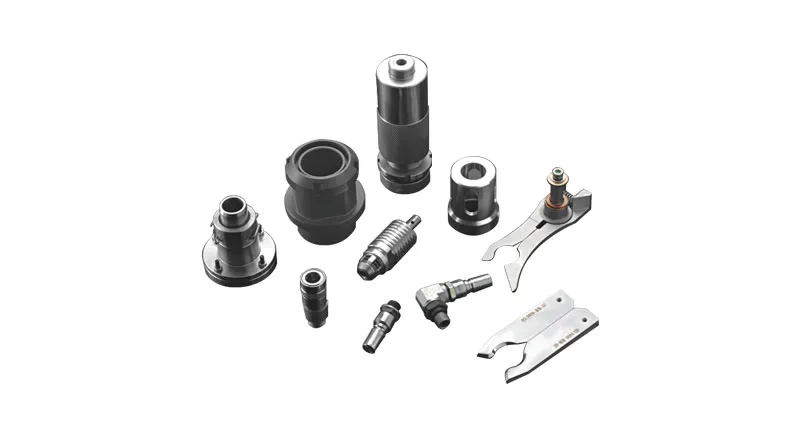
Accessories Kit
Personalized parts for blow molding machines: parts needed for neck finish changes, bottle shape and...
View Details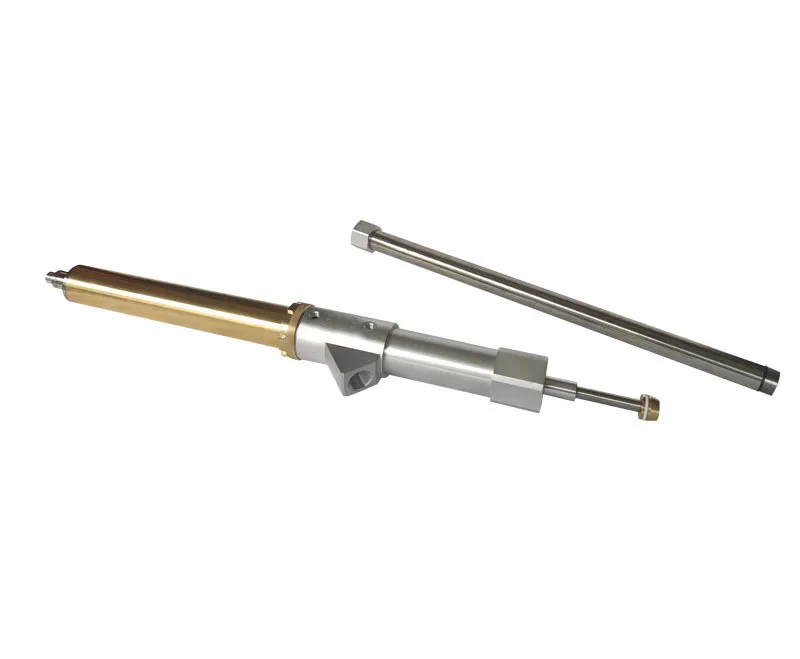
Blowing Pins & Stretch Rods
Blowing nozzles, blowing pins and stretch rods for PET stretch blow molding machines. These parts se...
View Details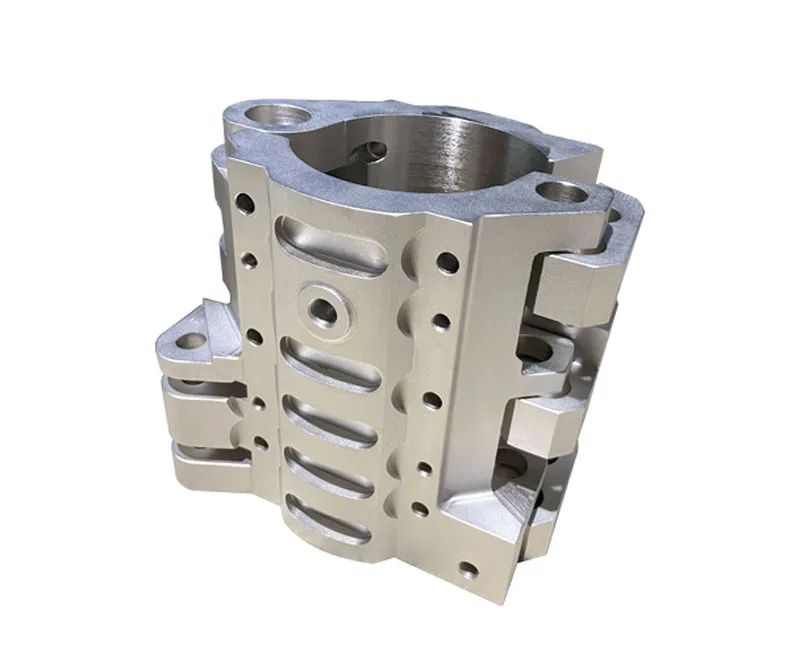
Clamping Base
Clamping bases (mold carrier bases) that hold the blow mold shells and base mold in the blowing stat...
View Details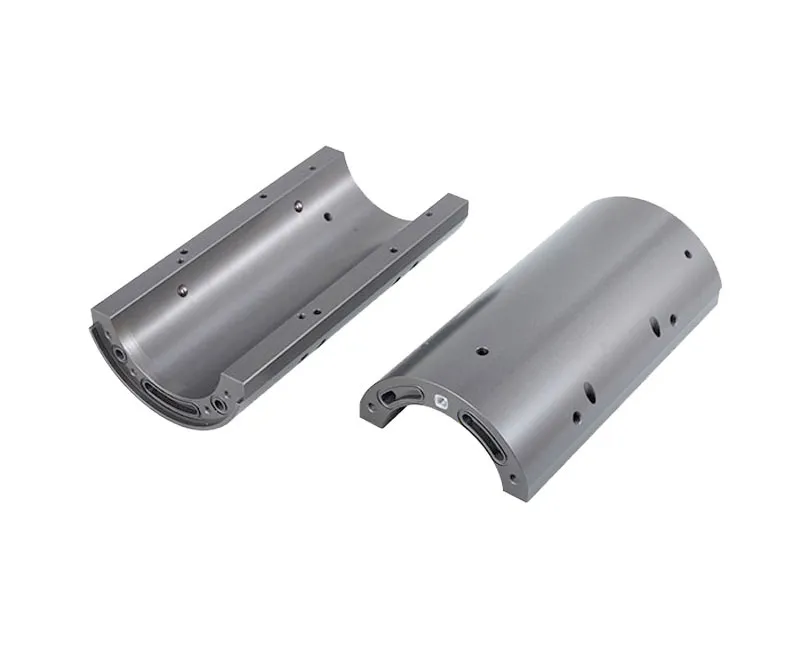
Mold Shell
Mold shells (shell holders) that carry the bottle cavity halves in the blowing machine's mold carrie...
View DetailsProduct images have been enhanced with AI. To see the actual products, contact our sales team for photos of the machines on site.
Format change parts for PET bottle lines: star wheels, guides and neck grippers for bottle, neck finish and preform changes
A format change part is a bottle- or preform-specific part of a blowing or bottle handling line, such as a star wheel, transfer guide or neck gripper, that is exchanged when the line switches to a different bottle, neck finish or preform. They decide whether preforms and bottles move through the line without jams, scratches or falls. This guide explains which parts change for each type of format change, what measurement data a supplier needs, and how to run the changeover in a controlled order.
What changes with a new bottle, neck finish or preform
Not every format change needs a full set of new parts. The parts affected depend on which dimension changes: the bottle body, the neck finish or the preform.
- New bottle shape or capacity, for example from 500ml to 1.5L: star wheel pockets, transfer and outfeed guides, and other parts that touch the bottle body.
- New neck finish, for example from PCO 1810 to PCO 1881 or to a 38mm finish: neck grippers, neck guides and any part that holds the preform or bottle by the support ring or neck.
- New preform length or weight with the same neck: infeed rails and preform handling parts may need checking, and the blow mold, stretch rod and heating settings must suit the new preform.
- Same bottle on a different blowing machine: conversion parts that let one blow mold run on different blowing equipment.
- Lightweight bottles: thinner walls and lighter necks can change how bottles behave in grippers and guides, so contact parts should be checked even if nominal dimensions stay similar.
Format change parts comparison table
| Type of change | Star wheels | Guides | Neck grippers | Blow mold and blowing parts |
|---|---|---|---|---|
| New bottle body (diameter, height, shape) | Usually new pockets | Usually new or adjusted | Usually unchanged if neck is the same | New cavity inserts or mold |
| New neck finish | Check neck-handling stars | Neck guides change | New grippers | New blowing pins; check stretch rods |
| New preform, same neck | Usually unchanged | Check infeed rails | Usually unchanged | Check stretch rod stroke and heating settings |
| Same mold on another blowing machine | Machine-specific parts | Machine-specific parts | Machine-specific parts | Conversion parts for the mold mounting |
Measurement data to send for conversion parts
Accurate input data is the main factor in whether new parts fit the first time. Send as much of the following as possible.
- Machine make, model and serial number for every machine the parts must fit, for example SIDEL, KRONES or KHS equipment.
- Bottle drawing with body diameter, height, shoulder and base geometry, and the position of label panels.
- Neck finish drawing with thread diameter, support ring diameter and thickness, and the distance between support ring and neck top.
- Preform drawing with length, neck finish and weight.
- Existing parts or their drawings; LIHE makes conversion parts from customers' existing parts or drawings.
- Photos of the current parts installed, showing identification marks and fixing points.
- Fill type (cold fill, hot fill at about 85–95°C, or aseptic), because hot-filled bottles can be softer during handling.
Changeover steps for star wheels, guides and neck grippers
- Step 1: Prepare the complete format kit in advance, check it against the parts list and mark each part with its position on the line.
- Step 2: Run out the old format, stop the line and follow the lockout procedure for every machine that will be changed.
- Step 3: Remove old star wheels, guides and neck grippers in a fixed order and store them as a kit for the next changeover.
- Step 4: Install the new parts on their locating features and fasten them without forcing; parts that do not fit freely should be checked, not hammered.
- Step 5: Set adjustable guides to the new bottle or neck dimensions using a sample bottle or preform as a gauge.
- Step 6: Turn the line by hand or at slow speed and watch every transfer point for contact, scratches or misalignment.
- Step 7: Run production samples, check for neck damage, scuffing and falls, then increase to normal speed and record the settings for the next changeover.
Reducing format change time on a PET bottle line
- Single-minute exchange of die (SMED) methods aim to complete changeovers in under 10 minutes by moving as much work as possible to the time before the line stops.
- Store each format as a complete, labelled kit so nothing is searched for during the stop.
- Use parts with fixed locating features instead of parts that must be adjusted by eye.
- Order conversion parts with the new blow mold as one complete format change package, so the mold, blowing parts and handling parts are made to the same drawings.
- Plan lead times: LIHE's stated lead time for replacement parts is 4 weeks; plan new formats so that molds and change parts arrive together.
Common fitting problems after a format change
- Bottles falling at a transfer point: pocket or guide dimensions do not match the bottle, or timing between star wheels is off.
- Scuffing on the bottle body: guides set too tight or contact surfaces worn.
- Neck finish marks or damaged support rings: neck grippers do not match the new neck finish dimensions.
- Jams at the infeed: preform length or neck dimensions differ from what the infeed rails were made for.
- Parts that fit one machine but not another of the same type: machine versions differ, so always send the model and serial number.
Frequently asked questions
- Which parts must change when only the neck finish changes?
- Usually the neck grippers, neck guides and blowing pins, because they touch the neck or support ring. Star wheels that handle the bottle body may stay the same if the bottle body is unchanged.
- Can one blow mold run on different blowing machines?
- Yes, with conversion parts that adapt the mold mounting and handling to each machine. LIHE supplies conversion parts for running one blow mold on different blowing machines.
- What is the most common cause of conversion parts not fitting?
- Incomplete input data, especially a missing machine model or serial number, or a bottle drawing that does not match the final bottle. Sending existing parts or their drawings reduces this risk.
- Should conversion parts be ordered with the blow mold?
- It is usually better, because the mold, blowing parts and handling parts are then made to the same bottle and neck drawings. LIHE supplies conversion parts with the new blow mold as a complete format change package.
- How long does it take to get conversion parts?
- LIHE's stated lead time for replacement parts is 4 weeks. Plan new formats so that conversion parts and molds are ready before the planned launch date.