
Hot Fill vs Cold Fill PET Blow Molds: How to Choose the Right Mold
Hot fill and cold fill PET blow molds are built for different filling temperatures. This guide compares how each mold works, which beverages each one suits and what to specify when you order a new mold set.
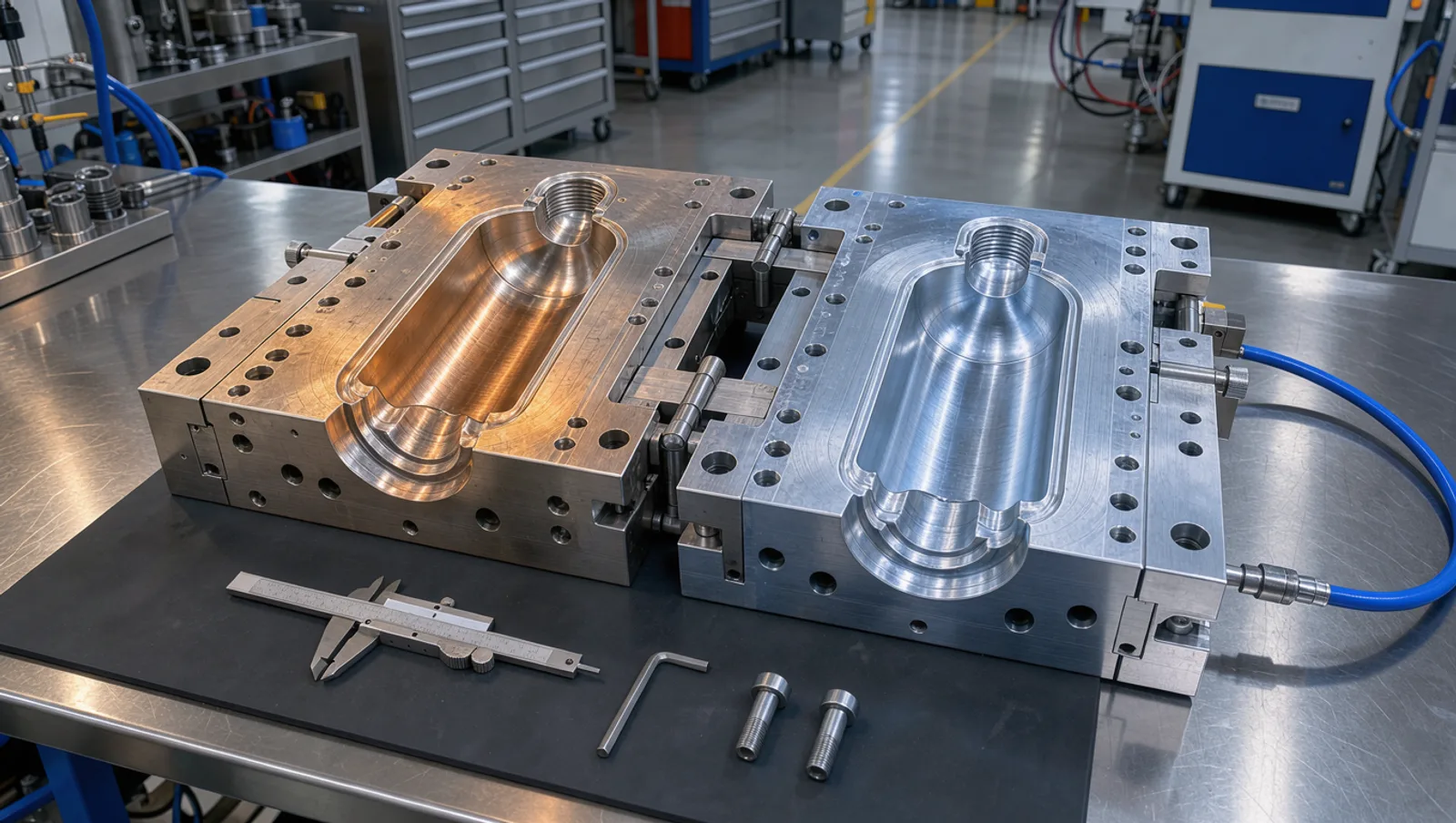
What is the difference between a hot fill and a cold fill blow mold?
Hot filling is a bottling method in which the beverage enters the PET bottle at about 85–95°C.
A cold fill blow mold produces PET bottles that are filled at ambient temperature, such as still water, carbonated soft drinks (CSD), juice and dairy. A hot fill (heat-set) blow mold produces bottles that are filled hot, at around 85–95°C, for products such as juice, tea drinks and isotonic beverages.
The difference matters because standard PET bottles start to deform above about 60°C. A hot fill mold uses heated mold walls to crystallize and stabilize the bottle during blowing, so it keeps its shape when hot product goes in.
Key terms used in this guide
- Cold fill: the beverage is filled at ambient or chilled temperature, so the bottle never has to withstand hot product.
- Hot fill: the beverage is filled hot, at about 85–95°C, so the heat of the product helps keep the bottle and closure free of microorganisms.
- Heat-set: a blow molding process in which the bottle is formed against heated mold walls, which raises crystallinity and relieves stretch-induced stress so the bottle tolerates hot product.
- Vacuum panels: flexible areas in the bottle wall or base that move inward as the hot product cools and contracts, so the rest of the bottle keeps its shape.
- Aseptic filling: the product and the bottle are sterilized separately and filled in a sterile environment, usually at ambient temperature.
- Two-step (reheat) blow molding: preforms are injection molded first, then reheated and stretch blow molded on a separate machine such as a SIDEL, KRONES or KHS blower.
- One-step blow molding: the preform is injection molded and blown on the same machine, as on SIPA, ASB or AOKI systems.
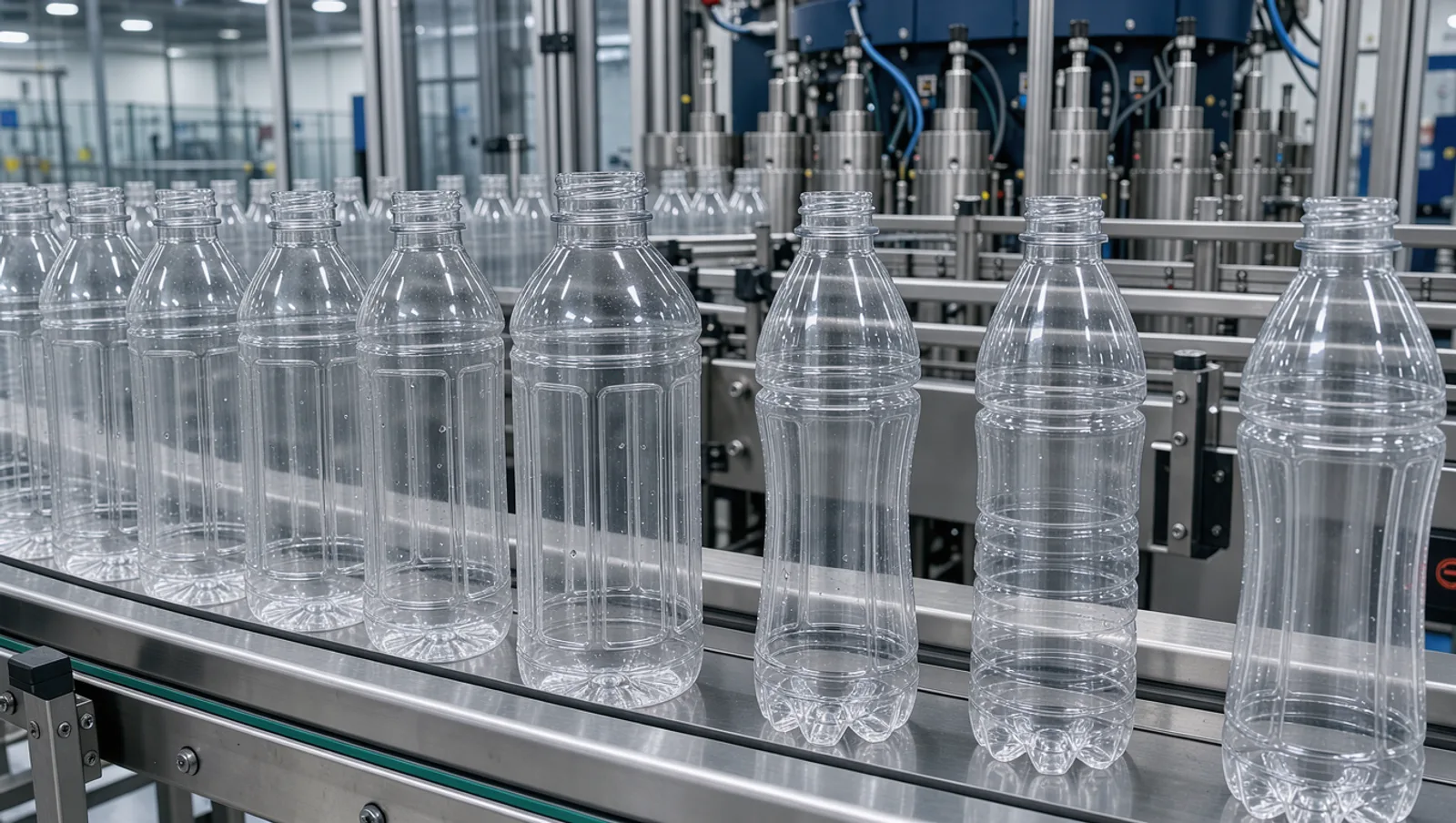
Key numbers at a glance
- Hot fill temperature: about 85–95°C.
- Deformation point of standard (non-heat-set) PET bottles: about 60°C.
- Cold fill: ambient-temperature filling, no heat-set process required.
Hot fill vs cold fill blow molds compared
| Cold fill blow mold | Hot fill (heat-set) blow mold | |
|---|---|---|
| Filling temperature | Ambient | About 85–95°C |
| Typical products | Still water, CSD, juice, dairy | Juice, tea drinks, isotonic beverages |
| Mold temperature control | Integrated cooling channels in shells and base molds | Heating channels for hot oil circulation, with separate temperature control of body and base |
| Bottle design focus | Lightweighting and even wall thickness | Vacuum panels, reinforcing ribs and base geometry that stay stable after filling and cooling |
| Machine platforms (LIHE range) | KHS / SIG InnoPET Blomax, Krones Contiform and other two-step and one-step blowers | Heat-set versions of mainstream two-step rotary blowers, including SIDEL and KRONES |
How a hot fill mold keeps the bottle stable
In a heat-set mold the shells carry hot oil instead of only cooling water. The heated cavity walls crystallize the PET during blowing, which raises the temperature the bottle can tolerate. As the hot product cools in the closed bottle, the internal pressure drops; vacuum panels in the bottle design absorb that pressure change so the bottle does not collapse or panel unevenly.
Because the mold runs at elevated temperature for long periods, the mold material and cavity finish are chosen for long-term operation under heat.
How the heat-set blowing cycle works
The heat-set cycle follows the same basic stretch blow molding sequence as cold fill, with extra steps to stabilize the PET. The exact temperatures and timings are set by the machine maker and the bottle design, so treat the sequence below as a description, not as process settings.
- Step 1: The preform is reheated above the glass transition temperature of PET so that it can be stretched.
- Step 2: A stretch rod pushes the preform down while blowing air expands it against the cavity walls of the mold shells and base mold.
- Step 3: Instead of cooling the bottle at once, the heated mold walls hold the PET at an elevated temperature, which raises crystallinity and relaxes stress from stretching.
- Step 4: The bottle is cooled before it leaves the mold, typically by flushing air through its interior, so it keeps the shape of the cavity when released.
- Step 5: On the filling line the bottle is filled hot, capped and cooled; the vacuum panels absorb the volume change as the product contracts.
Where a cold fill mold saves cost
Cold fill bottles do not need the heat-set structure, so the design work focuses on using less PET. Bottle geometry and base design are matched to the preform for even wall thickness at reduced bottle weight, and integrated cooling channels keep bottle quality stable at production speed. For producers with many bottle formats, a split-type quick-change mold lets you swap only the cavity inserts and base instead of the whole mold set.
Aseptic filling: the third option
Aseptic lines sterilize the product and the container separately and fill in a sterile zone, usually at ambient temperature. Because the bottle does not see hot product, it does not need a heat-set structure, and its design is closer to a cold fill bottle. LIHE builds blow molds for cold fill, hot fill and aseptic applications, so the filling method of the line, not the beverage alone, decides which mold you need.
- Choose cold fill for water, CSD and other products that do not need heat treatment in the bottle.
- Choose hot fill when the product is filled hot at about 85–95°C, for example many juices, tea drinks and isotonic beverages.
- Choose an aseptic mold when your filling line uses aseptic technology for sensitive products filled at ambient temperature.
Common problems and what usually causes them
- Paneling or ovalization after hot filling: the bottle design, vacuum panels or heat-set conditions do not match the filling temperature.
- Shrinkage and volume loss in hot fill bottles: insufficient heat-set stabilization, so the bottle relaxes when hot product goes in.
- Deformed or loose neck finish on hot fill bottles: the neck finish is not suited to hot product; some hot fill bottles use a crystallized (opaque white) neck finish for this reason.
- Uneven wall thickness in cold fill bottles: the preform design and the bottle geometry are not matched, or the preform heating profile is not balanced.
- Pearlescence (white haze) in the bottle wall: the PET has been stretched too far or at too low a temperature.
- Incomplete details, such as soft logos or a poorly formed base: blocked or insufficient venting in the mold shells or base mold.
- Stress cracking in carbonated bottle bases: base geometry and material distribution do not suit the internal pressure of the product.
Maintenance considerations for hot fill and cold fill molds
- Cold fill molds: keep cooling water clean and treated, because scale or corrosion in the channels reduces cooling and makes bottle quality drift.
- Hot fill molds: check hot oil connections, seals and hoses regularly, and keep separate temperature control of the body and base working as designed.
- Both types: clean venting slots and holes, because blocked vents cause incomplete forming and visible marks on the bottle.
- Both types: protect polished cavity surfaces during cleaning and storage; scratches transfer directly to the bottle surface.
- Keep spare base molds and cavity inserts for high-volume formats, so a damaged part does not stop the line.
- Record mold temperature settings and bottle quality checks for each format, so a mold can be restarted quickly after a changeover.
What to specify when you request a quote
- Step 1: Filling type and temperature: cold fill, or hot fill with the actual filling temperature.
- Step 2: Blow molding machine brand, model and mold carrier type (for example KHS InnoPET Blomax or Krones Contiform).
- Step 3: Bottle drawing or sample, capacity and target bottle weight.
- Step 4: Preform specification and neck finish, or ask us to match the preform to the bottle.
- Step 5: Whether you need a complete set (mold shells, base molds and neck plates) or only cavity inserts.
- Step 6: Expected output and number of cavities on the blow molder, so mold shells and base molds are planned for the full set.
- Step 7: Any special requirements, such as a crystallized neck finish for hot fill, a quick-change mold design or rPET material trials.
LIHE blow mold capabilities relevant to this choice
- Two-step blow molds for SIDEL, KRONES, SIG/KHS, TECH-LONG and NEWAMSTAR machines, and one-step blow molds for SIPA, ASB and AOKI machines.
- Cold fill, hot fill (about 85–95°C) and aseptic blow molds.
- Cold fill mold sets for KHS InnoPET Blomax and Krones Contiform stretch blow molders.
- Split-type quick-change molds that let you change only cavity inserts and base molds between formats.
- Water bottle molds for common sizes such as 330ml, 500ml, 550ml and 1.5L.
- Preform lightweighting proposals that reduce preform weight by 1g to 2g through neck or wall-thickness optimization.
- Inspection on an in-house Zeiss CMM, with validation and inspection reports available on request.
- Published lead times: pilot molds 20 days, standard PET molds 8 weeks, replacement parts 4 weeks.
Frequently asked questions
- Can a cold fill blow mold be used for hot fill products?
- No. Standard PET bottles deform above about 60°C. Hot fill products filled at about 85–95°C need a heat-set mold with heated mold walls and a bottle design with vacuum panels.
- Which machines does LIHE build cold fill blow molds for?
- LIHE builds cold fill molds for KHS (formerly SIG) InnoPET Blomax and Krones Contiform stretch blow molders, and blow molds for SIDEL, KRONES, SIG/KHS, TECH-LONG and NEWAMSTAR two-step machines as well as SIPA, ASB and AOKI one-step machines.
- Does LIHE help with bottle design?
- Yes. Bottle design, preform matching, lightweighting and wall thickness optimization are part of LIHE's blow mold development.
- Why do hot fill bottles have vacuum panels?
- When a hot product cools inside a closed bottle, its volume shrinks and the pressure inside drops. Vacuum panels are designed to flex inward in a controlled way, so the bottle keeps an even shape instead of collapsing or denting at random points.
- Is aseptic filling the same as hot filling?
- No. Aseptic filling sterilizes the product and the bottle separately and fills in a sterile environment, usually at ambient temperature. Hot filling uses the heat of the product, at about 85–95°C, and therefore needs a heat-set bottle.
- How long does a new blow mold take?
- LIHE's published lead times are 20 days for pilot molds, 8 weeks for standard PET molds and 4 weeks for replacement parts. The exact schedule for your project is confirmed in the quotation.
References
Related products
Have a mold project? Our engineers can review your requirements.
Request a Quote