
Product images have been enhanced with AI. To see the actual products, contact our sales team for photos of the machines on site.
Cold Fill Blow Mold — KHS Platform
Cold fill PET blow molds built for KHS (formerly SIG) InnoPET Blomax stretch blow molders. Designed for still water, CSD and other ambient-filled beverages, the mold shells, base molds and neck plates are machined to fit the KHS mold carrier directly, supporting lightweight bottle designs with even material distribution.
- Machine platform: KHS / SIG InnoPET Blomax series stretch blow molders.
- Filling type: Cold fill (ambient temperature) for still water, CSD, juice and dairy bottles.
- Lightweighting: Bottle geometry and base design matched to the preform for even wall thickness at reduced bottle weight.
- Complete set: Mold shells, base molds and neck plates machined to fit the KHS mold carrier without modification.
- Cooling: Integrated cooling channels in shells and base molds for stable bottle quality at production speed.
Quotes and technical questions are handled directly by the manufacturer's international sales department.
Related Products
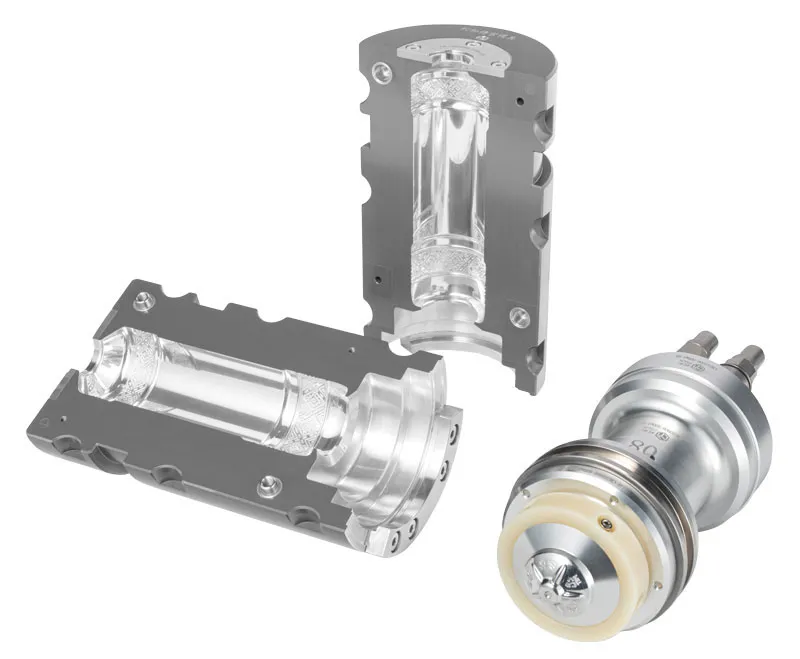
Blow Mold
PET blow molds for two-step and one-step stretch blow molding. Built for SIDEL, KRONES, SIG/KHS, TEC...
View Details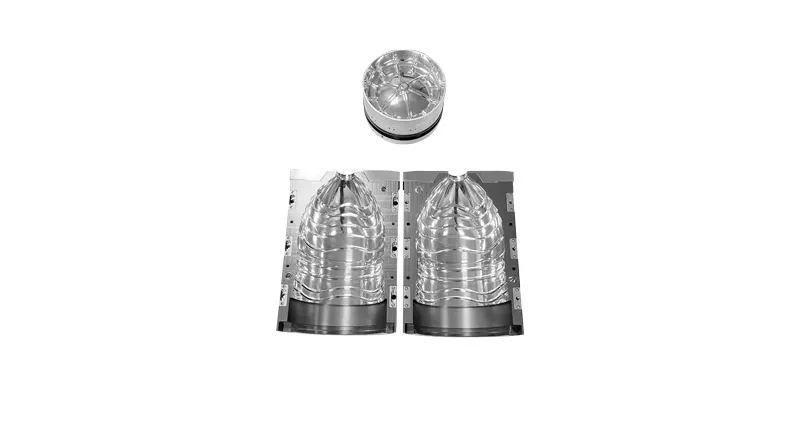
Blow Mold for Disposable Bottled Water
Blow molds for single-use still water bottles, where bottle weight and output speed decide productio...
View Details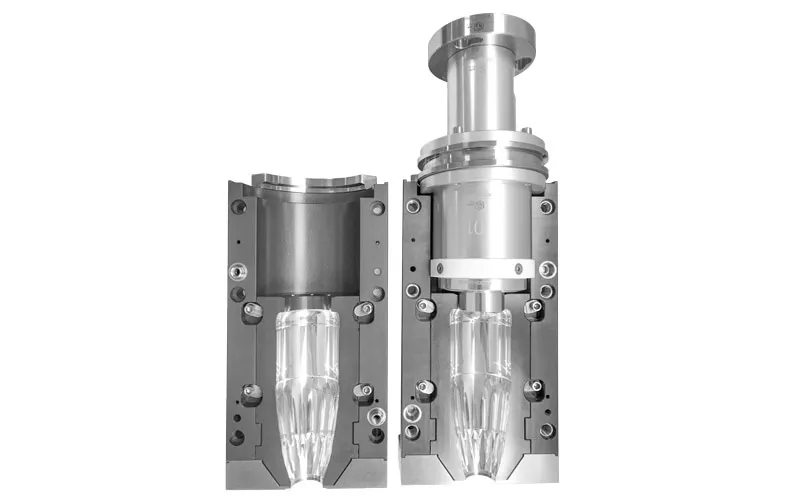
Split-Type Quick-Change Blow Mold
Blow molds with a split structure: the bottle-shaped cavity inserts are separated from the mold shel...
View Details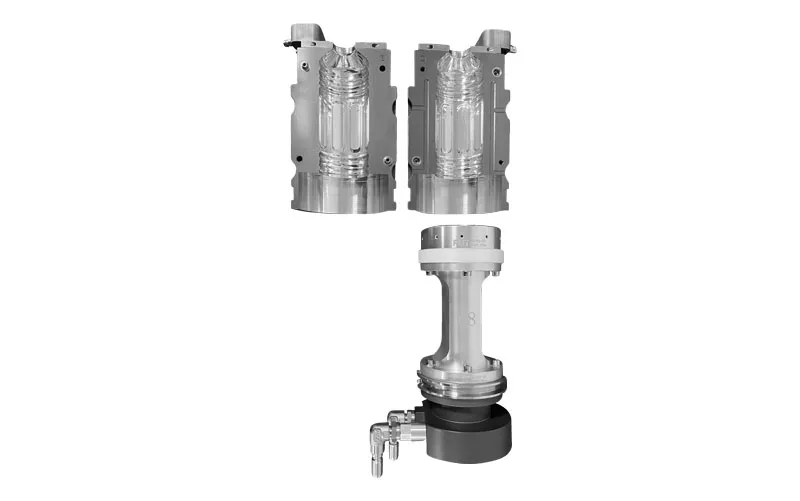
Cold Fill Blow Mold — Krones Platform
Cold fill PET blow molds built for Krones Contiform stretch blow molders. Mold shells, base molds an...
View DetailsProduct images have been enhanced with AI. To see the actual products, contact our sales team for photos of the machines on site.
KHS InnoPET Blomax cold fill PET blow mold: compatible replacement molds for beverage bottle lines — mold carrier fit, still water and CSD
A KHS cold fill blow mold is a set of mold shells, a base mold and a neck plate machined to the mold carrier of a KHS (formerly SIG) InnoPET Blomax stretch blow molder, for bottles filled at ambient temperature. This guide covers what has to match the Blomax mold carrier, the information to send for a quote, design points for lightweight still water and carbonated soft drink (CSD) bottles, and the steps of a format changeover on a Blomax line.
What a KHS Blomax blow mold must match on the mold carrier
A Blomax mold set only works if it seats, locks and connects exactly like the original KHS parts. The bottle cavity can be new, but the outside of each part follows the machine. Because the InnoPET Blomax series has been built over several machine generations under the SIG and KHS names, the details are confirmed from the machine nameplate and documentation for each project.
- Mold shell outer geometry and mounting faces, so the shells sit in the shell holders of the mold carrier without shims or modification.
- Clamping and locking interface of the mold carrier, so the mold closes and locks under blowing pressure.
- Position and type of the cooling water connections, so shells and base mold connect to the machine circuit directly.
- Base mold mounting and height, matched to the base unit and its stroke so the base closes against the shells at the right point.
- Neck plate seat, matched to the preform support ring and centered on the stretch rod axis.
- Number of blowing stations, because every station needs an identical set.
Lightweight still water vs CSD bottles on a KHS Blomax
The same Blomax machine often runs both still water and carbonated products, but the bottles behave differently in use, so the mold design priorities differ.
| Lightweight still water bottle | CSD bottle | |
|---|---|---|
| Pressure inside the filled bottle | None, or a small pressure from nitrogen dosing | Carbonation pressure throughout shelf life |
| Typical base | Flat or champagne-style base | Petaloid base with feet |
| Main design goal | Minimum PET weight while keeping top load and handling strength | Resistance to pressure, creep and base stress cracking |
| Critical bottle tests | Top load, volume, wall thickness distribution | Burst pressure, volume expansion under pressure, base material distribution |
| Mold focus | Even wall distribution, ribs and shoulder shape for stiffness | Petaloid base geometry and strong base cooling |
Design considerations for lightweight still water bottles
- Lightweighting starts with the preform: preform lightweighting proposals reduce preform weight by 1g to 2g through neck or wall-thickness optimization, and the bottle geometry is then adjusted to the new preform.
- Material must reach the shoulder and the label panel evenly, because thin areas buckle first under top load on the filler and capper.
- Horizontal ribs and shoulder shape add stiffness without adding PET, but they must also be easy to vent so they form sharply.
- Very light bottles are often filled with nitrogen dosing, which gives a small internal pressure and makes the bottle firmer for stacking and handling.
- Common water bottle formats are 330ml, 500ml, 550ml and 1.5L; each format is matched to its own preform.
Design considerations for CSD bottles on KHS machines
- The petaloid base carries the carbonation pressure; its feet, valleys and center must receive enough oriented material.
- The base center stays thicker and less oriented than the wall, so the base mold has its own cooling circuit to cool this area well.
- Base geometry and material distribution together decide resistance to stress cracking, so the base is checked on trial bottles before the full set is built.
- CSD bottles expand slightly under pressure over their shelf life; the design allows for this so the fill level and label fit stay acceptable.
- Cooling channels in shells and base molds keep bottle quality stable at production speed, as listed in the product specification above.
Information to send for a KHS Blomax blow mold quote
- Machine data: KHS or SIG InnoPET Blomax model and generation from the nameplate, number of blowing stations and the mold carrier type.
- Bottle data: drawing or sample, capacity, target weight, product (still water, CSD, juice or dairy) and base type.
- Preform data: drawing or sample, weight and neck finish, or a request to match a new preform.
- Scope: complete sets of shells, base molds and neck plates for all stations, or spare base molds and replacement parts only.
- Photos of the existing mold parts and their markings, which help confirm the carrier interface.
- Target dates; published lead times are 20 days for pilot molds, 8 weeks for standard PET molds and 4 weeks for replacement parts.
Changeover steps for a KHS Blomax blow mold set
A format change on a Blomax line replaces the set in every blowing station. Always follow the KHS operating manual for the machine-specific procedure and safety lock-out; the sequence below shows the general order of work.
- Step 1: Prepare the new sets: clean, inspected and numbered for each station, with the matching preforms and the bottle recipe ready.
- Step 2: Empty the machine of preforms and bottles, stop it according to the KHS manual and secure it against restart.
- Step 3: Shut off and drain the cooling water to the molds before disconnecting the hoses or couplings.
- Step 4: Open the mold carriers and remove the shells, base molds and neck plates station by station; if the neck finish changes, change the neck-related parts as well.
- Step 5: Install the new parts, check that each shell and base mold is fully seated and locked, and reconnect the cooling water.
- Step 6: Restore cooling flow and check every connection for leaks before the machine is restarted.
- Step 7: Load the recipe, adjust the oven heating profile to the new preform, and blow the first bottles.
- Step 8: Check bottles from each station for volume, wall thickness, base shape and appearance before releasing the line to production.
Frequently asked questions
- Can LIHE build molds for older SIG-branded Blomax machines?
- The cold fill sets are built for the KHS / SIG InnoPET Blomax series. Send the nameplate data and photos of the existing mold parts so the exact carrier interface of your machine generation is matched.
- Can a mold for a still water bottle also run CSD?
- Usually not. A CSD bottle needs a petaloid base and a material distribution designed for carbonation pressure, while a still water bottle is designed for minimum weight with a flat or champagne-style base. A separate base mold, and often a separate cavity, is needed.
- Can the same bottle design run on both KHS and Krones machines?
- The bottle design can be shared, but each machine needs parts that fit its own mold carrier. LIHE supplies conversion parts or a separate set for each platform.
- How many mold sets do we need for a KHS Blomax?
- One identical set per blowing station, plus spare parts for the parts that wear or get damaged most often, such as base molds. The station count comes from the machine model.
- Do you supply hot fill molds for KHS machines?
- This product is the cold fill set for ambient-filled still water, CSD, juice and dairy. Hot fill requires a heat-set machine and a heat-set mold; see the Hot Fill Blow Mold page and send your machine data so compatibility can be checked.