
Product images have been enhanced with AI. To see the actual products, contact our sales team for photos of the machines on site.
Split-Type Quick-Change Blow Mold
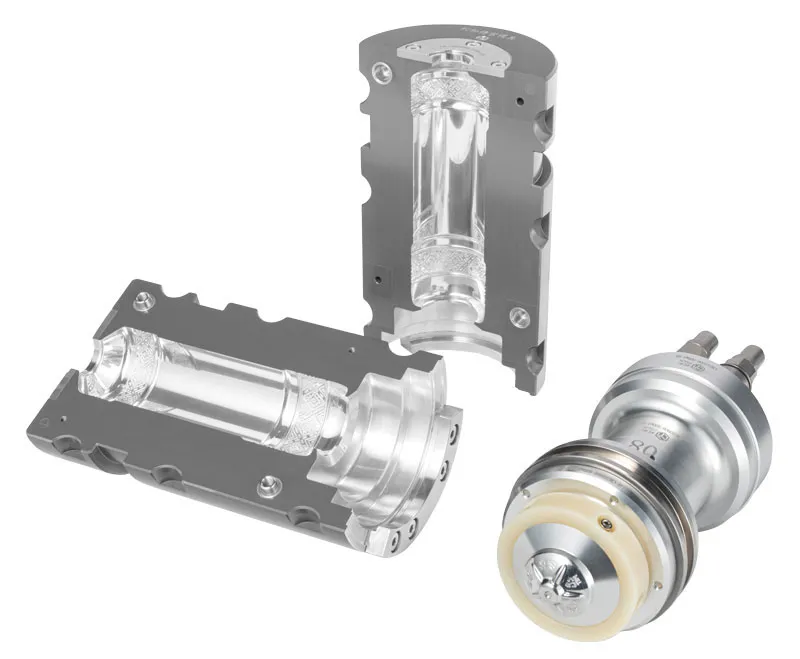
Blow molds with a split structure: the bottle-shaped cavity inserts are separated from the mold shells that stay mounted in the machine. When the bottle format changes, only the lightweight inserts and base are swapped, cutting changeover time and the cost of tooling for each new bottle design.
- Structure: Replaceable cavity inserts and base molds mounted in fixed mold shells.
- Fast changeover: Format changes without removing the shells from the mold carrier, reducing line downtime.
- Lower tooling cost: New bottle shapes only need new inserts, not a complete mold set.
- Machine compatibility: Adapted to the quick-change mold carriers of mainstream rotary blow molding machines.
- Best for: Producers running many SKUs, frequent format changes or seasonal packaging.
Quotes and technical questions are handled directly by the manufacturer's international sales department.
Related Products
Blow Mold
PET blow molds for two-step and one-step stretch blow molding. Built for SIDEL, KRONES, SIG/KHS, TEC...
View Details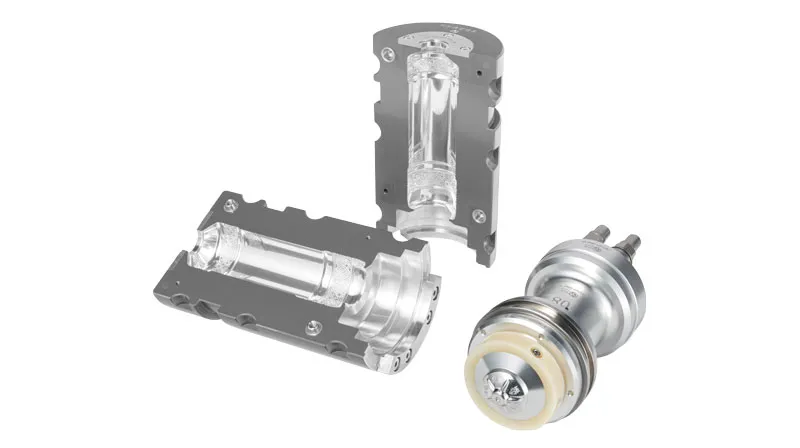
Cold Fill Blow Mold — KHS Platform
Cold fill PET blow molds built for KHS (formerly SIG) InnoPET Blomax stretch blow molders. Designed ...
View Details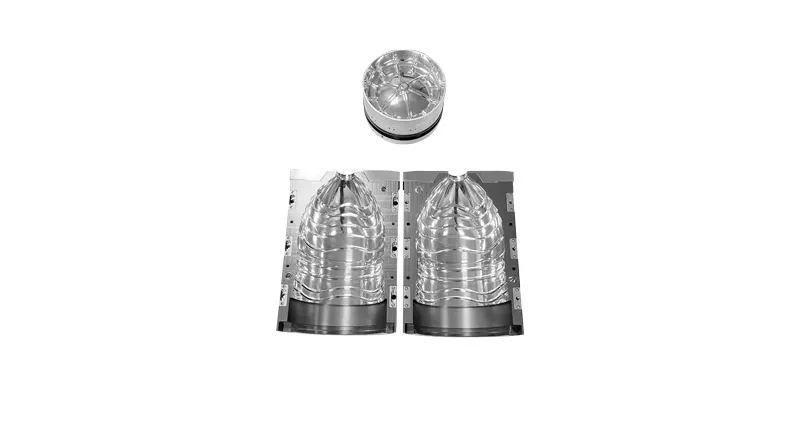
Blow Mold for Disposable Bottled Water
Blow molds for single-use still water bottles, where bottle weight and output speed decide productio...
View Details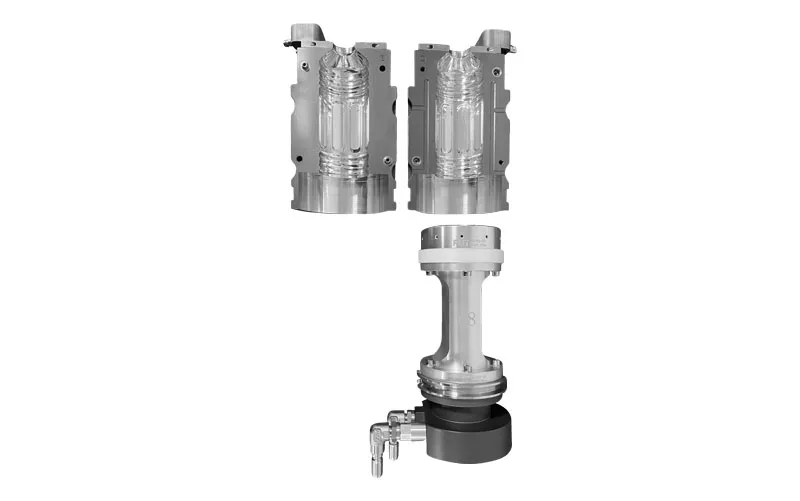
Cold Fill Blow Mold — Krones Platform
Cold fill PET blow molds built for Krones Contiform stretch blow molders. Mold shells, base molds an...
View DetailsProduct images have been enhanced with AI. To see the actual products, contact our sales team for photos of the machines on site.
Blow mold changeover cost for PET bottle lines: when a split-type quick-change system pays off vs full mold sets
A split-type quick-change blow mold is a blow mold in which the bottle-shaped cavity inserts and the base are separate from mold shells that stay mounted in the machine, so a format change replaces only the inserts. This guide looks at the full cost of changeovers on a rotary blow molder and shows when a split-type system pays off compared with buying a complete mold set for every bottle. It also gives a changeover procedure and a method for planning SKUs around shared shells.
What a blow mold changeover really costs
The price of a mold set is only one part of the cost of running many bottle formats. Each format change also stops the line and consumes labor and material. These costs repeat every time the format changes, so they grow with the number of SKUs and the frequency of changes.
- Line downtime: the blow molder, and usually the filler behind it, produce nothing while molds are changed and the new format is started.
- Labor: technicians for mold removal, installation, adjustment and first-bottle checks, often with a crane or lifting device for full mold sets.
- Start-up scrap: preforms and bottles rejected while the heating profile and blowing conditions are tuned for the new shape.
- Tooling investment: a complete mold set per cavity for every bottle shape, or one set of shells plus inserts for each shape.
- Storage and handling: full mold sets are heavier and take more storage space, protection and handling equipment than inserts.
- Wear and damage risk: frequent removal and remounting of heavy parts increases the chance of damaged cooling connections and locating surfaces.
Full mold set vs split-type quick-change blow mold: comparison
| Full mold set per format | Split-type quick-change mold | |
|---|---|---|
| What is changed | Complete mold halves, shells and base for every cavity | Cavity inserts and base only; shells stay in the mold carrier |
| Tooling for a new bottle shape | New complete mold set | New inserts and base (shells reused if the bottle fits the shell envelope) |
| Weight handled during changeover | Higher; lifting aids often needed | Lower; inserts are lighter parts |
| Changeover downtime | Longer, because more parts are disconnected and aligned | Shorter, because shells and their connections stay in place |
| Storage per format | Full sets per cavity | Inserts and bases per cavity |
| Best fit | Few formats, long runs, very different bottle sizes | Many SKUs, frequent changes, bottles within one size family |
| Limits | Higher cost per new shape | New shape must fit the existing shell size; shells must be in good condition |
When a split-type quick-change blow mold pays off
A split-type system makes sense when the savings from shorter changeovers and cheaper new shapes are larger than the cost of the shells and the engineering needed to fit several bottles into one shell family.
- The line runs many SKUs in one size family, for example several 500ml shapes for different brands or customers.
- Formats change weekly or more often, so downtime per changeover is multiplied many times per year.
- New bottle shapes are launched regularly, such as seasonal or promotional packaging.
- Bottles share the same neck finish and preform, so the heating and stretch settings change little between formats.
- A full set still makes sense when a line runs one or two formats for months at a time, or when the new bottle is so different in diameter or height that it cannot fit the existing shell.
Estimating annual changeover cost: a simple worksheet
Use your own line data. The figures below only show how to set up the calculation; they are not performance data for any specific mold.
- Changeovers per year = changeovers per week × operating weeks. Example: 3 changeovers per week × 52 weeks = 156 changeovers per year.
- Downtime per year = changeovers per year × hours per changeover (measured from last good bottle to first good bottle).
- Lost output = downtime per year × line output per hour.
- Start-up scrap = changeovers per year × preforms rejected per start-up.
- Tooling = (number of new shapes per year × cost of a full set) compared with (shells once + number of new shapes × cost of inserts and base).
- Compare the totals over the expected life of the shells; the difference is the value of moving to a split-type system.
- Track changeover time as part of overall equipment effectiveness (OEE), where it appears as availability loss.
Quick-change blow mold changeover procedure
SMED (single-minute exchange of die) is a lean method that aims to bring tool changes under 10 minutes by separating work done while the machine runs (external) from work done while it is stopped (internal). The steps below apply that idea to a split-type blow mold.
- Step 1: Before stopping the line, prepare the next format: inserts and bases cleaned, checked and labeled by cavity, tools and the machine recipe ready.
- Step 2: Run out the current format and stop the blow molder according to its safety procedure.
- Step 3: Open the mold stations and release the inserts and base from the shells, leaving the shells in the mold carrier.
- Step 4: Install the new inserts and base in each station and lock them, checking that each part is seated correctly.
- Step 5: If the preform changes, change the preform-related parts and settings as well, such as the stretch rod stroke and oven heating profile.
- Step 6: Load the new machine recipe, start at reduced output and check the first bottles for volume, wall distribution, base shape and dimensions.
- Step 7: Release to full speed, then record the changeover time and any problems so the next change can be shorter.
SKU planning around shared shells
- Group bottles into size families that fit one shell envelope, for example 500ml and 550ml shapes with similar diameter and height.
- Keep the same neck finish and, where possible, the same preform within a family so only the inserts and base change.
- Sequence production so that formats from the same family run back to back, and changes between families are planned for scheduled stops.
- Keep one spare set of inserts and bases for the highest-volume shapes so worn parts can be replaced without stopping production.
- Design new SKUs to fit an existing shell family whenever the marketing brief allows it; this keeps tooling to inserts only.
- Document every insert set by cavity number and format, and store them in protective racks near the machine.
What LIHE needs to quote a split-type quick-change mold
- Blow molding machine brand, model and mold carrier type; LIHE builds blow molds for SIDEL, KRONES, SIG/KHS, TECH-LONG and NEWAMSTAR two-step machines and SIPA, ASB and AOKI one-step machines.
- Drawings or samples of all bottles to run in the shell family, with their preforms and neck finishes.
- Expected number of formats and how often they change.
- Whether existing shells are to be reused, with their drawings or condition, or new shells are needed.
- Any related accessories such as stretch rods, blowing pins or neck grippers for formats with different preforms.
Frequently asked questions
- Can any new bottle shape use the existing shells?
- Only if it fits the shell envelope, mainly the maximum diameter and height, and uses a compatible neck and base arrangement. Bottles that are much larger or smaller usually need their own shells or a full mold set.
- How much changeover time does a split-type mold save?
- It depends on the machine, the number of cavities and how the changeover is organized. Measure your current time from last good bottle to first good bottle, then compare it with a trial changeover of inserts only. Good preparation of external tasks often matters as much as the mold design.
- Do I still need to change parts other than the inserts?
- If the new format uses the same preform and neck finish, usually only the inserts and base change. If the preform or neck changes, preform-related parts such as stretch rods and neck handling parts, and the machine settings, also change.
- Is a split-type mold suitable for hot fill bottles?
- Hot fill bottles, filled at about 85–95°C, need heat-set molds with heated mold surfaces because standard PET deforms above about 60°C. Whether a quick-change insert design suits a specific hot fill bottle and machine has to be checked case by case.
- Which machines can use LIHE split-type quick-change molds?
- They are adapted to the quick-change mold carriers of mainstream rotary blow molding machines. Send the machine brand, model and carrier type so the shell interface can be confirmed.