
Product images have been enhanced with AI. To see the actual products, contact our sales team for photos of the machines on site.
Cold Fill Blow Mold — Krones Platform
Cold fill PET blow molds built for Krones Contiform stretch blow molders. Mold shells, base molds and neck plates fit the Contiform mold carrier and its quick-change locking system directly, for still water, CSD, juice and other ambient-filled beverage bottles.
- Machine platform: Krones Contiform series stretch blow molders.
- Filling type: Cold fill for still water, CSD, juice and other ambient-filled beverages.
- Quick change: Compatible with Contiform manual and tool-free quick-change mold carriers.
- Complete set: Mold shells, base molds and neck plates supplied as a matched set.
- Bottle development: Lightweighting and base design for carbonated and still products.
Quotes and technical questions are handled directly by the manufacturer's international sales department.
Related Products
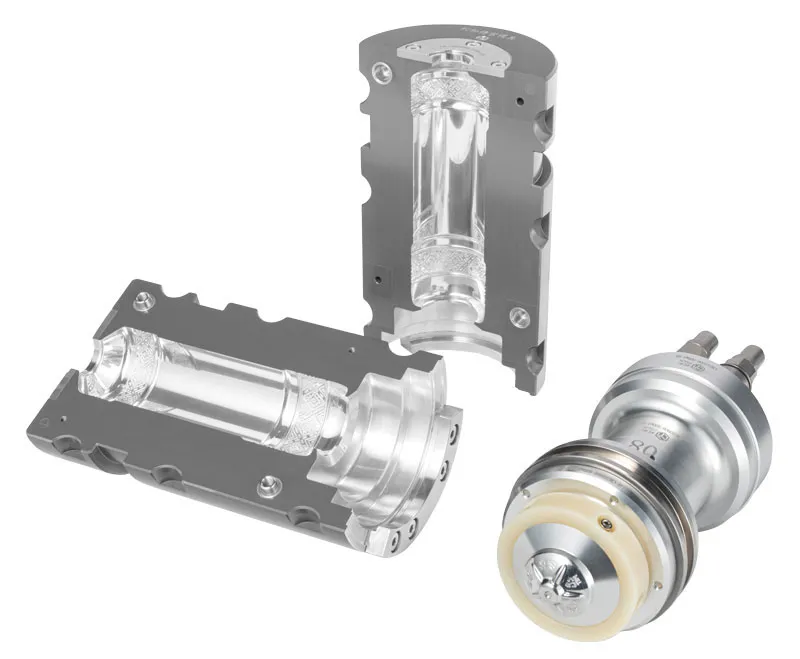
Blow Mold
PET blow molds for two-step and one-step stretch blow molding. Built for SIDEL, KRONES, SIG/KHS, TEC...
View Details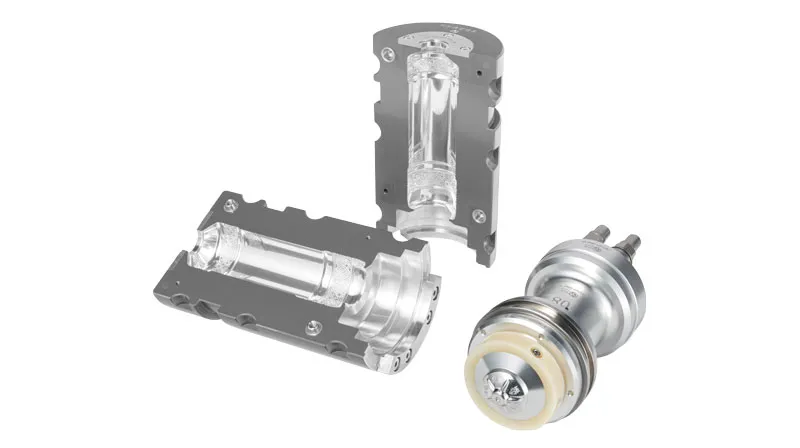
Cold Fill Blow Mold — KHS Platform
Cold fill PET blow molds built for KHS (formerly SIG) InnoPET Blomax stretch blow molders. Designed ...
View Details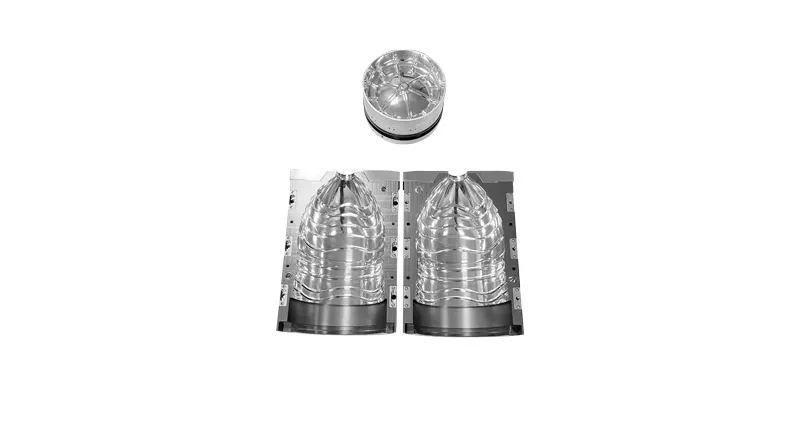
Blow Mold for Disposable Bottled Water
Blow molds for single-use still water bottles, where bottle weight and output speed decide productio...
View Details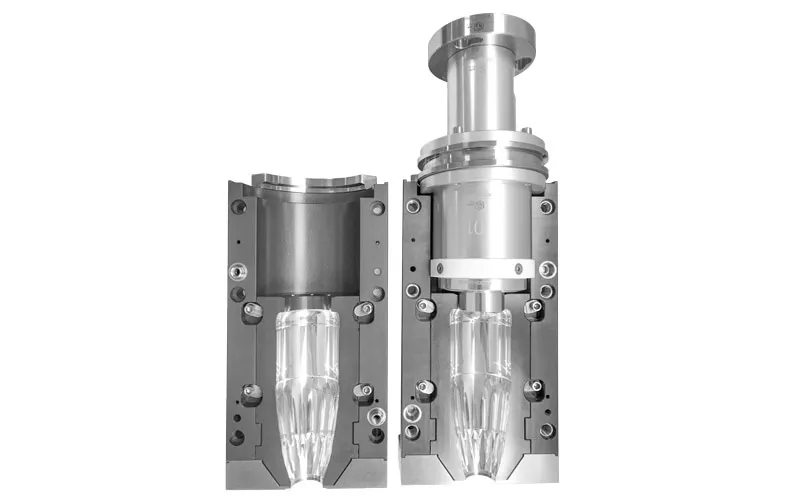
Split-Type Quick-Change Blow Mold
Blow molds with a split structure: the bottle-shaped cavity inserts are separated from the mold shel...
View DetailsProduct images have been enhanced with AI. To see the actual products, contact our sales team for photos of the machines on site.
Krones Contiform cold fill PET blow mold: compatible replacement molds, quick-change locking and changeover for beverage bottle lines
A Krones cold fill blow mold is a matched set of mold shells, base mold and neck plate built to fit the mold carrier and quick-change locking system of a Krones Contiform stretch blow molder, for bottles filled at ambient temperature. This guide focuses on the Contiform interface: how manual and tool-free quick-change carriers affect the mold, what to send for a quote, how to plan sets and spares for frequent format changes, and the steps of a quick changeover.
The Contiform mold carrier: what the blow mold must fit
On a Contiform, each blowing station has a mold carrier that opens and closes the shells, holds the base mold and connects the mold to the machine's cooling circuit. A replacement mold is accepted by the machine only when its outside matches the carrier exactly; the bottle cavity inside can be a new design.
- Shell back faces and locating features, so the shells sit in the carrier in the same position as the original parts.
- Locking features for the carrier's quick-change system, whether the shells are fixed with fasteners or with tool-free locking elements.
- Cooling connections in the positions the carrier expects, so the water circuit connects without adapters.
- Base mold fit to the base unit, including its locating diameter and height, so the base closes against the shells correctly.
- Neck plate seat for the preform support ring, centered on the stretch rod.
- Machine model and generation, read from the nameplate, because carrier details can differ between Contiform versions.
Manual vs tool-free quick-change mold carriers on Krones Contiform
LIHE's Contiform sets are compatible with both manual and tool-free quick-change mold carriers. The two systems ask different things of the mold, so the carrier type must be known before design starts.
| Manual mold carrier | Tool-free quick-change carrier | |
|---|---|---|
| How the shells are fixed | With fasteners released using hand tools | With the carrier's own locking elements, operated by hand |
| What the mold must match | Mounting faces and fastener positions | Locking and locating features of the quick-change interface |
| Changeover work per station | Longer: fasteners and connections are handled one by one | Shorter: mainly unlocking, handling and checking |
| Typical line profile | Few format changes, long production runs | Frequent format changes, many bottle sizes |
| Critical check after mounting | Fastener torque and seating | Locking element fully engaged and seating |
Why quick-change compatibility matters for the blow mold design
- Locating features on the shells must be machined to tight tolerances, because the carrier relies on them instead of manual alignment.
- Shell weight affects how easily an operator handles parts during a fast change, so material and wall sections are chosen with handling in mind.
- Base molds must center themselves on the base unit, so a quick change does not need adjustment of the base position.
- Identical outer dimensions across all sets mean any set can go into any station without sorting or shimming.
- Split-type quick-change molds can reduce the parts to be changed further: only cavity inserts and base molds are exchanged while the outer shells stay in the carrier.
- Each set is inspected on the in-house Zeiss CMM so locating and locking dimensions match across the full set.
Planning sets and spare parts for frequent format changes
Contiform lines that run several products often switch between bottle sizes such as 330ml, 500ml, 550ml and 1.5L. Planning the mold sets as a system makes these changes predictable.
- One identical set per blowing station for each bottle format, so the full machine can run every format.
- Spare base molds and neck plates for the formats that run most, because these parts see the most handling during changes.
- A labelled storage rack or trolley per format, so a complete set can be moved to the machine at once.
- Common neck plates across formats with the same neck finish, which reduces the number of parts touched in a change.
- Replacement parts have a published lead time of 4 weeks; plan stock for parts that would stop a station if damaged.
Information to send for a Krones Contiform blow mold quote
- Machine: Krones Contiform model and generation from the nameplate, number of blowing stations, and carrier type (manual or tool-free quick-change).
- Bottle: drawing or sample, capacity, target weight, product (still water, CSD, juice or another ambient-filled beverage) and base type.
- Preform: drawing or sample, weight and neck finish, or a request to design a matched preform.
- Existing parts: photos of a current shell, base mold and neck plate with their markings, which help confirm the carrier interface.
- Scope: complete sets for all stations, split-type quick-change inserts, or spare parts only.
- Timing: published lead times are 20 days for pilot molds and 8 weeks for standard PET molds.
Quick changeover steps for a Krones Contiform mold set
Follow the Krones operating manual for machine-specific procedures and safety; the sequence below shows how to organize a quick change so the machine is stopped for as little time as possible.
- Step 1: Before the stop, stage the new sets by station number next to the machine, with the preforms, recipe and any neck-related change parts ready.
- Step 2: Run the machine empty of preforms and bottles, stop it according to the Krones manual and secure it against restart.
- Step 3: Shut off the mold cooling water and release the pressure in the circuit.
- Step 4: Open each carrier, release the manual fasteners or the tool-free locking elements, and remove shells, base mold and neck plate.
- Step 5: Fit the new parts, engage the locking elements or tighten the fasteners, and check that every part is fully seated.
- Step 6: Restore cooling water and check each station for leaks.
- Step 7: Load the recipe and adjust the oven heating profile for the new preform.
- Step 8: Blow sample bottles and check each station for volume, wall distribution, base shape and appearance before releasing production.
- Step 9: Clean, check and store the removed sets on their own rack so they are ready for the next change.
Frequently asked questions
- Are LIHE Contiform molds compatible with tool-free quick-change carriers?
- Yes. The cold fill sets are built for Contiform manual and tool-free quick-change mold carriers. Tell us which type your machine has so the locking and locating features are machined for it.
- Can I mix LIHE sets and original sets on the same machine?
- Sets are built to fit the same carrier interface, but all stations should run the same bottle design so bottles are identical. For a new bottle design, supply sets for every station; for an existing design, replacement parts can be built to your current drawing or sample.
- What should we stock as spare parts for a Contiform line?
- Base molds and neck plates for the highest-volume formats are the usual priority, because they see the most handling and wear. Replacement parts have a published lead time of 4 weeks.
- Can a Contiform mold be converted to run on a KHS machine?
- The bottle design can be reused, but the parts must fit the KHS mold carrier. LIHE supplies conversion parts or builds a separate set for the KHS InnoPET Blomax platform.
- Is a split-type quick-change mold worth it on a Contiform?
- It is most useful when the line changes formats often: only cavity inserts and base molds are exchanged, so fewer and lighter parts are handled at each station. For lines with few format changes, complete sets are usually simpler.